Why do foreign leaders receive 21-gun salute in India?
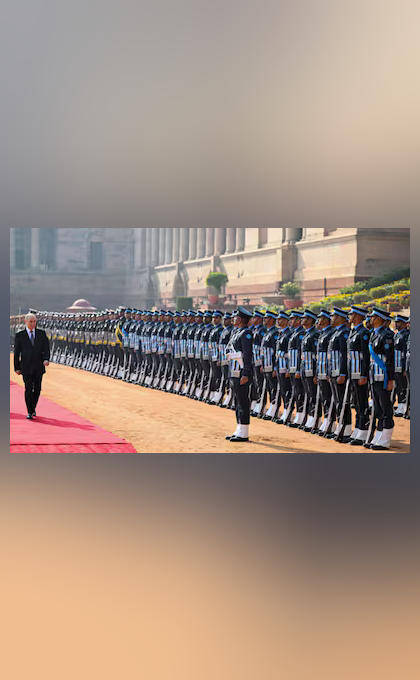
On a recent visit to India, Russian President Vladimir Putin was accorded a ceremonial 21-gun salute at the Rashtrapati Bhavan, the official residence of the President of India. This tradition, steeped in history and protocol, is an integral part of India’s ceremonial honors reserved for foreign heads of state and their families. But have you ever wondered why foreign leaders receive a 21-gun salute in India? In this blog post, we will delve into the history and significance of this honor, exploring its origins, evolution, and the significance it holds in modern times.
The 21-gun salute is a time-honored tradition that dates back to the British era in India. During the colonial period, the British used to accord a 21-gun salute to their monarchs and other high-ranking dignitaries as a mark of respect and honor. The number 21 was considered significant because it was thought to be the highest odd number that could not be divided evenly, making it a symbol of unity and wholeness. When India gained independence in 1947, the country inherited many of the British-era practices, including the 21-gun salute.
Today, the 21-gun salute is an integral part of India’s traditional protocol, reserved for the highest offices of state. It is accorded to foreign heads of state, heads of government, and other high-ranking dignitaries as a mark of respect and honor. The salute is typically fired from the grounds of the Rashtrapati Bhavan, the official residence of the President of India, or from other designated locations. The salute is usually accompanied by other ceremonial honors, including a guard of honor, a national anthem, and a reception by the President or the Prime Minister of India.
The 21-gun salute is a symbolic gesture that signifies the country’s highest form of ceremonial respect. It is a way of acknowledging the dignity and prestige of the visiting dignitary and their country. The salute is also seen as a gesture of friendship and cooperation between nations. When a foreign leader receives a 21-gun salute, it is a sign that India values its relationship with that country and is committed to strengthening ties.
In addition to its symbolic significance, the 21-gun salute is also a display of military pomp and ceremony. The salute is typically fired by a battery of artillery guns, usually 21 in number, which are positioned in a designated area. The guns are fired in a sequence, with each gun firing a single round, followed by a brief pause before the next gun fires. The salute is usually accompanied by music, with the national anthem of the visiting country being played during the ceremony.
The 21-gun salute has been accorded to many foreign leaders visiting India over the years. From heads of state to heads of government, the salute has been a standard feature of India’s ceremonial protocol. In recent years, the salute has been accorded to leaders such as former US President Barack Obama, former Chinese President Xi Jinping, and former French President Francois Hollande, among others.
In conclusion, the 21-gun salute is a time-honored tradition that is an integral part of India’s ceremonial protocol. It is a symbol of respect, honor, and friendship, and is accorded to foreign leaders as a mark of the country’s highest form of ceremonial respect. The salute has a rich history, dating back to the British era, and has been inherited by India as part of its colonial legacy. Today, the 21-gun salute continues to be an important part of India’s diplomatic protocol, signifying the country’s commitment to international cooperation and friendship.
About the Author