Why do foreign leaders receive 21-gun salute in India?
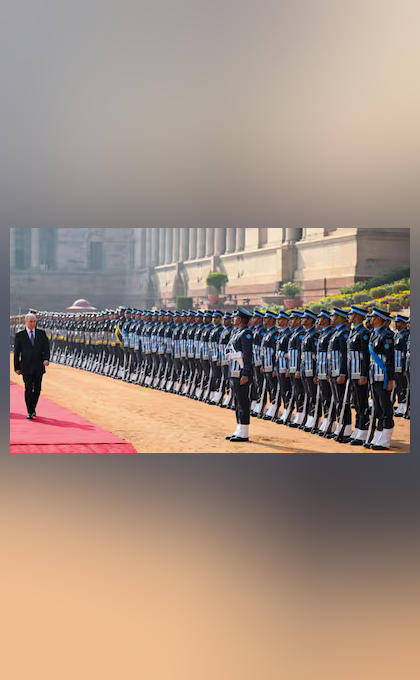
The ceremonial 21-gun salute is a time-honored tradition in India, reserved for the highest offices of state and accorded to foreign heads of state and their families as part of the country’s traditional protocol. Recently, Russian President Vladimir Putin received a ceremonial 21-gun salute at Rashtrapati Bhavan during his India visit, sparking curiosity about the significance and history behind this honor. In this blog post, we will delve into the origins of the 21-gun salute and explore its evolution over time, as well as its significance in modern-day India.
The tradition of the 21-gun salute has its roots in the British era, when India was a colonial territory under British rule. During this period, the salute was used as a way to honor visiting dignitaries and heads of state, as well as to signify the importance of the occasion. The number 21 was chosen because it was considered a high odd number, which was deemed to be a symbol of sovereignty and independence. The use of an odd number also ensured that the salute could not be accidentally returned, as an even number of guns could be misinterpreted as a return salute.
The 21-gun salute is typically fired from a battery of field guns, usually located in a prominent location such as the Rashtrapati Bhavan or the India Gate in New Delhi. The salute is usually accompanied by other ceremonial honors, such as the playing of the national anthem and the presentation of a guard of honor. The entire ceremony is carefully choreographed to ensure that it is executed with precision and dignity, reflecting the importance of the occasion and the honor being bestowed upon the visiting dignitary.
In India, the 21-gun salute is reserved for the highest offices of state, including the President, the Vice President, and visiting heads of state. The salute is also accorded to the families of these dignitaries, as a mark of respect and courtesy. The 21-gun salute is an integral part of India’s traditional protocol, and is considered an essential aspect of the country’s diplomatic etiquette. The salute is seen as a way to extend a warm welcome to visiting dignitaries, and to demonstrate the country’s commitment to international diplomacy and cooperation.
Over time, the 21-gun salute has evolved to become an important symbol of India’s sovereignty and independence. The salute is seen as a way to assert the country’s dignity and self-respect, and to demonstrate its commitment to upholding the principles of international diplomacy. The 21-gun salute is also seen as a way to promote goodwill and friendship between nations, and to foster greater understanding and cooperation between countries.
In modern-day India, the 21-gun salute continues to play an important role in the country’s diplomatic protocol. The salute is accorded to visiting heads of state and government, as well as to other high-ranking dignitaries. The salute is seen as a way to extend a warm welcome to these visitors, and to demonstrate the country’s respect and admiration for their office and position.
In conclusion, the 21-gun salute is a time-honored tradition in India, reserved for the highest offices of state and accorded to foreign heads of state and their families as part of the country’s traditional protocol. The salute has its roots in the British era, and has evolved over time to become an important symbol of India’s sovereignty and independence. The 21-gun salute is an essential aspect of India’s diplomatic etiquette, and is seen as a way to promote goodwill and friendship between nations.
The recent ceremonial 21-gun salute accorded to Russian President Vladimir Putin during his India visit is a testament to the enduring significance of this tradition. The salute is a reminder of the importance of upholding the principles of international diplomacy, and of the need to promote greater understanding and cooperation between countries. As India continues to play an increasingly important role on the global stage, the 21-gun salute will remain an important symbol of the country’s commitment to diplomacy and international cooperation.
For more information on this topic, you can visit the following news article: https://www.news18.com/amp/india/why-do-foreign-leaders-receive-21-gun-salute-history-of-the-honour-explained-ws-akl-9752258.html
About the Author