Why do foreign leaders receive 21-gun salute in India?
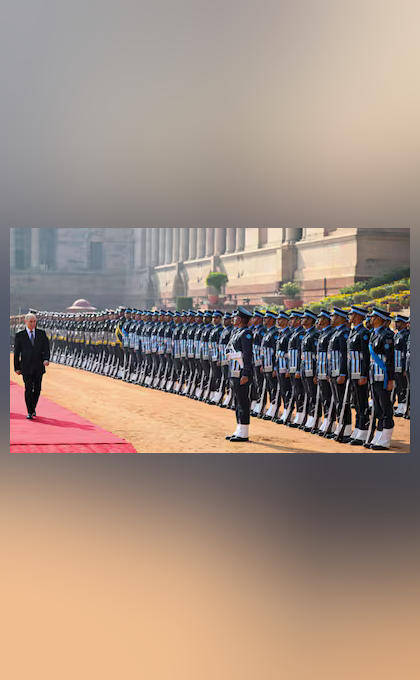
The ceremonial 21-gun salute is a tradition that has been an integral part of India’s protocol for foreign dignitaries, particularly heads of state, for decades. Recently, Russian President Vladimir Putin received this honor at Rashtrapati Bhavan during his visit to India. The salute, which is the highest form of ceremonial respect, is reserved for the highest offices of state and is accorded to foreign heads of state and their families as part of India’s traditional protocol. But have you ever wondered why foreign leaders receive a 21-gun salute in India? In this blog post, we will delve into the history and significance of this tradition.
The tradition of the 21-gun salute has its roots in the British era. During the 17th and 18th centuries, the British Navy used to fire a seven-gun salute to announce the arrival of a dignitary. The number of guns was later increased to 21, which was considered the highest form of salute. The reason behind this number is not certain, but it is believed that 21 was considered a sacred number in the British Navy. The 21-gun salute was initially used to welcome British monarchs and other high-ranking officials, but it was later adopted by other countries, including India, as a way to show respect to visiting dignitaries.
In India, the 21-gun salute is an integral part of the ceremonial welcome accorded to foreign heads of state. The salute is fired by the Indian Army’s ceremonial battery, which is stationed at the Rashtrapati Bhavan, the official residence of the President of India. The salute is usually accompanied by a guard of honor, which is composed of soldiers from the Indian Army, Navy, and Air Force. The guard of honor is a symbol of the country’s respect for the visiting dignitary, and it is considered a great honor to be part of it.
The 21-gun salute is not just a formality; it has a deep significance in the context of international diplomacy. It is a way for India to show its respect and hospitality to visiting foreign leaders, and it is an important part of the country’s protocol. The salute is usually accompanied by other ceremonial events, such as a reception at the Rashtrapati Bhavan, a meeting with the President of India, and a visit to other important landmarks in the country.
In recent years, the 21-gun salute has been accorded to several foreign leaders, including US Presidents, Chinese Premiers, and Russian Presidents. The salute is a symbol of India’s commitment to international diplomacy and its desire to build strong relationships with other countries. It is also a way for India to showcase its rich cultural heritage and its traditions of hospitality.
The 21-gun salute is not just limited to foreign heads of state; it is also accorded to other high-ranking officials, such as the Vice President of India, the Prime Minister of India, and other dignitaries. However, the salute is usually reserved for the highest offices of state, and it is considered a great honor to receive it.
In conclusion, the 21-gun salute is an important part of India’s protocol for foreign dignitaries, and it has a rich history and significance. The salute is a way for India to show its respect and hospitality to visiting foreign leaders, and it is an important part of the country’s tradition of international diplomacy. Whether it is a US President, a Chinese Premier, or a Russian President, the 21-gun salute is a symbol of India’s commitment to building strong relationships with other countries and showcasing its rich cultural heritage.
As we have seen, the 21-gun salute is an integral part of India’s ceremonial welcome for foreign heads of state. It is a tradition that has been inherited from the British era, but it has been adopted and modified by India to suit its own needs and traditions. The salute is a way for India to show its respect and hospitality to visiting dignitaries, and it is an important part of the country’s protocol.
In addition to its ceremonial significance, the 21-gun salute also has a deeper meaning in the context of international diplomacy. It is a way for India to build relationships with other countries and to showcase its commitment to international cooperation. The salute is usually accompanied by other ceremonial events, such as meetings with Indian leaders, visits to important landmarks, and cultural exchanges.
The 21-gun salute is also a symbol of India’s military strength and its ability to defend its sovereignty. The salute is fired by the Indian Army’s ceremonial battery, which is composed of highly trained soldiers who are equipped with the latest technology and equipment. The salute is a way for India to showcase its military prowess and its ability to defend its interests.
In recent years, the 21-gun salute has been accorded to several foreign leaders, including US Presidents, Chinese Premiers, and Russian Presidents. The salute is a symbol of India’s commitment to international diplomacy and its desire to build strong relationships with other countries. It is also a way for India to showcase its rich cultural heritage and its traditions of hospitality.
In conclusion, the 21-gun salute is an important part of India’s protocol for foreign dignitaries, and it has a rich history and significance. The salute is a way for India to show its respect and hospitality to visiting foreign leaders, and it is an important part of the country’s tradition of international diplomacy. Whether it is a US President, a Chinese Premier, or a Russian President, the 21-gun salute is a symbol of India’s commitment to building strong relationships with other countries and showcasing its rich cultural heritage.
About the Author