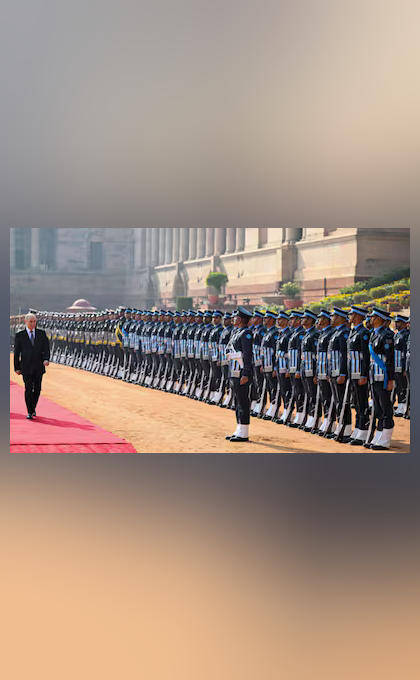
Why do foreign leaders receive 21-gun salute in India?
The ceremonial 21-gun salute is a time-honored tradition in India, reserved for the highest offices of state and accorded to foreign heads of state and their families as part of the country’s traditional protocol. Recently, Russian President Vladimir Putin received a ceremonial 21-gun salute at Rashtrapati Bhavan during his India visit, sparking curiosity about the history and significance of this honor. In this blog post, we will delve into the origins of the 21-gun salute and its significance in Indian protocol.
The 21-gun salute is a relic of the British era, when the British Empire ruled over India. During this period, the salute was used to signify the importance and prestige of a visiting dignitary. The number 21 was chosen because it was considered a sacred number, representing the sum of the digits of the solar system (the sun, the moon, and the 19 planets known at the time). The 21-gun salute was reserved for the most important visitors, including heads of state, royalty, and high-ranking military officials.
When India gained independence in 1947, the country inherited many of the British-era practices and traditions, including the 21-gun salute. The salute was retained as a symbol of respect and honor, and it continues to be an integral part of Indian protocol to this day. The 21-gun salute is typically fired by the Indian Army’s ceremonial battery, which is responsible for performing the salute on behalf of the Indian government.
The 21-gun salute is a complex and intricately choreographed ceremony, involving a team of highly trained soldiers and a battery of artillery guns. The ceremony begins with the arrival of the visiting dignitary, who is greeted by the Indian President or Prime Minister. The dignitary is then escorted to the saluting base, where the ceremonial battery is waiting. The salute is fired in a sequence of 21 rounds, with each round representing a single gun firing. The guns used for the salute are typically old-fashioned field guns, which are loaded with blank cartridges.
The 21-gun salute is not just a ceremonial gesture; it also holds significant symbolic meaning. The salute represents the country’s highest form of ceremonial respect, and it is reserved for the most important visitors. The salute is also seen as a symbol of India’s sovereignty and independence, and it is an important part of the country’s diplomatic protocol. When a foreign leader receives a 21-gun salute, it is seen as a sign of respect and friendship between the two nations.
In addition to its ceremonial significance, the 21-gun salute also has a rich history. The salute has been fired in honor of many notable dignitaries over the years, including British royalty, American presidents, and other world leaders. The salute has also been fired on special occasions, such as Independence Day and Republic Day.
Despite its historical significance, the 21-gun salute has not been without controversy. Some critics have argued that the salute is a relic of the colonial era and has no place in modern India. Others have pointed out that the salute is a waste of resources and could be better spent on more pressing national priorities. However, the Indian government has consistently maintained that the 21-gun salute is an important part of the country’s cultural heritage and diplomatic protocol.
In conclusion, the 21-gun salute is a time-honored tradition in India, reserved for the highest offices of state and accorded to foreign heads of state and their families as part of the country’s traditional protocol. The salute has a rich history and holds significant symbolic meaning, representing the country’s highest form of ceremonial respect. While the salute has been the subject of controversy, it remains an important part of Indian protocol and a symbol of the country’s sovereignty and independence.
About the Author