Why do foreign leaders receive 21-gun salute in India?
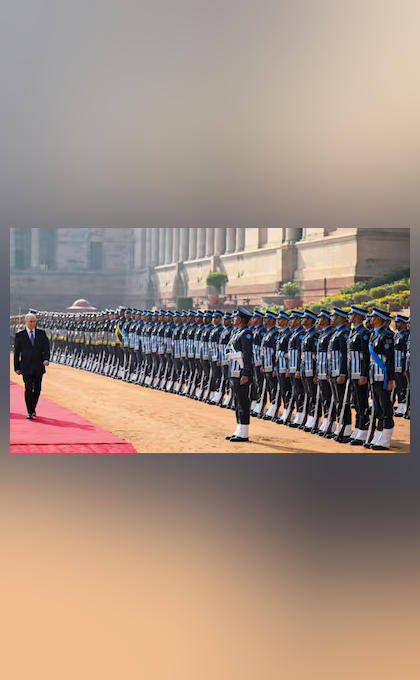
The ceremonial 21-gun salute is a time-honored tradition in India, reserved for the highest offices of state. Recently, Russian President Vladimir Putin received this honor at Rashtrapati Bhavan during his visit to India. The salute, which is an integral part of India’s traditional protocol, is accorded to foreign heads of state and their families as a symbol of the country’s highest form of ceremonial respect. But have you ever wondered where this tradition originated and what significance it holds?
The 21-gun salute has its roots in the British era, when India was under colonial rule. During this period, the British used a 21-gun salute to honor the monarch, which was the highest form of salute in the British military. The number 21 was chosen because it was considered a high odd number, which was believed to be a symbol of power and prestige. The salute was fired using cannons, which were the primary artillery pieces used by the British military at that time.
After India gained independence in 1947, the country inherited many of the British-era practices, including the 21-gun salute. The salute was retained as a mark of respect for foreign heads of state and their families, and it has since become an integral part of India’s diplomatic protocol. Today, the 21-gun salute is fired using field guns, which are specifically designed for ceremonial purposes.
The 21-gun salute is a complex ceremony that involves a lot of planning and coordination. The salute is typically fired by a battery of field guns, which are positioned in a specific location, usually near the presidential palace or the venue where the foreign leader is being honored. The guns are loaded with blank cartridges, which are designed to produce a loud noise without causing any damage.
The ceremony begins with the arrival of the foreign leader, who is escorted to the saluting base by the President of India or other high-ranking officials. The salute is then fired in a sequence of 21 rounds, with each round being fired at a specific interval. The salute is accompanied by a band playing the national anthem of the visiting country, as well as other ceremonial music.
The 21-gun salute is a symbol of India’s respect and courtesy towards foreign leaders, and it is an important part of the country’s diplomatic protocol. The salute is a way of showing honor and esteem to the visiting leader, and it is a gesture of goodwill and friendship between nations. The salute is also a reminder of India’s rich history and cultural heritage, and it is an important part of the country’s tradition and customs.
In addition to the 21-gun salute, foreign leaders also receive other honors and courtesies during their visit to India. These include a guard of honor, a ceremonial reception, and a meeting with the President and other high-ranking officials. The 21-gun salute is, however, the most prominent and visible symbol of India’s respect and courtesy towards foreign leaders.
The 21-gun salute has been accorded to many foreign leaders over the years, including heads of state, heads of government, and other high-ranking officials. The salute is a universal symbol of respect and courtesy, and it is recognized and appreciated by leaders from around the world.
In conclusion, the 21-gun salute is a time-honored tradition in India, which is reserved for the highest offices of state. The salute, which has its roots in the British era, is a symbol of India’s highest form of ceremonial respect, and it is an important part of the country’s diplomatic protocol. The salute is a way of showing honor and esteem to foreign leaders, and it is a gesture of goodwill and friendship between nations. Whether it is a head of state, a head of government, or other high-ranking official, the 21-gun salute is a universal symbol of respect and courtesy, which is recognized and appreciated by leaders from around the world.
The next time you see a foreign leader receiving a 21-gun salute in India, remember the rich history and cultural significance behind this ceremony. The salute is not just a gesture of respect, but also a symbol of India’s tradition and customs, which have been passed down through generations.
About the Author