Why do foreign leaders receive 21-gun salute in India?
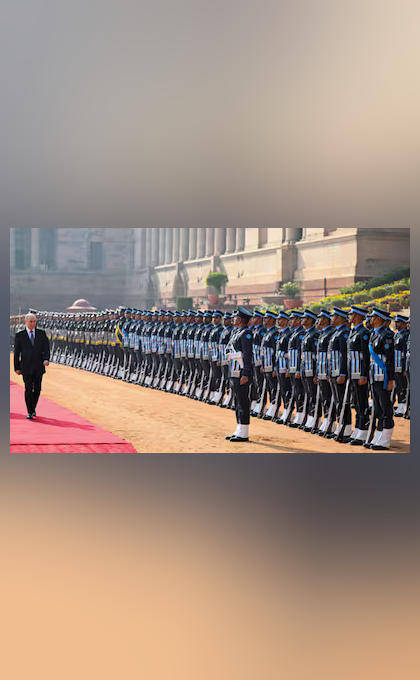
The ceremonial 21-gun salute is a tradition that has been a part of India’s protocol for decades, reserved for the highest offices of state. Recently, Russian President Vladimir Putin received a ceremonial 21-gun salute at Rashtrapati Bhavan during his visit to India. This honour is not only limited to foreign heads of state but also extended to their families as a symbol of respect and dignity. But have you ever wondered why foreign leaders receive a 21-gun salute in India? Let’s delve into the history and significance of this tradition.
The tradition of the 21-gun salute has its roots in the British era. During the 18th and 19th centuries, the British Empire used gun salutes as a way to honour visiting dignitaries and heads of state. The number of guns used in the salute was determined by the rank and importance of the visiting dignitary. The highest honour was reserved for the British monarch, who was accorded a 21-gun salute. This tradition was later adopted by other countries, including India, as a way to show respect and dignity to visiting heads of state.
In India, the 21-gun salute is accorded to foreign heads of state and their families as part of the country’s traditional protocol. The salute is typically fired from the Rashtrapati Bhavan, the official residence of the President of India, or from other designated locations. The salute is a symbol of the country’s highest form of ceremonial respect and is reserved for the highest offices of state.
The significance of the 21-gun salute lies in its historical and cultural context. During the British era, the number of guns used in the salute was determined by the rank and importance of the visiting dignitary. The use of 21 guns was reserved for the highest honour, symbolizing the country’s respect and dignity towards the visiting head of state. Today, the 21-gun salute is a continuation of this tradition, symbolizing India’s respect and dignity towards visiting foreign leaders.
The 21-gun salute is not just a ceremonial honour but also a symbol of the country’s military might and strength. The use of artillery guns to fire the salute is a display of the country’s military capabilities and is meant to impress the visiting dignitary. The salute is typically fired by a team of military personnel, who are trained to fire the guns in a synchronized manner.
In addition to the 21-gun salute, foreign leaders visiting India are also accorded other ceremonial honours, including a guard of honour and a reception at the Rashtrapati Bhavan. These honours are a symbol of India’s respect and dignity towards the visiting head of state and are an important part of the country’s diplomatic protocol.
The 21-gun salute has been accorded to numerous foreign leaders visiting India over the years, including heads of state, prime ministers, and other dignitaries. The salute is a symbol of India’s respect and dignity towards the visiting leader and is an important part of the country’s diplomatic protocol.
In conclusion, the 21-gun salute is a tradition that has been a part of India’s protocol for decades, reserved for the highest offices of state. The honour is accorded to foreign heads of state and their families as a symbol of respect and dignity. The significance of the 21-gun salute lies in its historical and cultural context, symbolizing the country’s respect and dignity towards visiting foreign leaders. The salute is not just a ceremonial honour but also a symbol of the country’s military might and strength.
As India continues to play an important role in global affairs, the 21-gun salute will remain an important part of the country’s diplomatic protocol. The honour will continue to be accorded to foreign leaders visiting India, symbolizing the country’s respect and dignity towards the visiting head of state.
About the Author