Why do foreign leaders receive 21-gun salute in India?
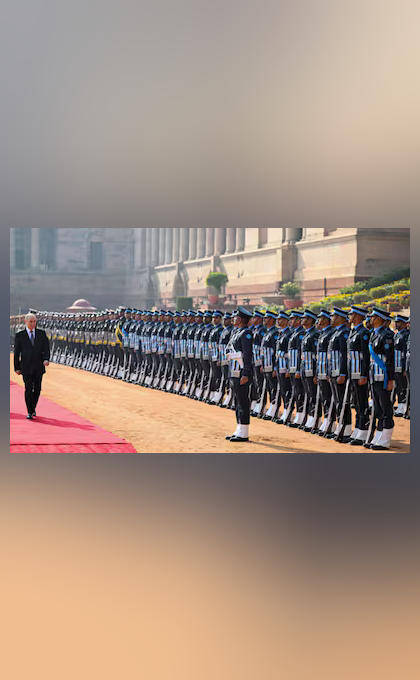
The ceremonial 21-gun salute is a time-honored tradition in India, reserved for the highest offices of state and accorded to foreign heads of state and their families as part of the country’s traditional protocol. Recently, Russian President Vladimir Putin received a ceremonial 21-gun salute at Rashtrapati Bhavan during his India visit, highlighting the significance of this honor in Indian diplomatic protocol. But have you ever wondered why foreign leaders receive a 21-gun salute in India, and what is the history behind this tradition?
The 21-gun salute is a symbol of the country’s highest form of ceremonial respect, and it is a practice that has been inherited from British-era traditions. During the British Raj, a 21-gun salute was reserved for the British monarch, and it was considered the highest honor that could be bestowed upon a visiting dignitary. After India gained independence, the tradition was continued, and it has since become an integral part of Indian diplomatic protocol.
So, why 21 guns? The origins of the 21-gun salute are shrouded in mystery, but there are several theories that attempt to explain the significance of the number 21. One theory is that the number 21 was chosen because it was considered a “perfect” number, being the sum of 7 (considered a sacred number) and 14 (twice 7). Another theory suggests that the 21-gun salute was chosen because it was considered a “full” salute, with 21 being the maximum number of guns that could be fired in a single salute without causing damage to the guns or injuring the gunners.
Regardless of its origins, the 21-gun salute has become an important part of Indian diplomatic protocol, and it is reserved for the highest offices of state. When a foreign head of state visits India, they are accorded a 21-gun salute as a mark of respect and honor. The salute is typically fired from the Rashtrapati Bhavan, the official residence of the President of India, and it is accompanied by other ceremonial honors, such as a guard of honor and a reception by the President.
The 21-gun salute is not just a matter of pomp and ceremony; it is also a symbol of the country’s respect for the visiting dignitary and their country. It is a way of showing that India values its relationship with the visiting country and is committed to strengthening ties between the two nations. In return, the visiting dignitary is expected to reciprocate the honor, and they typically do so by hosting a similar ceremony in their own country.
In addition to the 21-gun salute, India also has a number of other ceremonial honors that are reserved for visiting dignitaries. These include a guard of honor, which is a ceremonial escort provided by the Indian military, and a reception by the President, which is a formal meeting between the President and the visiting dignitary. These ceremonies are an important part of Indian diplomatic protocol, and they are designed to show respect and honor to the visiting dignitary and their country.
In recent years, the 21-gun salute has become an important part of India’s diplomatic outreach efforts. As India seeks to strengthen its relationships with other countries, the 21-gun salute has become a key symbol of the country’s respect and honor for its visiting dignitaries. Whether it is a visit by a head of state or a meeting between Indian and foreign officials, the 21-gun salute is always an important part of the ceremony.
In conclusion, the 21-gun salute is an important part of Indian diplomatic protocol, and it is a symbol of the country’s highest form of ceremonial respect. The tradition of the 21-gun salute has been inherited from British-era practices, and it is reserved for the highest offices of state. Whether it is a visit by a foreign head of state or a meeting between Indian and foreign officials, the 21-gun salute is always an important part of the ceremony, and it is a way of showing respect and honor to the visiting dignitary and their country.
As India continues to strengthen its relationships with other countries, the 21-gun salute is likely to remain an important part of the country’s diplomatic outreach efforts. It is a symbol of India’s respect and honor for its visiting dignitaries, and it is a way of showing that the country values its relationships with other nations. So the next time you hear the sound of 21 guns firing, remember that it is not just a matter of pomp and ceremony; it is a symbol of India’s highest form of ceremonial respect, and a way of showing honor and respect to the visiting dignitary and their country.
About the Author