Why do foreign leaders receive 21-gun salute in India?
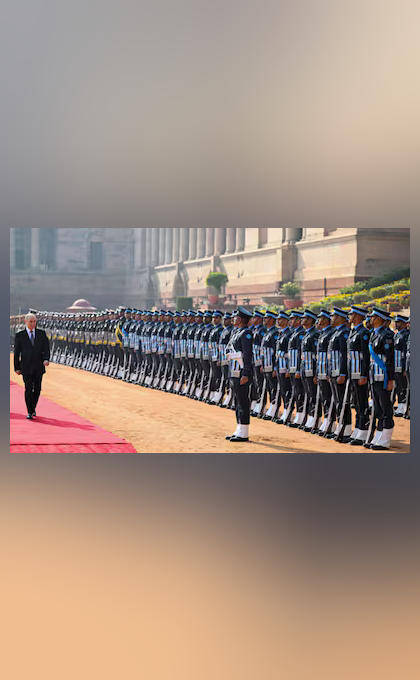
The ceremonial 21-gun salute is a tradition that has been a part of India’s protocol for decades. Recently, Russian President Vladimir Putin received a ceremonial 21-gun salute at Rashtrapati Bhavan during his visit to India. This honour, reserved for the highest offices of state, is accorded to foreign heads of state and their families as part of India’s traditional protocol. The 21-gun salute symbolises the country’s highest form of ceremonial respect, and it is an important part of the country’s diplomatic etiquette.
But have you ever wondered why foreign leaders receive a 21-gun salute in India? What is the significance of this tradition, and how did it originate? In this blog post, we will delve into the history of the 21-gun salute and explore its significance in the context of Indian protocol.
History of the 21-gun salute
The tradition of the 21-gun salute has its roots in the British era. During the 17th and 18th centuries, the British Navy used to fire a seven-gun salute to announce the arrival of a ship. The number of guns fired was determined by the rank of the officer on board. For example, a vice-admiral would receive a 13-gun salute, while a full admiral would receive a 19-gun salute.
Over time, the tradition of the gun salute evolved, and the number of guns fired increased. By the mid-19th century, a 21-gun salute had become the standard for heads of state, including monarchs and presidents. The 21-gun salute was considered the highest form of ceremonial respect, and it was reserved for the most important dignitaries.
Inheritance of the tradition
When India gained independence in 1947, the country inherited many of the British-era traditions, including the 21-gun salute. The Indian government decided to continue the tradition as a way of showing respect to foreign dignitaries. Today, the 21-gun salute is an integral part of India’s protocol, and it is accorded to foreign heads of state and their families during official visits.
Significance of the 21-gun salute
The 21-gun salute is a symbol of the country’s highest form of ceremonial respect. It is a way of honouring the visiting dignitary and showing respect for their office. The salute is typically fired from a location near the Presidential Palace, and it is accompanied by other ceremonial rituals, such as the presentation of a guard of honour and the playing of the national anthem.
The 21-gun salute is also a way of showcasing India’s military might and ceremonial prowess. The salute is fired by a team of highly trained soldiers, who use traditional artillery guns to fire the salute. The entire ceremony is carefully choreographed, and it involves a great deal of precision and coordination.
Protocol surrounding the 21-gun salute
The 21-gun salute is a highly ceremonial affair, and it is governed by a strict protocol. The protocol surrounding the salute is as follows:
- The salute is typically fired at 10:00 am on the day of the visiting dignitary’s arrival.
- The salute is fired from a location near the Presidential Palace, such as the Rashtrapati Bhavan.
- The salute is accompanied by other ceremonial rituals, such as the presentation of a guard of honour and the playing of the national anthem.
- The visiting dignitary is typically present during the ceremony, and they are escorted by the President of India or another high-ranking official.
- The ceremony is attended by a large number of dignitaries, including government officials, military personnel, and members of the media.
Conclusion
The 21-gun salute is a time-honoured tradition that is an integral part of India’s protocol. The salute is a symbol of the country’s highest form of ceremonial respect, and it is accorded to foreign heads of state and their families during official visits. The tradition has its roots in the British era, and it was inherited by India after independence. Today, the 21-gun salute is a way of showcasing India’s military might and ceremonial prowess, and it is an important part of the country’s diplomatic etiquette.
In conclusion, the 21-gun salute is a significant tradition that reflects India’s rich cultural heritage and its commitment to diplomatic protocol. The next time you hear the sound of gunfire during a state visit, remember the significance of the 21-gun salute and the tradition that it represents.
About the Author