Why do foreign leaders receive 21-gun salute in India?
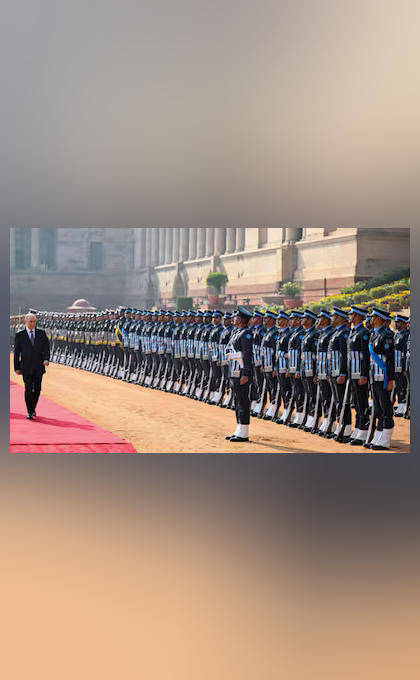
The ceremonial 21-gun salute is a timeless tradition that has been an integral part of India’s protocol for foreign dignitaries. Recently, Russian President Vladimir Putin received this honour at Rashtrapati Bhavan during his visit to India. The 21-gun salute is a gesture of respect and courtesy extended to foreign heads of state and their families, symbolizing the country’s highest form of ceremonial respect. But have you ever wondered where this tradition originated and what significance it holds?
The history of the 21-gun salute dates back to the British era, when it was used as a way to honor visiting dignitaries and heads of state. The tradition is believed to have originated in the 17th century, when the British Navy would fire a 21-gun salute to announce the arrival of a high-ranking official or a member of the royal family. The number 21 was chosen because it was considered a high odd number, which was deemed to be a sign of respect and dignity.
Over time, the tradition of the 21-gun salute was adopted by other countries, including India, which was a British colony at the time. After India gained independence in 1947, the country continued to follow the tradition as a way to honor foreign dignitaries and show respect to their offices. Today, the 21-gun salute is an integral part of India’s protocol for receiving foreign heads of state and their families.
So, what exactly is a 21-gun salute? It is a ceremonial gesture where 21 rounds of ammunition are fired from a gun, typically a field gun or a howitzer, in a specific sequence. The salute is usually fired in a series of three rounds, with a pause of 10-15 seconds between each round. The entire ceremony is carefully choreographed to ensure that the salute is fired in a precise and dignified manner.
The 21-gun salute is not just a ceremonial gesture; it also holds significant symbolic meaning. The number 21 is considered to be a sacred number in many cultures, representing completeness and perfection. In the context of the 21-gun salute, it symbolizes the highest form of respect and dignity that a country can offer to a visiting dignitary.
In India, the 21-gun salute is typically fired at Rashtrapati Bhavan, the official residence of the President of India, or at other designated locations such as the India Gate or the Red Fort. The ceremony is usually accompanied by other ceremonial gestures, such as the presentation of a guard of honor, the playing of the national anthem, and the exchange of gifts between the visiting dignitary and the host country.
The 21-gun salute is not just limited to foreign heads of state; it is also accorded to other high-ranking officials, such as Prime Ministers, Vice-Presidents, and royalty. The ceremony is an important part of India’s diplomatic protocol, and it is carefully planned and executed to ensure that the visiting dignitary feels honored and respected.
In addition to the 21-gun salute, India also has other ceremonial gestures to honor foreign dignitaries. For example, the guard of honor is a ceremonial unit that is presented to the visiting dignitary as a sign of respect. The guard of honor is typically composed of soldiers from the Indian Army, Navy, or Air Force, and they are dressed in their finest uniforms.
The 21-gun salute has also been the subject of some controversy over the years. Some critics have argued that the ceremony is a relic of the colonial era and that it is no longer relevant in modern times. Others have pointed out that the ceremony is expensive and that the money could be better spent on other priorities.
However, proponents of the 21-gun salute argue that it is an important part of India’s cultural heritage and that it symbolizes the country’s respect for its guests. They also point out that the ceremony is an important part of India’s diplomatic protocol and that it helps to strengthen relations between India and other countries.
In conclusion, the 21-gun salute is a timeless tradition that has been an integral part of India’s protocol for foreign dignitaries. The ceremony has a rich history and holds significant symbolic meaning, representing the country’s highest form of ceremonial respect. Whether you are a fan of the 21-gun salute or not, it is undeniable that it is an important part of India’s cultural heritage and diplomatic protocol.
About the Author