Why do foreign leaders receive 21-gun salute in India?
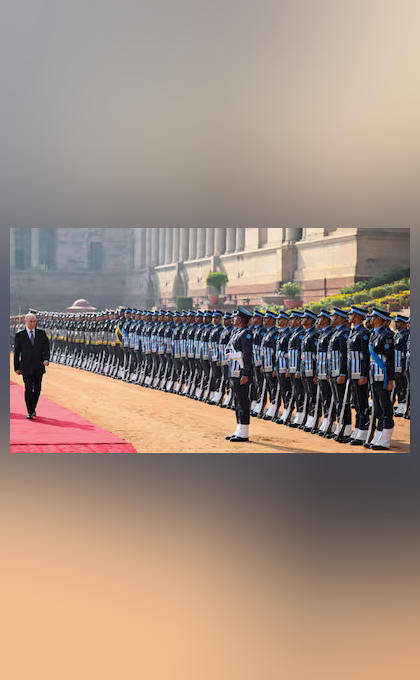
The ceremonial 21-gun salute is a tradition that has been an integral part of India’s protocol for foreign heads of state and their families. Recently, Russian President Vladimir Putin received a ceremonial 21-gun salute at Rashtrapati Bhavan during his visit to India. This honour, reserved for the highest offices of state, is a symbol of the country’s highest form of ceremonial respect. But have you ever wondered why foreign leaders receive a 21-gun salute in India? Let’s delve into the history of this tradition and explore its significance.
The tradition of the 21-gun salute has its roots in the British era. During the 17th and 18th centuries, the British Navy used to fire a seven-gun salute to announce the arrival of a high-ranking official. The number of guns was gradually increased to 21, which was considered the highest form of salute. The reason behind this number is not certain, but it is believed that 21 was considered a sacred number in the British Navy. The salute was initially used to signal the arrival of a high-ranking official, but it eventually became a symbol of respect and honour.
After India gained independence in 1947, the tradition of the 21-gun salute was continued as a way to show respect to foreign dignitaries. The salute is typically fired from the grounds of the Rashtrapati Bhavan, the official residence of the President of India, or from other designated locations. The salute is usually accompanied by a ceremonial guard of honour, which consists of soldiers from the Indian Army, Navy, and Air Force.
The 21-gun salute is a significant honour that is reserved for the highest offices of state. It is typically accorded to foreign heads of state, their spouses, and other high-ranking officials. The salute is a symbol of the country’s respect and hospitality towards the visiting dignitary. It is also a way to showcase India’s rich cultural heritage and its commitment to traditional protocol.
The ceremony of the 21-gun salute is a grand affair, with all the pomp and grandeur that one would expect from a ceremonial event. The salute is fired by a battery of guns, typically consisting of seven guns, which are fired three times to make a total of 21 rounds. The guns are usually positioned in a prominent location, such as the grounds of the Rashtrapati Bhavan, and are fired in a sequence to create a dramatic effect.
The significance of the 21-gun salute goes beyond its ceremonial value. It is a symbol of the country’s commitment to international diplomacy and its desire to build strong relationships with other nations. The salute is a way to show respect and hospitality to foreign dignitaries, and it is an important part of India’s traditional protocol.
In addition to foreign heads of state, the 21-gun salute is also accorded to other high-ranking officials, such as the Vice-President of India, the Prime Minister of India, and other dignitaries. The salute is also fired on certain national occasions, such as Republic Day and Independence Day, to mark the country’s independence and sovereignty.
In conclusion, the 21-gun salute is a significant honour that is reserved for the highest offices of state in India. It is a symbol of the country’s respect and hospitality towards foreign dignitaries, and it is an important part of India’s traditional protocol. The tradition of the 21-gun salute has its roots in the British era, but it has been continued and adapted by India as a way to show respect and honour to foreign leaders. Whether it is a ceremonial event or a national occasion, the 21-gun salute is a grand affair that is steeped in tradition and history.
As we reflect on the significance of the 21-gun salute, it is worth noting that it is not just a ceremonial event, but also a symbol of India’s commitment to international diplomacy and its desire to build strong relationships with other nations. The salute is a way to show respect and hospitality to foreign dignitaries, and it is an important part of India’s traditional protocol.
In recent years, the 21-gun salute has been accorded to several foreign leaders, including Russian President Vladimir Putin, who received the honour during his visit to India. The salute is a reminder of the country’s rich cultural heritage and its commitment to traditional protocol.
As India continues to play a significant role in international diplomacy, the 21-gun salute will remain an important part of the country’s traditional protocol. It is a symbol of the country’s respect and hospitality towards foreign dignitaries, and it is a way to showcase India’s rich cultural heritage.
About the Author