Why do foreign leaders receive 21-gun salute in India?
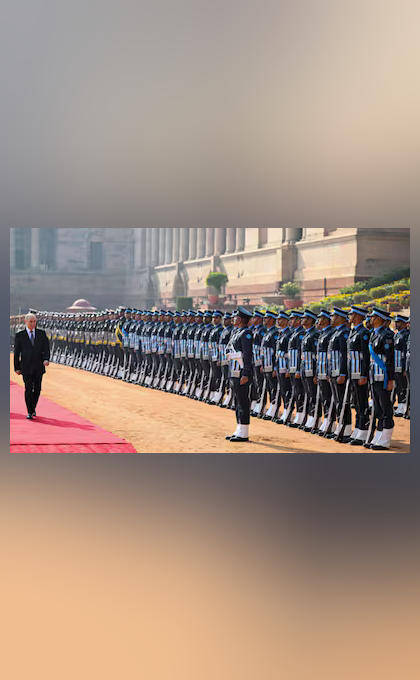
The ceremonial 21-gun salute is a time-honored tradition in India, reserved for the highest offices of state and accorded to foreign heads of state and their families as part of the country’s traditional protocol. Recently, Russian President Vladimir Putin received a ceremonial 21-gun salute at Rashtrapati Bhavan during his visit to India, highlighting the significance of this honor. But have you ever wondered why foreign leaders receive a 21-gun salute in India, and what is the history behind this tradition?
The 21-gun salute is a symbol of the country’s highest form of ceremonial respect, and it is inherited from British-era practices. During the British Raj, the salute was used to honor visiting dignitaries, including royalty and high-ranking officials. The tradition was continued even after India gained independence, as a way of showing respect to visiting foreign leaders.
The number 21 is significant in this context, as it is considered the highest odd number, symbolizing the completion of a cycle. In the past, the number of guns used in a salute varied, depending on the rank and status of the visiting dignitary. However, the 21-gun salute became the standard for honoring heads of state, as it was considered the most prestigious and respectful.
The ceremonial 21-gun salute is typically performed by the Indian Army’s ceremonial units, such as the President’s Bodyguard or the 61st Cavalry Regiment. The salute is fired from a battery of guns, usually located in a prominent location, such as the Rashtrapati Bhavan or the India Gate. The guns are fired in a sequence, with a short interval between each shot, creating a dramatic and impressive display of sound and smoke.
The 21-gun salute is not just a symbolic gesture; it is also a carefully choreographed ceremony that involves meticulous planning and execution. The ceremony typically begins with the arrival of the visiting dignitary, who is greeted by the Indian President or Prime Minister. The dignitary is then escorted to the saluting base, where the ceremonial units are waiting. The salute is fired, and the dignitary is then invited to inspect the guard of honor.
The 21-gun salute is an important part of India’s diplomatic protocol, and it is reserved for the highest offices of state. The honor is typically accorded to visiting heads of state, as well as their spouses and other high-ranking officials. The salute is also fired on certain national occasions, such as Republic Day and Independence Day, as a way of honoring the country’s sovereignty and independence.
In addition to the 21-gun salute, India also has a tradition of according other types of salutes to visiting dignitaries. For example, a 19-gun salute is typically fired for visiting prime ministers or deputy prime ministers, while a 17-gun salute is fired for visiting ministers or other high-ranking officials. The type of salute accorded depends on the rank and status of the visiting dignitary, as well as the nature of their visit.
The 21-gun salute has a rich history, dating back to the 17th century. During this time, the salute was used by the British Navy to honor visiting ships and dignitaries. The salute was fired from a ship’s guns, and the number of guns used varied depending on the rank and status of the visiting dignitary. The tradition was later adopted by the British Army, and it became a standard practice for honoring visiting royalty and high-ranking officials.
Over time, the 21-gun salute has evolved to become an important part of India’s diplomatic protocol. The salute is now fired using modern artillery guns, and the ceremony is carefully choreographed to ensure that it is a dignified and respectful honor. The salute is also accompanied by other ceremonial elements, such as the playing of the national anthem and the inspection of the guard of honor.
In conclusion, the 21-gun salute is a significant honor that is accorded to foreign leaders in India, symbolizing the country’s highest form of ceremonial respect. The tradition has a rich history, dating back to the British era, and it is an important part of India’s diplomatic protocol. The salute is carefully choreographed and executed, involving meticulous planning and attention to detail. As India continues to engage with the world and host visiting dignitaries, the 21-gun salute will remain an important part of the country’s ceremonial traditions.
About the Author