Why do foreign leaders receive 21-gun salute in India?
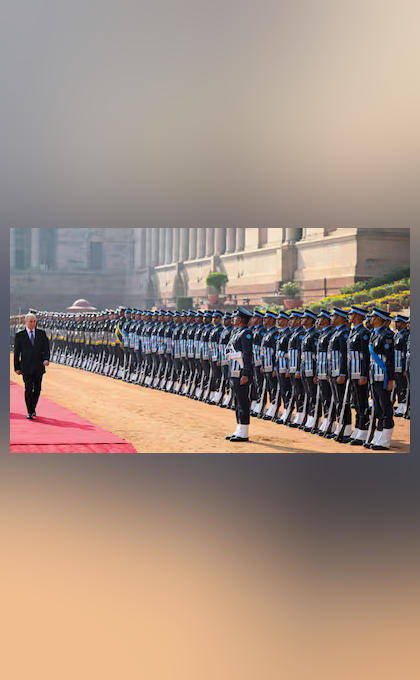
Recently, Russian President Vladimir Putin received a ceremonial 21-gun salute at Rashtrapati Bhavan during his visit to India. This honour, reserved for the highest offices of state, is accorded to foreign heads of state and their families as part of India’s traditional protocol. The 21-gun salute is a symbol of the country’s highest form of ceremonial respect, and it is an integral part of the ceremonial welcome extended to visiting dignitaries.
But have you ever wondered why foreign leaders receive a 21-gun salute in India? What is the history behind this tradition, and what does it signify? In this blog post, we will delve into the origins of the 21-gun salute and explore its significance in the context of India’s diplomatic protocol.
The tradition of the 21-gun salute has its roots in the British era. During the 17th and 18th centuries, the British used to fire a 21-gun salute to signal the arrival of a high-ranking official or a head of state. The number 21 was chosen because it was considered a sacred number, representing the sum of the numbers of the three basic components of a gun salute: 7 for the number of planets known at the time, 7 for the number of days in a week, and 7 for the number of colours in the rainbow.
When India gained independence in 1947, the country inherited many of the British-era practices and traditions, including the 21-gun salute. Over time, the salute has become an integral part of India’s diplomatic protocol, and it is now accorded to foreign heads of state and their families as a mark of respect and courtesy.
The 21-gun salute is a complex ceremony that involves a series of coordinated actions. When a foreign leader arrives at Rashtrapati Bhavan, the President’s official residence, a battery of guns is positioned in the forecourt. As the leader steps out of their vehicle, the guns are fired in a sequence, with a 21-gun salute being the highest honour that can be accorded.
The ceremony is accompanied by other ceremonial gestures, such as the playing of the national anthem, the presentation of a guard of honour, and the exchange of gifts between the visiting leader and the Indian President. The entire ceremony is carefully choreographed to reflect the dignity and prestige of the occasion, and it is an important part of India’s diplomatic protocol.
The 21-gun salute is not just a ceremonial gesture; it also has a deeper significance. It symbolizes the respect and courtesy that India extends to visiting dignitaries, and it reflects the country’s commitment to maintaining good relations with other nations. In a world where diplomacy is often conducted through subtle gestures and symbolic acts, the 21-gun salute is an important way for India to demonstrate its hospitality and friendship towards other countries.
In recent years, the 21-gun salute has been accorded to several foreign leaders, including US President Donald Trump, Chinese President Xi Jinping, and French President Emmanuel Macron. Each of these visits has been an important milestone in India’s diplomatic calendar, and the 21-gun salute has played a significant role in setting the tone for the discussions and negotiations that follow.
In conclusion, the 21-gun salute is an important part of India’s diplomatic protocol, and it reflects the country’s commitment to extending respect and courtesy to visiting dignitaries. With its roots in British-era practices, the salute has evolved over time to become an integral part of India’s ceremonial welcome, and it continues to play a significant role in the country’s diplomatic engagements.
As India continues to engage with the world and strengthen its relationships with other nations, the 21-gun salute will remain an important symbol of the country’s hospitality and friendship. Whether it is a visit by a head of state or a ceremonial welcome for a foreign dignitary, the 21-gun salute will continue to be an integral part of India’s diplomatic protocol, reflecting the country’s commitment to building strong and lasting relationships with other nations.
About the Author