Why do foreign leaders receive 21-gun salute in India?
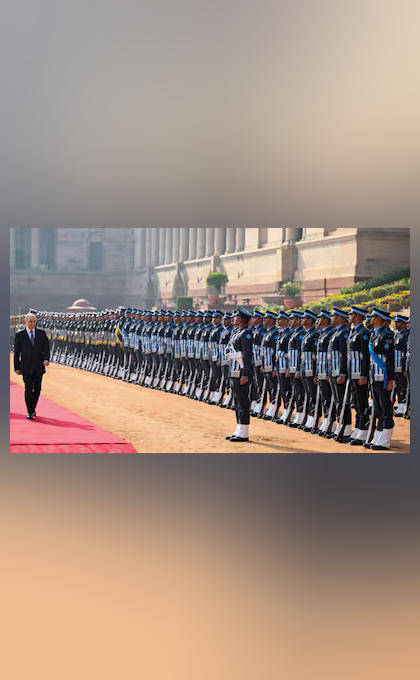
The ceremonial 21-gun salute is a tradition that has been an integral part of India’s protocol for foreign dignitaries. Recently, Russian President Vladimir Putin received a ceremonial 21-gun salute at Rashtrapati Bhavan during his visit to India. This honour, reserved for the highest offices of state, is accorded to foreign heads of state and their families as a mark of respect and courtesy. But have you ever wondered where this tradition originated from and what it signifies?
The 21-gun salute has its roots in the British era, when India was a colony under the British Empire. During this period, the British would fire a 21-gun salute to announce the arrival of a high-ranking official or a member of the royal family. This practice was inherited by India after it gained independence in 1947 and has since been continued as a tradition to honour foreign leaders.
The significance of the 21-gun salute lies in its symbolism of respect and courtesy. The number 21 is not arbitrary, but has a specific meaning. In the past, the strength of a nation’s navy was measured by the number of guns it had on its warships. A 21-gun salute was considered the highest form of salute, as it signified that the nation was willing to disarm 21 of its guns as a mark of respect to the visiting dignitary. This gesture was seen as a symbol of friendship and peace, as it indicated that the host nation was willing to lay down its arms in honour of the guest.
The 21-gun salute is typically fired by the Indian Army’s ceremonial units, such as the President’s Bodyguard or the 104th Infantry Battalion. The salute is fired in a sequence, with each gun firing in succession to create a rolling thunder effect. The salute is usually accompanied by other ceremonial honours, such as the playing of the national anthem and the presentation of a guard of honour.
The 21-gun salute is not just a mere formality, but a significant honour that is reserved for the highest offices of state. It is a symbol of India’s respect and courtesy towards foreign leaders and their families. The salute is usually accorded to heads of state, such as presidents and prime ministers, as well as members of royal families.
In addition to the 21-gun salute, foreign leaders visiting India are also accorded other ceremonial honours, such as a guard of honour and a state banquet. These ceremonies are an integral part of India’s protocol for foreign dignitaries and are designed to showcase the country’s rich cultural heritage and hospitality.
The 21-gun salute has been accorded to numerous foreign leaders visiting India over the years, including presidents, prime ministers, and members of royal families. Some notable examples include former US President Barack Obama, who received a 21-gun salute during his visit to India in 2015, and former British Prime Minister David Cameron, who received a similar honour during his visit in 2013.
In conclusion, the 21-gun salute is a significant honour that is accorded to foreign leaders visiting India as a mark of respect and courtesy. The tradition has its roots in the British era and has been continued as a part of India’s protocol for foreign dignitaries. The salute symbolises the country’s highest form of ceremonial respect and is a symbol of friendship and peace. As India continues to engage with the world and host foreign leaders, the 21-gun salute will remain an integral part of the country’s ceremonial protocol.
About the Author