Why do foreign leaders receive 21-gun salute in India?
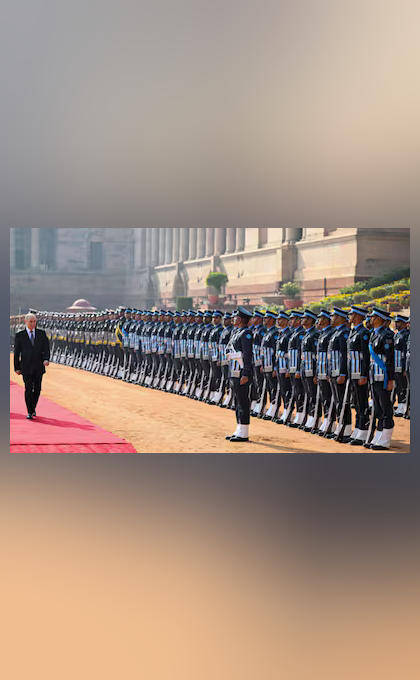
On a recent visit to India, Russian President Vladimir Putin was accorded a ceremonial 21-gun salute at Rashtrapati Bhavan, the official residence of the President of India. This honour, reserved for the highest offices of state, is a time-honoured tradition in India, where foreign heads of state and their families are welcomed with a 21-gun salute as a mark of respect and dignity. But have you ever wondered why foreign leaders receive a 21-gun salute in India, and what is the history behind this tradition?
The 21-gun salute is a ceremonial gesture that has its roots in the British era. During the colonial period, the British Empire used a variety of gun salutes to honour visiting dignitaries, with the number of guns fired indicating the level of respect and importance accorded to the visitor. The 21-gun salute was reserved for the most important visitors, including heads of state and royalty. This tradition was inherited by India after independence and has been continued to this day.
The 21-gun salute is a complex ceremony that involves a great deal of planning and coordination. The salute is typically fired by the Indian Army’s ceremonial units, such as the Presidential Bodyguard or the 61 Cavalry Regiment. The guns used for the salute are usually 25-pounder field guns or 105mm light field guns, which are capable of firing blank rounds. The salute is usually fired in a specific sequence, with the first gun firing at a precise moment, followed by the remaining guns at intervals of one second each.
The significance of the 21-gun salute lies in its symbolism. The number 21 is considered to be a sacred number in many cultures, representing the unity of mind, body, and spirit. In the context of the gun salute, the number 21 is believed to represent the highest form of respect and dignity that can be accorded to a visiting dignitary. The salute is also seen as a symbol of the host country’s commitment to peace and friendship, as the guns are fired without any projectiles, indicating that the visitor is coming in peace.
In India, the 21-gun salute is an integral part of the country’s traditional protocol for receiving foreign heads of state and their families. The salute is usually accompanied by other ceremonial gestures, such as the presentation of a guard of honour, the playing of the national anthems of both countries, and the exchange of gifts and diplomatic courtesies. The 21-gun salute is also an important part of India’s diplomatic protocol, as it helps to establish a positive and respectful tone for the visit and sets the stage for fruitful discussions and negotiations.
The 21-gun salute has been accorded to many foreign leaders visiting India over the years, including heads of state, prime ministers, and royalty. Some notable examples include former US President Barack Obama, who received a 21-gun salute during his visit to India in 2015, and former British Prime Minister David Cameron, who was accorded a 21-gun salute during his visit to India in 2013. The salute has also been accorded to royalty, including King Abdullah II of Jordan and Queen Elizabeth II of the United Kingdom.
In conclusion, the 21-gun salute is an important part of India’s traditional protocol for receiving foreign heads of state and their families. The salute has its roots in British-era practices and is a symbol of the country’s highest form of ceremonial respect. The 21-gun salute is a complex ceremony that involves a great deal of planning and coordination and is an integral part of India’s diplomatic protocol. Whether it is a head of state, a prime minister, or royalty, the 21-gun salute is a gesture of respect and dignity that is reserved for the most important visitors to India.
About the Author