Why do foreign leaders receive 21-gun salute in India?
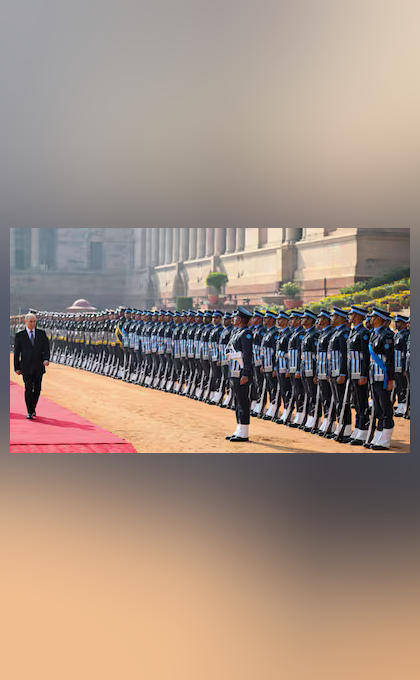
The ceremonial 21-gun salute is a time-honored tradition in India, reserved for the highest offices of state. Recently, Russian President Vladimir Putin received this esteemed honor at Rashtrapati Bhavan during his visit to India. The salute, which is accorded to foreign heads of state and their families as part of India’s traditional protocol, is a symbol of the country’s highest form of ceremonial respect. But have you ever wondered why foreign leaders receive a 21-gun salute in India, and what is the history behind this honor?
To understand the significance of the 21-gun salute, it is essential to delve into its history. The tradition of gun salutes dates back to the 17th century, when the British East India Company ruled India. During this period, the British would fire a series of gunshots to signal the arrival of a dignitary or to mark a significant event. The number of gunshots fired was determined by the rank of the dignitary, with higher-ranking officials receiving more gunshots.
When India gained independence from British rule in 1947, the country inherited many of the British-era practices, including the tradition of gun salutes. The 21-gun salute, in particular, was reserved for the highest offices of state, including the President of India and foreign heads of state. The number 21 was chosen because it was considered a symbol of the highest form of ceremonial respect. The salute is typically fired from a battery of field guns, with each gun firing a single shot in succession.
The 21-gun salute is an integral part of India’s traditional protocol, and it is accorded to foreign leaders as a mark of respect and hospitality. The salute is usually fired at Rashtrapati Bhavan, the official residence of the President of India, or at other designated locations. The ceremony is typically attended by high-ranking government officials, including the President and the Prime Minister of India.
The 21-gun salute is not just a ceremonial gesture; it is also a symbol of the strong diplomatic ties between India and the visiting country. The salute is often accompanied by other ceremonial honors, including a guard of honor and a reception at Rashtrapati Bhavan. The ceremony is designed to showcase India’s rich cultural heritage and its commitment to international diplomacy.
In recent years, the 21-gun salute has been accorded to several foreign leaders, including US President Barack Obama, Chinese President Xi Jinping, and French President Emmanuel Macron. The salute is a reminder of India’s rich history and its commitment to upholding the traditions of the past.
The 21-gun salute is also a symbol of India’s military might and its ability to defend its sovereignty. The salute is fired by the Indian Army’s ceremonial units, which are trained to perform the ceremony with precision and accuracy. The ceremony is a testament to the professionalism and discipline of the Indian Armed Forces.
In conclusion, the 21-gun salute is a time-honored tradition in India, reserved for the highest offices of state. The salute is a symbol of the country’s highest form of ceremonial respect and is accorded to foreign leaders as a mark of respect and hospitality. The tradition of gun salutes dates back to the British era, and the 21-gun salute has been inherited by India as part of its traditional protocol. The salute is an integral part of India’s diplomatic ceremonies and is a reminder of the country’s rich cultural heritage and its commitment to international diplomacy.
About the Author