When you meet an Indian and a snake, kill the Indian first: Norway leader in Epstein files email
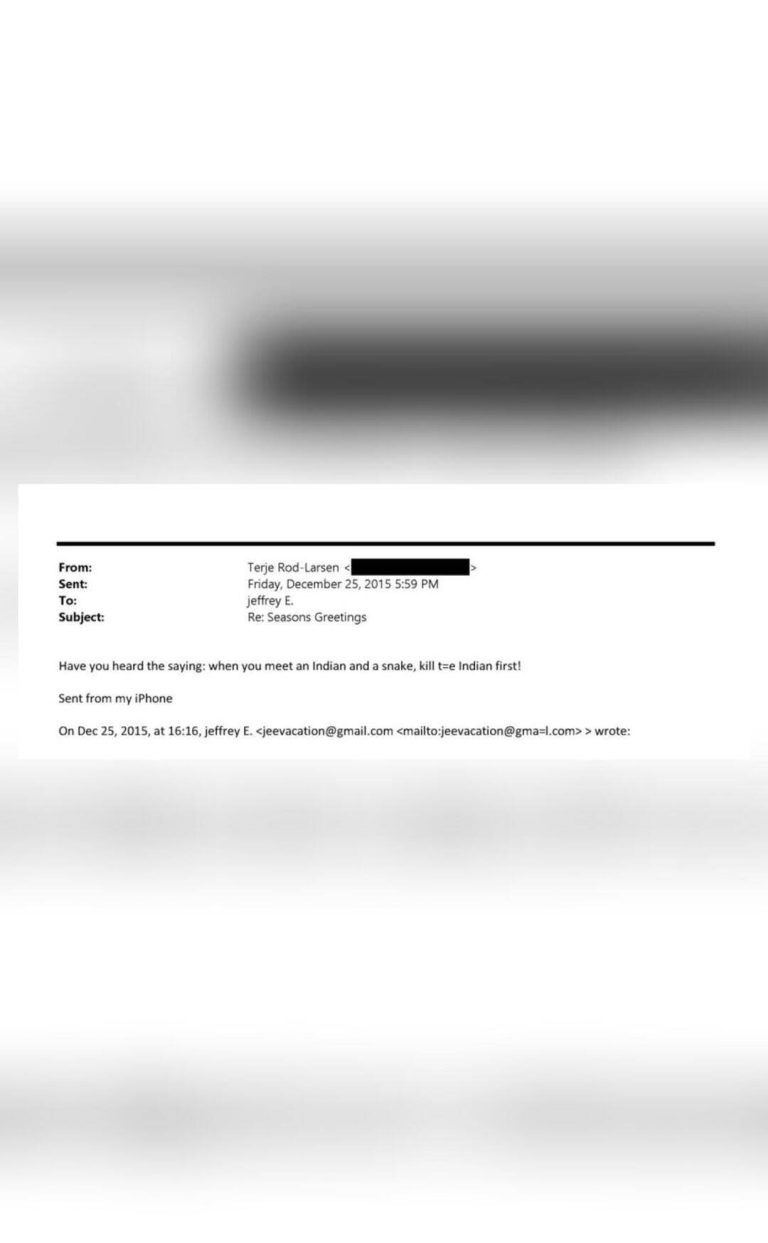
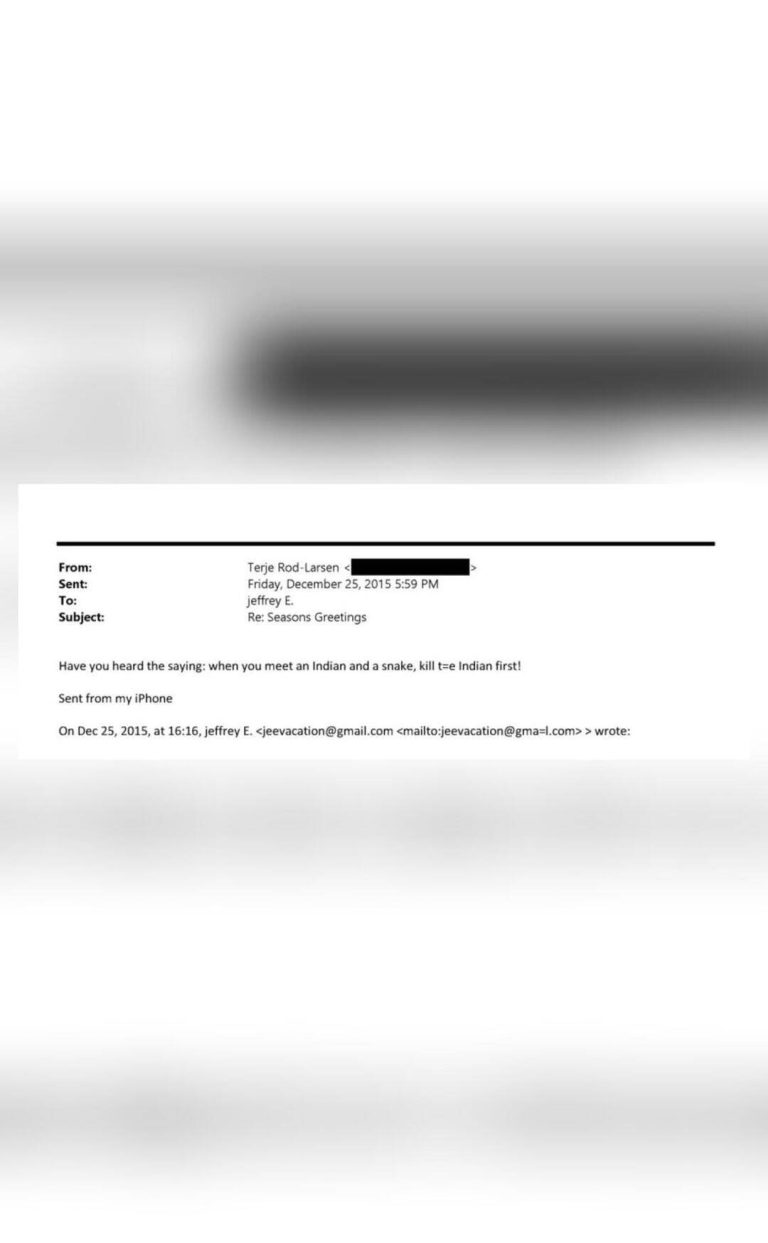
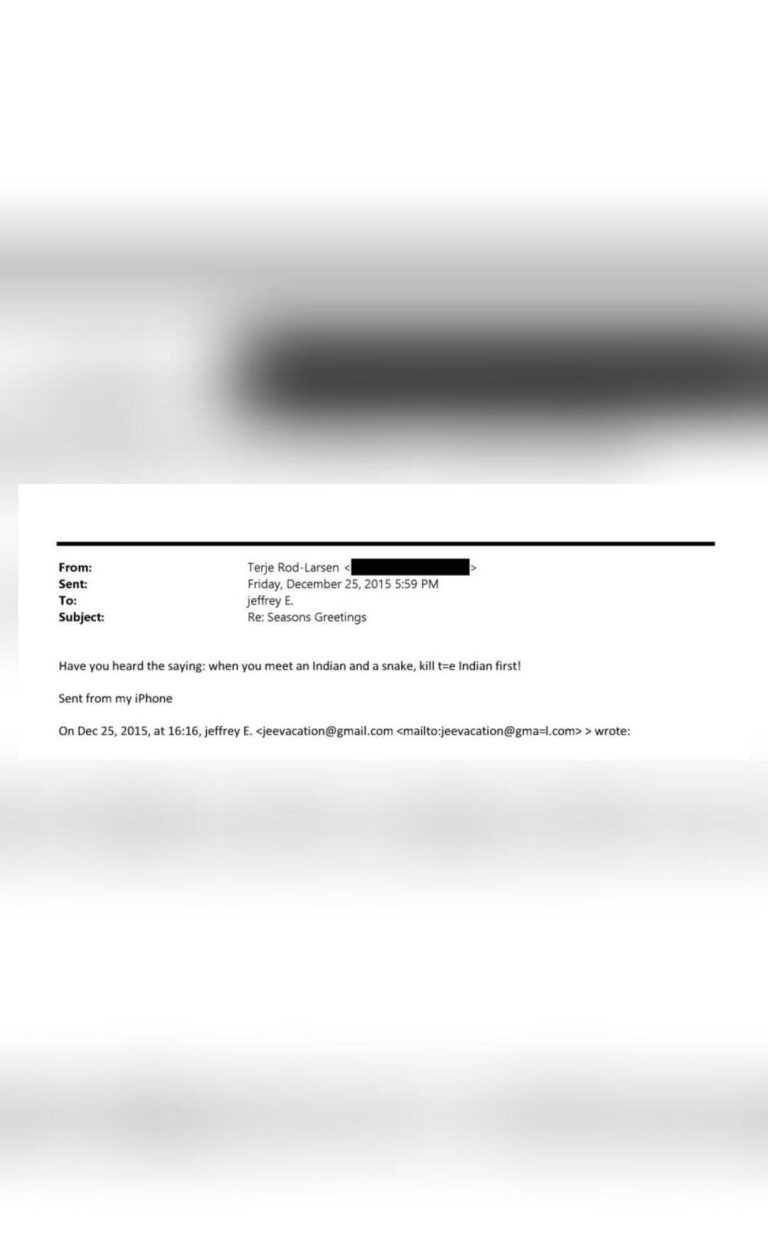
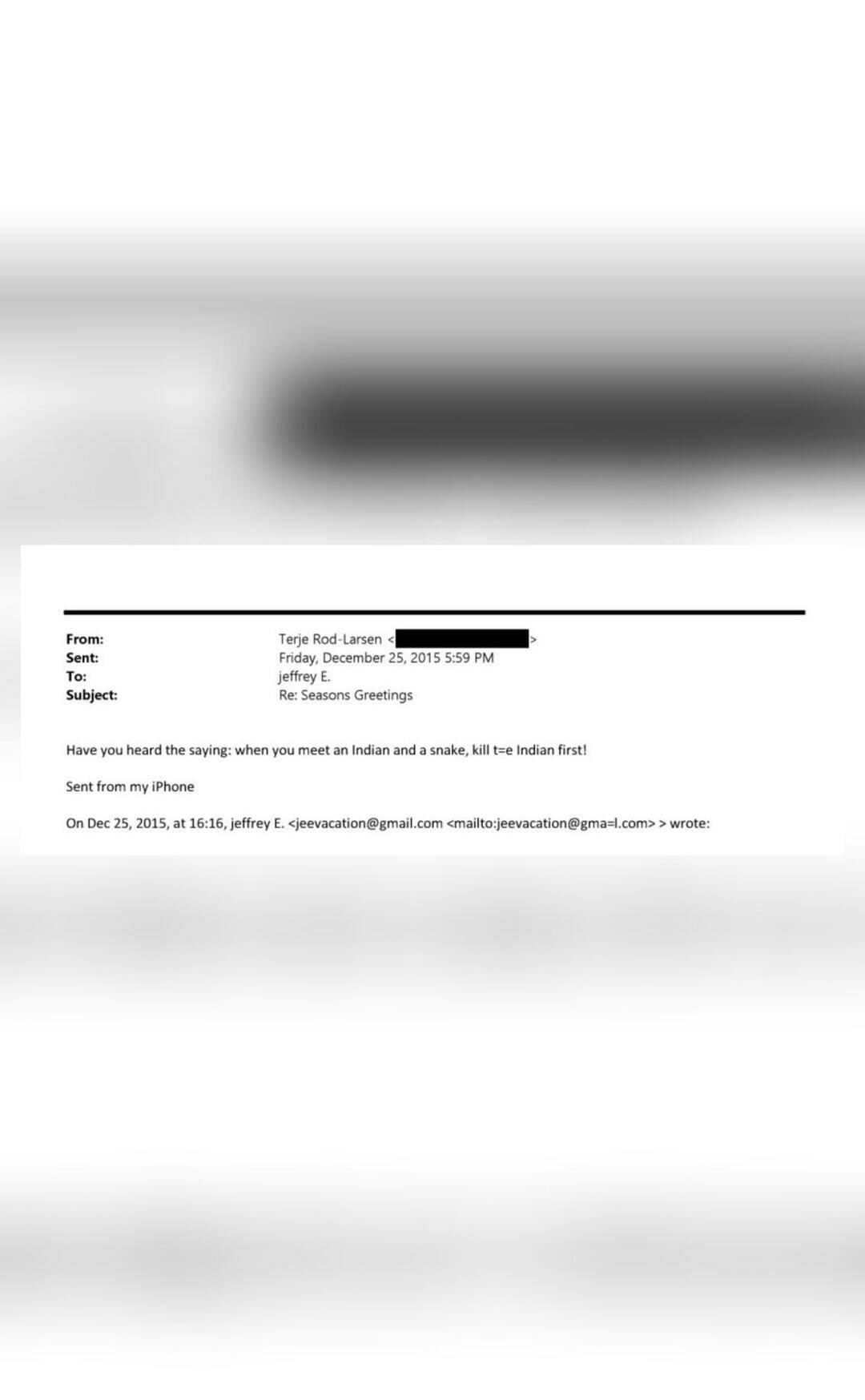
The recent release of the Epstein files has sent shockwaves across the globe, revealing a web of secrets and scandals that involve some of the most powerful and influential individuals in the world. Among the numerous emails and documents that have been made public, one particular email has sparked outrage and condemnation on social media. The email, sent by Norwegian diplomat Terje Rod-Larsen to convicted sex offender Jeffrey Epstein, contains a disturbing and derogatory remark about Indians.
The email quotes a saying that is both racist and violent: “Have you heard the saying: when you meet an Indian and a snake, kill the Indian first.” The fact that a high-ranking diplomat like Terje Rod-Larsen would casually share such a remark with someone like Jeffrey Epstein, who has been convicted of sex trafficking and other heinous crimes, is appalling and raises serious questions about the diplomat’s character and judgment.
The reaction on social media has been swift and furious, with many users expressing their outrage and disgust at the diplomat’s remark. One user wrote, “Aah Norwegians, the famously racist white lot,” highlighting the perception that Norway, a country known for its progressive values and social welfare system, has a darker side when it comes to issues of race and diversity. Others have called for Terje Rod-Larsen to be held accountable for his actions and for Norway to take concrete steps to address the issue of racism and bigotry within its diplomatic corps.
The incident has also sparked a wider conversation about the prevalence of racism and xenophobia in Norway and other European countries. While Norway is often seen as a beacon of tolerance and inclusivity, the reality is that racism and discrimination are pervasive and entrenched in many aspects of Norwegian society. From the treatment of migrant workers to the marginalization of indigenous communities, Norway has a long way to go in terms of addressing its own internal biases and prejudices.
The fact that a diplomat like Terje Rod-Larsen would feel comfortable sharing a racist joke with someone like Jeffrey Epstein is a symptom of a larger problem. It suggests that there is a culture of impunity and privilege within the diplomatic corps, where individuals feel that they can get away with making derogatory comments about marginalized communities without facing any consequences.
The Epstein files have already revealed a shocking array of secrets and scandals, from the sex trafficking of minors to the corrupting influence of wealth and power. But the email from Terje Rod-Larsen is a reminder that the problem of racism and bigotry is not just limited to the United States or other countries, but is a global issue that requires a global response.
In the wake of this incident, Norway and other countries must take concrete steps to address the issue of racism and xenophobia within their diplomatic corps and wider society. This includes providing training and education on diversity and inclusion, as well as holding individuals accountable for their actions. It also requires a fundamental shift in the way that we think about and approach issues of race and diversity, recognizing that racism and bigotry are not just individual prejudices, but are also embedded in institutional and systemic structures.
As the world grapples with the fallout from the Epstein files, it is clear that there is much work to be done in terms of addressing the deep-seated issues of racism, sexism, and corruption that have been revealed. The email from Terje Rod-Larsen is just one example of the many ways in which power and privilege can be used to perpetuate harm and injustice. But it is also a reminder that we have the power to create change and to build a more just and equitable world, one that values diversity and inclusivity and rejects racism and bigotry in all its forms.
About the Author