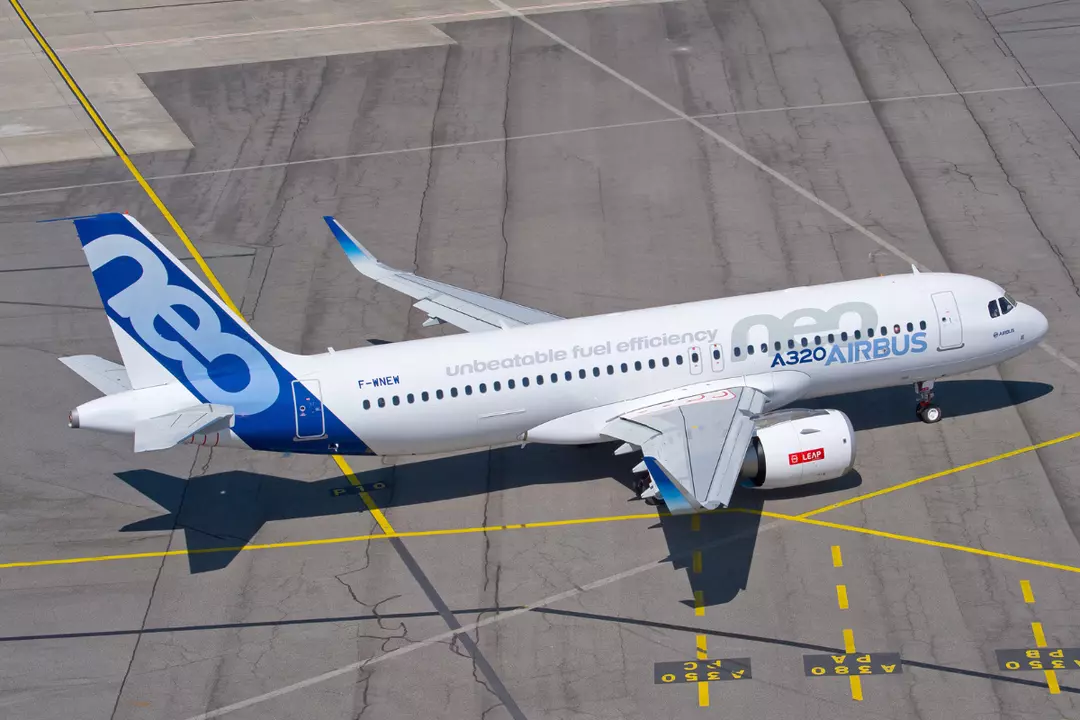
What is the Airbus A320 software issue and why are 6,000 planes grounded?
The aviation industry has been rocked by a recent software issue affecting the Airbus A320, one of the most widely used commercial aircraft in the world. In a shocking incident, an A320 aircraft suddenly nosedived in the US without any pilot input, injuring several passengers on board. The cause of this alarming event has been attributed to a software issue, specifically related to the aircraft’s electronic flight control system. As a result, Airbus has taken the drastic step of recalling 6,000 A320 jets, leaving airlines and passengers around the world wondering what exactly is going on.
At the heart of the issue is the aircraft’s Electronic Flight Control System (EFCS), which translates pilot commands into movements of the wings and tail. The system is designed to provide a safe and stable flight experience, but in this case, it appears to have malfunctioned due to external factors. According to experts, the problem lies in the way the system responds to solar radiation, which can release charged particles that disrupt aircraft electronics.
The incident in question occurred when an A320 aircraft, operated by a US-based airline, suddenly plummeted without warning, causing injuries to several passengers. An investigation into the incident revealed that the cause of the sudden altitude loss was not a mechanical failure or pilot error, but rather a software issue related to the aircraft’s Elevator and Aileron Computer (ELAC) system. The ELAC system is a critical component of the EFCS, responsible for controlling the movement of the aircraft’s elevators and ailerons.
It appears that the ELAC system was corrupted by solar radiation, which caused it to malfunction and send incorrect signals to the aircraft’s control surfaces. This resulted in the aircraft’s sudden and unexplained nosedive, putting the lives of everyone on board at risk. The incident has raised serious concerns about the safety and reliability of the A320, and has prompted Airbus to take immediate action to address the issue.
The recall of 6,000 A320 jets is a significant development, and one that will have far-reaching consequences for the aviation industry. Airlines that operate the A320 will be forced to ground their fleets, at least temporarily, while the software issue is being addressed. This will likely cause disruptions to flight schedules, and may even lead to cancellations and delays.
So, what exactly is the software issue that has led to this massive recall? According to Airbus, the problem lies in the way the ELAC system responds to solar radiation. It appears that the system is not adequately protected against the effects of solar radiation, which can cause the system to malfunction. The company has announced that it will be implementing a software update to fix the issue, but the process is likely to take several weeks, if not months.
In the meantime, airlines and regulatory authorities are taking a cautious approach, grounding the affected aircraft as a precautionary measure. The US Federal Aviation Administration (FAA) has issued a statement saying that it is working closely with Airbus to address the issue, and has advised airlines to take necessary precautions to ensure the safety of their passengers.
The incident has also raised questions about the vulnerability of modern aircraft to external factors such as solar radiation. As aircraft become increasingly reliant on complex electronic systems, the risk of malfunction due to external factors increases. This highlights the need for aircraft manufacturers to prioritize the development of robust and reliable systems that can withstand the stresses of flight, including exposure to solar radiation.
In conclusion, the Airbus A320 software issue is a serious concern that has significant implications for the aviation industry. The recall of 6,000 A320 jets is a major development, and one that will have far-reaching consequences for airlines, passengers, and the industry as a whole. As the investigation into the incident continues, it is clear that the safety and reliability of the A320 must be prioritized, and that aircraft manufacturers must take steps to address the vulnerabilities of modern aircraft to external factors.
For more information on this developing story, please visit: https://www.firstpost.com/explainers/airbus-a320-planes-recall-solar-radiation-disruption-software-issue-13954984.html/amp
About the Author