Violent Protest Breaks Out in Pak Over Demand of Separate ‘Sindhu Desh’
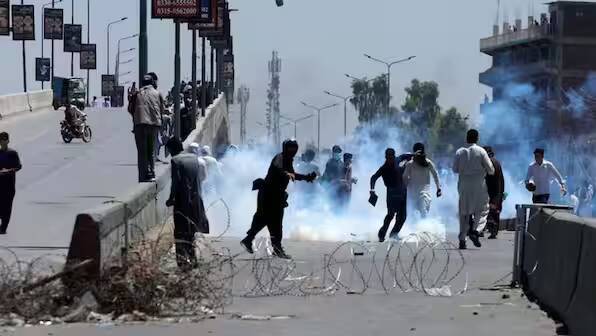
In a shocking turn of events, a protest demanding a separate ‘Sindhu Desh’ turned violent in Pakistan’s Karachi, leaving a trail of destruction and chaos in its wake. The protest, which was organized by the Jiye Sindh Muttahida Mahaz (JSSM), a nationalist group that has been advocating for the rights of the Sindhi people, quickly took a turn for the worse as stone pelting and clashes with police were reported.
The protest, which was attended by hundreds of Sindhis, began peacefully, with participants raising slogans of ‘Azadi’ (freedom) and ‘Pakistan Murdabad’ (death to Pakistan). However, things took a turn for the worse when the authorities redirected the rally’s path, which made the protesters angry. The redirection of the rally’s path was seen as an attempt by the government to suppress the voices of the Sindhi people, and it sparked a wave of anger and frustration among the protesters.
As the situation spiralled out of control, the protesters began to throw stones at the police, who responded with tear gas and baton charges. The clashes between the protesters and the police resulted in several injuries, and many protesters were arrested by the authorities. The violence also caused significant damage to property, with several vehicles and buildings being vandalized.
The demand for a separate ‘Sindhu Desh’ is not a new one, and it has been a long-standing issue in Pakistan. The Sindhi people have been complaining of discrimination and marginalization at the hands of the Pakistani government, and many feel that their rights and interests are not being represented. The JSSM, which is leading the charge for a separate ‘Sindhu Desh’, has been gaining popularity in recent years, and its message of Sindhi nationalism has resonated with many young people in the province.
The violence in Karachi is not an isolated incident, and it is part of a larger pattern of unrest and discontent in Pakistan. In recent years, the country has seen a surge in nationalist movements, with many ethnic and linguistic groups demanding greater autonomy and rights. The Balochistan province, which is located in the southwestern part of the country, has been a hotbed of separatist activity, with many Baloch people demanding independence from Pakistan.
The Pakistani government has been struggling to respond to these nationalist movements, and its heavy-handed approach has often exacerbated the situation. The use of force against protesters has only served to fuel the fires of discontent, and it has created a sense of mistrust and alienation among many Pakistanis. The government’s failure to address the grievances of the Sindhi people and other ethnic groups has created a sense of desperation and frustration, which is now boiling over into violence.
The international community has been watching the situation in Pakistan with growing concern, and many countries have called on the government to respect the rights of its citizens and to address their grievances through dialogue and negotiation. The United States, the European Union, and other major powers have all urged the Pakistani government to take a more nuanced and sensitive approach to the nationalist movements, and to work towards finding a peaceful and democratic solution to the country’s problems.
As the situation in Karachi continues to unfold, it is clear that the demand for a separate ‘Sindhu Desh’ is not going away anytime soon. The Sindhi people are determined to fight for their rights and to assert their identity, and they will not be silenced or intimidated by the government. The Pakistani government must recognize the legitimacy of the Sindhi people’s demands and work towards finding a solution that addresses their grievances and respects their rights.
In conclusion, the violent protest in Karachi is a wake-up call for the Pakistani government, and it highlights the need for a more nuanced and sensitive approach to the nationalist movements in the country. The government must recognize the legitimacy of the Sindhi people’s demands and work towards finding a solution that addresses their grievances and respects their rights. The international community must also play a role in promoting peace and stability in Pakistan, and in encouraging the government to respect the rights of its citizens.
About the Author