Violent Protest Breaks Out in Pak Over Demand of Separate ‘Sindhu Desh’
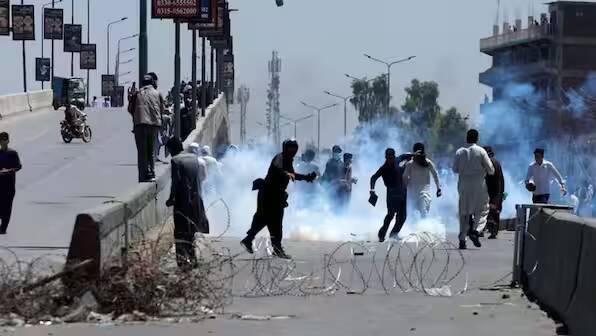
The streets of Karachi, Pakistan, witnessed a violent protest recently as a large group of Sindhis gathered to demand a separate ‘Sindhu Desh’. The protest, which was organized under the banner of Jiye Sindh Muttahida Mahaz (JSSM), quickly turned violent as stone pelting and clashes with police were reported. The protesters, who were demanding freedom and an independent state, raised slogans of ‘Azadi’ and ‘Pakistan Murdabad’, which translates to ‘freedom’ and ‘death to Pakistan’ respectively.
According to reports, the authorities had redirected the rally’s path, which made the protesters angry, forcing them to throw stones at the police. The situation quickly spiralled out of control, with the police trying to disperse the crowd using tear gas and baton charges. The protesters, however, remained defiant, and the clashes continued for several hours, resulting in injuries to several people, including police personnel.
The demand for a separate ‘Sindhu Desh’ is not a new one, and it has been a long-standing issue in Pakistan. The Sindhi people have been seeking greater autonomy and independence from the Pakistani government, which they claim has been exploiting their resources and suppressing their culture. The JSSM, which is a Sindhi nationalist organization, has been at the forefront of this movement, and its leaders have been vocal about their demands for a separate state.
The protest in Karachi is just the latest in a series of violent demonstrations that have taken place in Pakistan in recent months. Earlier, there were reports of violent protests in Balochistan, where the Baloch people were demanding greater autonomy and independence from the Pakistani government. The Baloch people have been seeking self-rule for decades, and their movement has been marked by violence and bloodshed.
The demands for a separate ‘Sindhu Desh’ and an independent Balochistan are not just limited to these two regions. There are several other ethnic and nationalist movements in Pakistan that are seeking greater autonomy and independence from the government. The Pashtun people, who live in the northwestern region of Khyber Pakhtunkhwa, have also been seeking greater autonomy and independence, and there have been reports of violent protests in the region.
The Pakistani government has been trying to suppress these movements, and has been accused of human rights abuses and violence against protesters. The government has also been trying to promote a sense of nationalism and unity among the different ethnic and nationalist groups, but so far, its efforts have been unsuccessful.
The demand for a separate ‘Sindhu Desh’ and an independent Balochistan is a complex issue, and it has its roots in the country’s history and politics. Pakistan was created in 1947 as a separate homeland for Muslims, but it has always been a diverse country with different ethnic and nationalist groups. The Sindhi people, who are the indigenous people of Sindh, have always felt that they have been marginalized and suppressed by the Pakistani government.
The JSSM, which is leading the movement for a separate ‘Sindhu Desh’, claims that the Sindhi people have been exploited and oppressed by the Pakistani government, and that they have been denied their basic rights and freedoms. The organization has been demanding greater autonomy and independence for Sindh, and has been seeking to promote Sindhi culture and language.
The Pakistani government, however, has been opposed to the idea of a separate ‘Sindhu Desh’, and has been trying to suppress the movement. The government claims that the demand for a separate state is unconstitutional and against the interests of the country. The government has also been trying to promote a sense of nationalism and unity among the different ethnic and nationalist groups, but so far, its efforts have been unsuccessful.
The violent protest in Karachi is a reflection of the deep-seated tensions and conflicts that exist in Pakistan. The country has been plagued by violence and instability for decades, and the demand for a separate ‘Sindhu Desh’ and an independent Balochistan is just one of the many challenges that the government faces. The government needs to address the grievances of the different ethnic and nationalist groups, and needs to promote a sense of inclusivity and diversity.
In conclusion, the violent protest in Karachi over the demand of a separate ‘Sindhu Desh’ is a complex issue that has its roots in the country’s history and politics. The Sindhi people have been seeking greater autonomy and independence from the Pakistani government, and their demands are not likely to go away anytime soon. The Pakistani government needs to address the grievances of the different ethnic and nationalist groups, and needs to promote a sense of inclusivity and diversity. The government also needs to ensure that the rights and freedoms of all citizens are protected, and that the rule of law is upheld.
About the Author