Violent Protest Breaks Out in Pak Over Demand of Separate ‘Sindhu Desh’
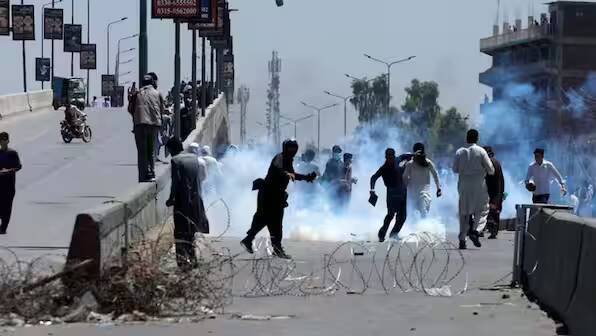
In a shocking turn of events, a protest demanding a separate ‘Sindhu Desh’ turned violent in Pakistan’s Karachi, leaving a trail of destruction and chaos in its wake. The protest, which was organized by the Jiye Sindh Muttahida Mahaz (JSSM), a Sindhi nationalist group, saw thousands of Sindhis taking to the streets, raising slogans of ‘Azadi’ (freedom) and ‘Pakistan Murdabad’ (death to Pakistan). The situation took a turn for the worse when the authorities attempted to redirect the rally’s path, which angered the protesters, forcing them to throw stones at the police.
The protest, which was initially peaceful, began to take a violent turn when the police attempted to divert the rally’s route. The protesters, who were determined to march through the city, refused to be deterred, and clashes broke out between the two groups. Stone pelting and sloganeering became the order of the day, as the protesters expressed their anger and frustration at the authorities. The police, in an attempt to maintain law and order, responded with tear gas and baton charges, but the situation continued to deteriorate.
The demand for a separate ‘Sindhu Desh’ is not a new one, and has been a longstanding issue in Pakistan. The Sindhi nationalist movement, which has been gaining momentum in recent years, seeks to create a separate homeland for the Sindhi people, who are the indigenous inhabitants of the Sindh province. The movement claims that the Sindhi people have been marginalized and oppressed by the Pakistani state, and that their rights and interests have been ignored.
The Jiye Sindh Muttahida Mahaz (JSSM), which is leading the protest, is a Sindhi nationalist group that has been at the forefront of the movement for a separate ‘Sindhu Desh’. The group, which was formed in 2018, has been organizing protests and rallies across the Sindh province, demanding greater autonomy and rights for the Sindhi people. The group’s leader, who wishes to remain anonymous, stated that the protest was a peaceful one, and that the violence was sparked by the police’s attempt to divert the rally’s route.
“We were marching peacefully, raising slogans and demanding our rights, when the police suddenly attempted to divert our route,” the leader said. “This angered our protesters, who felt that their rights were being ignored. The police responded with tear gas and baton charges, which only added to the chaos.”
The situation in Karachi is tense, with reports of injuries and arrests flooding in. The authorities have imposed a curfew in the city, and have warned protesters to stay off the streets. The Pakistani government has also issued a statement, condemning the violence and urging the protesters to engage in dialogue.
The demand for a separate ‘Sindhu Desh’ is not an isolated issue, and is part of a larger narrative of nationalist movements across Pakistan. The country has seen a surge in nationalist movements in recent years, with groups such as the Balochistan Liberation Army and the Pashtun Tahafuz Movement demanding greater autonomy and rights for their respective communities. The Pakistani government has been accused of responding to these movements with force, rather than engaging in dialogue and addressing the underlying issues.
As the situation in Karachi continues to unfold, it remains to be seen how the Pakistani government will respond to the demands of the Sindhi nationalist movement. The government has a long history of suppressing nationalist movements, and it is likely that the current protest will be met with a similar response. However, the Sindhi nationalist movement is determined to continue its struggle, and is unlikely to be deterred by the government’s attempts to suppress it.
In conclusion, the violent protest in Karachi is a symptom of a larger issue, one that requires a nuanced and thoughtful response from the Pakistani government. The demand for a separate ‘Sindhu Desh’ is not a new one, and has been a longstanding issue in Pakistan. The government must engage in dialogue with the Sindhi nationalist movement, and address the underlying issues that are driving the protest. Only then can a lasting solution be found, one that respects the rights and interests of all parties involved.
About the Author