Violent Protest Breaks Out in Pak Over Demand of Separate ‘Sindhu Desh’
In a shocking turn of events, a protest demanding a separate ‘Sindhu Desh’ turned violent in Pakistan’s Karachi, leaving a trail of destruction and chaos in its wake. The protest, which was organized by the Jiye Sindh Muttahida Mahaz (JSSM), a Sindhi nationalist group, saw thousands of Sindhis come together to raise their voices against the Pakistani government and demand independence for the Sindh region.
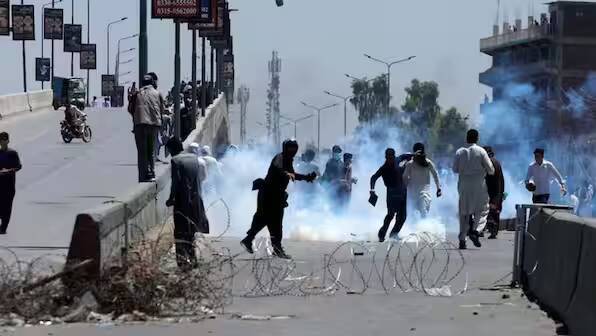
As the protesters marched through the streets of Karachi, they raised slogans of ‘Azadi’ (freedom) and ‘Pakistan Murdabad’ (death to Pakistan), which were met with a heavy-handed response from the police. The situation quickly escalated into violence, with reports of stone pelting and clashes between the protesters and the police. The authorities, in an attempt to contain the situation, redirected the rally’s path, which only served to further enrage the protesters, forcing them to throw stones at the police.
The demand for a separate ‘Sindhu Desh’ is not a new one, and has been a long-standing issue in the Sindh region. The Sindhi people have long felt marginalized and oppressed by the Pakistani government, which they claim has exploited their resources and ignored their needs. The JSSM, which is leading the charge for a separate Sindh, has been at the forefront of the movement, organizing protests and rallies to raise awareness about the issue.
The violence that broke out in Karachi is a testament to the deep-seated frustration and anger that the Sindhi people feel towards the Pakistani government. For decades, the Sindh region has been plagued by poverty, lack of development, and human rights abuses, which have only served to fuel the demand for independence. The Pakistani government, on the other hand, has been accused of using heavy-handed tactics to suppress the movement, including arrests, torture, and disappearances of Sindhi activists.
The demand for a separate ‘Sindhu Desh’ is not an isolated issue, and is part of a larger movement for independence in the region. The Balochistan region, which is located in the southwestern part of Pakistan, has also been witnessing a similar movement, with the Baloch people demanding independence from Pakistan. The Balochistan Liberation Army (BLA), a separatist group, has been waging a guerrilla war against the Pakistani government, which has resulted in a significant amount of violence and bloodshed in the region.
The Pakistani government has been accused of using military force to crush the independence movements in both Sindh and Balochistan, which has only served to further alienate the people of these regions. The government’s heavy-handed response to the protests has been widely criticized by human rights groups, which have called for restraint and dialogue to resolve the issue.
The international community has also been criticized for its silence on the issue, with many accusing it of turning a blind eye to the human rights abuses being committed by the Pakistani government. The United States, in particular, has been accused of being complicit in the Pakistani government’s actions, due to its strategic interests in the region.
As the situation in Karachi continues to unfold, it is clear that the demand for a separate ‘Sindhu Desh’ is not going to go away anytime soon. The Sindhi people are determined to fight for their rights and freedom, and are willing to take on the Pakistani government to achieve their goal. The Pakistani government, on the other hand, needs to take a long, hard look at its policies and actions, and engage in dialogue with the Sindhi people to find a peaceful solution to the issue.
In conclusion, the violent protest that broke out in Karachi over the demand for a separate ‘Sindhu Desh’ is a symptom of a larger problem that has been festering in the region for decades. The Pakistani government needs to take immediate action to address the grievances of the Sindhi people, and engage in dialogue to find a peaceful solution to the issue. The international community also needs to play its part, by speaking out against human rights abuses and supporting the Sindhi people in their struggle for freedom and independence.
About the Author