Violent Protest Breaks Out in Pak Over Demand of Separate ‘Sindhu Desh’
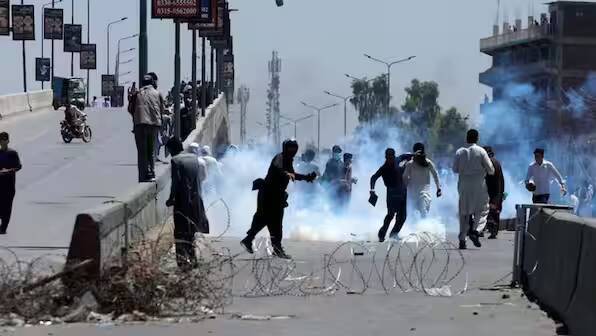
The streets of Karachi, Pakistan’s largest city, were filled with chaos and violence as a protest demanding a separate ‘Sindhu Desh’ turned ugly. The protest, which was organized by the Jiye Sindh Muttahida Mahaz (JSSM), a Sindhi nationalist group, saw thousands of Sindhis coming together to raise their voices for independence from Pakistan. The protesters, who were chanting slogans of ‘Azadi’ (freedom) and ‘Pakistan Murdabad’ (down with Pakistan), were met with resistance from the police, leading to violent clashes and stone pelting.
The protest, which was initially peaceful, took a turn for the worse when the authorities redirected the rally’s path, reportedly without warning. This move was seen as an attempt to suppress the protesters and limit their freedom of expression. The protesters, who felt that their rights were being violated, became angry and frustrated, leading to a violent outburst. Stones were thrown at the police, who responded with tear gas and baton charges.
The JSSM, which is a prominent Sindhi nationalist group, has been at the forefront of the movement for a separate ‘Sindhu Desh’. The group, which was formed in 2018, has been demanding independence for Sindh, which is one of the four provinces of Pakistan. The group’s leaders claim that Sindh has been exploited and oppressed by the Pakistani government, and that the only way to achieve true freedom and prosperity is through independence.
The demand for a separate ‘Sindhu Desh’ is not a new one. The Sindhi nationalist movement has been active for decades, with various groups and parties demanding greater autonomy or independence for Sindh. However, the movement has gained momentum in recent years, with many Sindhis feeling that their rights and interests are being ignored by the Pakistani government.
The protest in Karachi is not an isolated incident. There have been similar protests and demonstrations in other parts of Sindh, with many Sindhis expressing their frustration and anger at the Pakistani government. The situation has been further complicated by the fact that the Pakistani government has been accused of human rights abuses and repression in Sindh, with many Sindhis being arrested, tortured, and killed by the security forces.
The Pakistani government has responded to the protests by claiming that the demand for a separate ‘Sindhu Desh’ is a threat to the country’s unity and integrity. The government has also accused the JSSM and other Sindhi nationalist groups of being separatist and anti-Pakistani. However, the Sindhi nationalist groups argue that they are simply demanding their right to self-determination and freedom, which is guaranteed by the United Nations.
The situation in Sindh is complex and multifaceted, with many different factors and interests at play. However, one thing is clear: the demand for a separate ‘Sindhu Desh’ is not going away anytime soon. The Sindhi nationalist movement is gaining momentum, and it is likely that we will see more protests and demonstrations in the coming days and weeks.
As the situation in Sindh continues to unfold, it is essential to understand the underlying causes of the conflict. The demand for a separate ‘Sindhu Desh’ is not just a matter of nationalist sentiment; it is also a response to the economic, social, and cultural marginalization of the Sindhi people. Sindh is one of the most populous and resource-rich provinces of Pakistan, but it has been neglected and exploited by the Pakistani government.
The Sindhi people have been denied their basic rights and freedoms, including the right to language, culture, and self-governance. The Pakistani government has imposed Urdu as the official language, despite the fact that Sindhi is the mother tongue of the vast majority of the population. The government has also suppressed Sindhi culture and identity, promoting instead a dominant Pakistani narrative that erases the history and heritage of the Sindhi people.
The demand for a separate ‘Sindhu Desh’ is also a response to the economic exploitation of Sindh. The province is rich in natural resources, including oil, gas, and coal, but the benefits of these resources have been largely accrued by the Pakistani government and foreign corporations. The Sindhi people have been left with little to no control over their own resources, and have been forced to live in poverty and deprivation.
In conclusion, the violent protest in Karachi is a symptom of a deeper problem. The demand for a separate ‘Sindhu Desh’ is a response to the marginalization, exploitation, and oppression of the Sindhi people. The Pakistani government must listen to the demands of the Sindhi nationalist movement and address the underlying causes of the conflict. This includes recognizing the rights of the Sindhi people to language, culture, and self-governance, and ensuring that the benefits of Sindh’s natural resources are shared equitably among the population.
About the Author