Violent protest breaks out in Pak over demand of separate ‘Sindhu Desh’
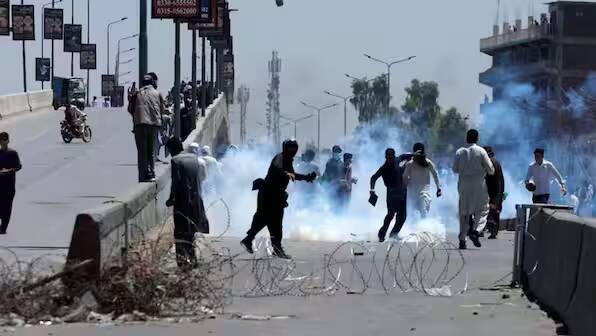
In a shocking turn of events, a protest demanding a separate ‘Sindhu Desh’ turned violent in Pakistan’s Karachi. The protest, which was organized by the Jiye Sindh Muttahida Mahaz (JSSM), saw thousands of Sindhis coming together to raise their voices against the Pakistani government. The protesters, who were chanting slogans of ‘Azadi’ and ‘Pakistan Murdabad’, were met with resistance from the police, leading to clashes and stone pelting.
According to reports, the authorities had redirected the rally’s path, which made the protesters angry, forcing them to throw stones at the police. The situation quickly escalated, with the police responding with tear gas and baton charges. The violence resulted in several injuries, with both protesters and police personnel being hurt.
The demand for a separate ‘Sindhu Desh’ is not a new one. The Sindhi nationalist movement has been gaining momentum in recent years, with many Sindhis feeling that they are being marginalized and oppressed by the Pakistani government. The JSSM, which is leading the movement, has been demanding greater autonomy for the province of Sindh, as well as the right to self-determination.
The protest in Karachi is the latest in a series of demonstrations and rallies that have taken place across Sindh in recent months. The movement has gained significant traction, with many Sindhis coming out to support the cause. The protests have also been marked by violence, with clashes between protesters and police becoming increasingly common.
The Pakistani government has been facing criticism for its handling of the situation. Many have accused the government of using excessive force to quell the protests, and of ignoring the legitimate demands of the Sindhi people. The government has responded by saying that it is committed to maintaining law and order, and that it will not tolerate any form of violence or extremism.
The demand for a separate ‘Sindhu Desh’ is not just a matter of regional identity, but also has significant implications for the future of Pakistan. The country is already facing significant challenges, including a struggling economy, a fragile political system, and a rising threat from extremist groups. The addition of a separatist movement in Sindh has the potential to further destabilize the country, and could have far-reaching consequences for the region.
The international community has been watching the situation in Sindh with interest. Many countries, including India, have been critical of Pakistan’s human rights record, and have called for greater autonomy for the province of Sindh. The Indian government has also been accused of supporting the Sindhi nationalist movement, although this has been denied by both India and the JSSM.
In recent years, the Balochistan province in Pakistan has also seen a similar separatist movement. The Baloch nationalist movement has been demanding greater autonomy and self-determination, and has been marked by violence and clashes with the Pakistani military. The situation in Balochistan has been described as a “humanitarian crisis”, with many Baloch people facing displacement, torture, and extrajudicial killings.
The protests in Sindh and Balochistan are a symptom of a larger problem in Pakistan. The country has a long history of marginalizing and oppressing its minority groups, including the Sindhis, Baloch, and Pashtuns. The Pakistani government has been accused of using force and coercion to maintain its control over these regions, and of ignoring the legitimate demands of the people.
In conclusion, the violent protest in Karachi is a wake-up call for the Pakistani government. The demand for a separate ‘Sindhu Desh’ is a legitimate one, and the government must take steps to address the grievances of the Sindhi people. The use of force and coercion is not a solution, and will only serve to further alienate the people of Sindh. The Pakistani government must engage in dialogue with the JSSM and other Sindhi nationalist groups, and work towards finding a peaceful solution to the crisis.
The international community must also play a role in supporting the people of Sindh. The United Nations and other human rights organizations must pressure the Pakistani government to respect the human rights of the Sindhi people, and to grant them greater autonomy and self-determination. The world cannot afford to ignore the crisis in Sindh, and must work towards finding a peaceful solution to the conflict.
About the Author