Violent protest breaks out in Pak over demand of separate ‘Sindhu Desh’
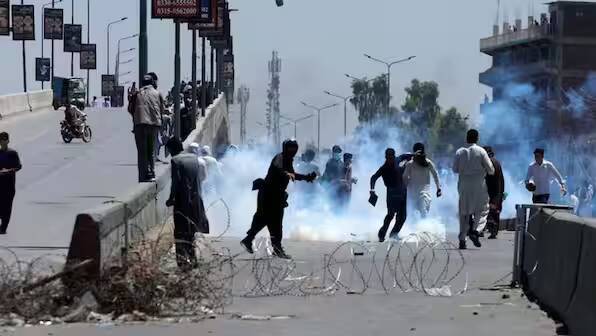
In a shocking turn of events, a protest demanding a separate ‘Sindhu Desh’ turned violent in Pakistan’s Karachi, leaving a trail of chaos and destruction in its wake. The protest, which was organized by the Jiye Sindh Muttahida Mahaz (JSSM), a Sindhi nationalist party, saw thousands of protesters take to the streets, raising slogans of ‘Azadi’ (freedom) and ‘Pakistan Murdabad’ (down with Pakistan). The situation quickly escalated into violence, with reports of stone pelting and clashes between protesters and police.
According to eyewitnesses, the protest began peacefully, with protesters marching through the streets of Karachi, waving flags and banners bearing the slogan ‘Sindhu Desh’. However, things took a turn for the worse when the authorities attempted to redirect the rally’s path, which was seen as an attempt to suppress the protest. This move angered the protesters, who responded by throwing stones at the police. The police, in turn, responded with tear gas and baton charges, leading to a full-blown clash between the two sides.
The JSSM, which is demanding a separate homeland for the Sindhi people, has been at the forefront of the protest movement. The party’s leaders have been vocal in their criticism of the Pakistani government, accusing it of neglecting the rights and interests of the Sindhi people. The demand for a separate ‘Sindhu Desh’ is not a new one, and has been a longstanding issue in Pakistani politics. However, the recent protests have brought the issue back into the spotlight, highlighting the deep-seated grievances and frustrations of the Sindhi people.
The protests in Karachi are not an isolated incident, but rather part of a larger trend of unrest and discontent in Pakistan. In recent years, the country has seen a surge in separatist movements, with various ethnic and regional groups demanding greater autonomy or independence. The Balochistan region, which borders Sindh, has been a hotbed of separatist activity, with the Baloch nationalist movement demanding independence from Pakistan.
The Pakistani government has been struggling to contain the separatist movements, with the military often being deployed to quell protests and maintain order. However, the use of force has only served to exacerbate the situation, with many protesters viewing the government’s actions as heavy-handed and oppressive. The situation is further complicated by the fact that many of the separatist movements have links to external actors, including India and other neighboring countries.
The demand for a separate ‘Sindhu Desh’ is rooted in a complex set of historical, cultural, and economic factors. The Sindhi people have a distinct cultural and linguistic identity, which is separate from the rest of Pakistan. The region of Sindh has also been a major contributor to Pakistan’s economy, with the province being home to several major industries, including textiles and agriculture. However, despite its economic importance, Sindh has long been neglected by the Pakistani government, with the province receiving limited investment and development.
The JSSM and other Sindhi nationalist parties have been demanding greater autonomy for Sindh, as well as a greater share of the country’s resources and wealth. However, the Pakistani government has been reluctant to grant these demands, fearing that it could lead to the break-up of the country. The government has instead sought to suppress the separatist movement, using a combination of force and coercion to maintain control.
The situation in Karachi is a stark reminder of the deep-seated divisions and tensions that exist within Pakistan. The country has long been plagued by ethnic and regional conflicts, which have been fueled by a range of factors, including poverty, inequality, and political marginalization. The demand for a separate ‘Sindhu Desh’ is just one example of the many separatist movements that exist in Pakistan, and highlights the need for the government to address the underlying grievances and concerns of the country’s diverse ethnic and regional groups.
In conclusion, the violent protest in Karachi is a wake-up call for the Pakistani government, highlighting the need for greater dialogue and engagement with the country’s diverse ethnic and regional groups. The demand for a separate ‘Sindhu Desh’ is a complex issue, rooted in a range of historical, cultural, and economic factors. However, rather than seeking to suppress the movement through force, the government should seek to address the underlying grievances and concerns of the Sindhi people, and work towards a more inclusive and equitable Pakistan.
About the Author