Violent protest breaks out in Pak over demand of separate ‘Sindhu Desh’
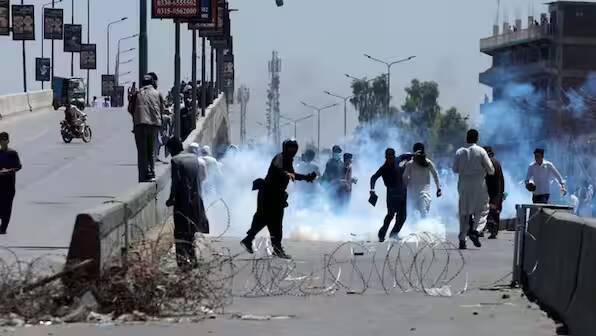
In a disturbing turn of events, a protest demanding a separate ‘Sindhu Desh’ turned violent in Pakistan’s Karachi, leaving a trail of destruction and chaos in its wake. The protest, which was organized by the Jiye Sindh Muttahida Mahaz (JSSM), a Sindhi nationalist group, saw thousands of Sindhis take to the streets, raising slogans of ‘Azadi’ (freedom) and ‘Pakistan Murdabad’ (death to Pakistan). The situation quickly spiralled out of control, with stone pelting and clashes with police reported from various parts of the city.
According to eyewitnesses, the protest began peacefully, with participants gathering at a designated location and marching through the streets, waving flags and banners. However, things took a turn for the worse when the authorities attempted to redirect the rally’s path, allegedly without prior notice or consultation with the organizers. This move was seen as a provocation by the protesters, who felt that their rights to free assembly and expression were being curtailed. In response, they began throwing stones at the police, who were forced to retaliate with tear gas and baton charges.
The violence that ensued was intense, with reports of injuries and arrests flooding in. The police, who were vastly outnumbered, struggled to maintain order, as the protesters, fueled by anger and a sense of injustice, continued to clash with them. The situation was further complicated by the fact that the protest was not just about demanding a separate ‘Sindhu Desh’, but also about highlighting the long-standing grievances of the Sindhi community, who feel marginalized and oppressed by the Pakistani state.
The demand for a separate ‘Sindhu Desh’ is not a new one, and has been a longstanding issue in Pakistani politics. The Sindhi nationalist movement, which has its roots in the pre-partition era, has been advocating for greater autonomy and rights for the Sindhi people, who are the indigenous inhabitants of the Sindh province. Over the years, the movement has gained momentum, with many Sindhis feeling that their culture, language, and identity are under threat from the dominant Punjabi and Urdu-speaking populations.
The JSSM, which is one of the main organizations behind the protest, has been at the forefront of the Sindhi nationalist movement. The group, which was founded by the late Bashir Khan Qureshi, a prominent Sindhi nationalist leader, has been advocating for a separate ‘Sindhu Desh’ since its inception. According to the JSSM, the creation of a separate Sindhi state is the only way to ensure the survival and prosperity of the Sindhi people, who are facing numerous challenges, including poverty, illiteracy, and lack of access to basic amenities.
The protest in Karachi is not an isolated incident, and is part of a larger trend of growing unrest and discontent in Pakistan’s Sindh province. In recent years, there have been numerous protests and demonstrations in Sindh, with Sindhi nationalists demanding greater autonomy, rights, and recognition. The Pakistani government, which has been struggling to contain the unrest, has been accused of using heavy-handed tactics to suppress the protests, including arrests, detentions, and violence against protesters.
The situation in Sindh is further complicated by the fact that the province is home to a number of other ethnic and nationalist groups, including the Mohajirs, who are Urdu-speaking migrants from India, and the Baloch, who are a separate ethnic group with their own distinct culture and language. The Baloch, who have been waging a long-running insurgency against the Pakistani state, have also been demanding greater autonomy and rights, and have been accused of carrying out numerous attacks against Pakistani security forces.
In conclusion, the violent protest in Karachi is a symptom of a larger problem, one that requires urgent attention and action from the Pakistani government. The demand for a separate ‘Sindhu Desh’ is not just a fringe issue, but a legitimate concern that reflects the deep-seated grievances and aspirations of the Sindhi people. Rather than trying to suppress the protests through force, the government needs to engage with the Sindhi nationalist movement and address their concerns through dialogue and negotiation. This includes recognizing the rights of the Sindhi people to self-determination, promoting their culture and language, and providing them with greater autonomy and representation in the Pakistani state.
As the situation in Sindh continues to simmer, it is essential that the international community takes note of the developments and offers its support to the Sindhi people in their struggle for rights and recognition. The creation of a separate ‘Sindhu Desh’ may be a distant dream, but it is one that reflects the aspirations and desires of a people who have been marginalized and oppressed for far too long.
About the Author