Violent Protest Breaks Out in Pak Over Demand of Separate ‘Sindhu Desh’
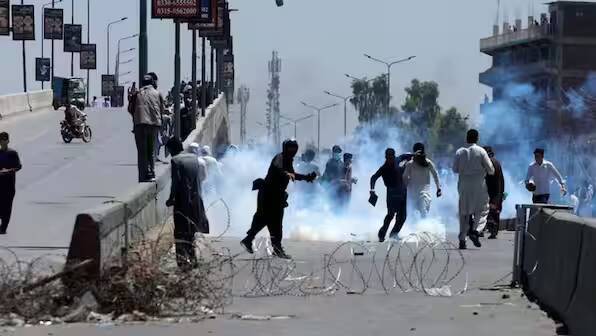
In a shocking turn of events, a protest demanding a separate ‘Sindhu Desh’ turned violent in Pakistan’s Karachi, with reports of stone pelting and clashes with police. The protest, which was organized by the Jiye Sindh Muttahida Mahaz (JSSM), saw Sindhis coming together to raise ‘Azadi’ and ‘Pakistan Murdabad’ slogans, demanding freedom and an end to Pakistani rule.
The protest, which was initially peaceful, took a turn for the worse when the authorities redirected the rally’s path, allegedly without prior notice. This move was met with anger and frustration from the protesters, who felt that their rights were being suppressed. As a result, they began to throw stones at the police, leading to a violent confrontation.
The JSSM, which is a Sindhi nationalist organization, has been at the forefront of the movement for a separate ‘Sindhu Desh’. The organization claims that the Sindhi people have been marginalized and oppressed by the Pakistani government, and that they have been denied their basic rights and freedoms. The demand for a separate ‘Sindhu Desh’ is not a new one, and has been a long-standing issue in the region.
The protest in Karachi is not an isolated incident, and is part of a larger movement that has been gaining momentum in recent years. The Sindhi people have been facing numerous challenges, including poverty, lack of access to education and healthcare, and human rights abuses. The Pakistani government has been accused of neglecting the region and ignoring the concerns of the Sindhi people.
The JSSM and other Sindhi nationalist organizations have been pushing for a separate ‘Sindhu Desh’ as a solution to these problems. They argue that a separate state would allow the Sindhi people to self-govern and make their own decisions, free from the interference of the Pakistani government.
However, the Pakistani government has been opposed to the idea of a separate ‘Sindhu Desh’, and has accused the JSSM and other Sindhi nationalist organizations of being separatist and anti-national. The government has also been accused of using force and intimidation to suppress the movement, and of violating the human rights of Sindhi activists and protesters.
The violence that broke out in Karachi is a clear indication of the tensions that are simmering in the region. The protest, which was initially peaceful, turned violent when the authorities redirected the rally’s path, allegedly without prior notice. This move was seen as a provocation by the protesters, who felt that their rights were being suppressed.
The use of force by the police to disperse the protesters has also been widely condemned. The JSSM and other Sindhi nationalist organizations have accused the police of using excessive force, and of targeting innocent protesters. The incident has sparked widespread outrage and condemnation, with many calling for an end to the violence and for the Pakistani government to address the grievances of the Sindhi people.
The demand for a separate ‘Sindhu Desh’ is a complex issue, and one that requires a nuanced and thoughtful approach. While the Pakistani government has a responsibility to maintain law and order, it also has a duty to listen to the concerns of the Sindhi people and to address their grievances.
The international community also has a role to play in resolving the issue. The United Nations and other international organizations have a responsibility to promote human rights and to protect the rights of marginalized communities. The Sindhi people have a right to self-determination, and to freedom from oppression and persecution.
In conclusion, the violent protest that broke out in Karachi is a clear indication of the tensions that are simmering in the region. The demand for a separate ‘Sindhu Desh’ is a complex issue, and one that requires a nuanced and thoughtful approach. The Pakistani government has a responsibility to listen to the concerns of the Sindhi people and to address their grievances, and the international community has a role to play in promoting human rights and protecting the rights of marginalized communities.
About the Author