Violent protest breaks out in Pak over demand of separate ‘Sindhu Desh’
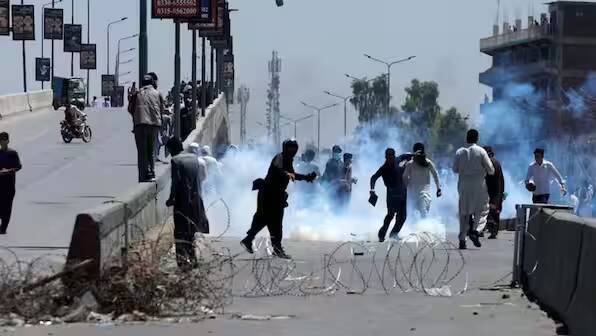
The streets of Karachi, Pakistan’s largest city, turned into a battleground on a recent day as a protest demanding a separate ‘Sindhu Desh’ turned violent. The protest, which was organized by the Jiye Sindh Muttahida Mahaz (JSSM), a Sindhi nationalist group, saw thousands of Sindhis gather to raise their voices for independence from Pakistan. The protest, which started peacefully, soon took a violent turn as clashes broke out between the protesters and the police.
As the protesters marched through the streets of Karachi, they raised slogans of ‘Azadi’ (freedom) and ‘Pakistan Murdabad’ (down with Pakistan). The atmosphere was tense, and the situation quickly spiralled out of control as the authorities attempted to redirect the rally’s path. This move was seen as an attempt to suppress the protest, and it only served to infuriate the protesters further.
The protesters, who were determined to make their voices heard, began to throw stones at the police, who were armed with batons and tear gas. The police responded by firing tear gas shells and baton-charging the protesters, which only added to the chaos. The situation quickly descended into anarchy, with protesters and police clashing in the streets.
The demand for a separate ‘Sindhu Desh’ is not a new one. For decades, Sindhi nationalists have been advocating for independence from Pakistan, citing cultural, linguistic, and economic differences. The Sindhis, who are the indigenous people of the Sindh province, have long felt marginalized and oppressed by the Pakistani government. They claim that their province has been exploited for its natural resources, and that they have been denied their rightful share of power and representation.
The Jiye Sindh Muttahida Mahaz (JSSM), which is leading the protest, is a Sindhi nationalist group that has been at the forefront of the movement for independence. The group, which was formed in 2018, has been organizing protests and rallies across the Sindh province, demanding independence from Pakistan. The group’s leader, who wishes to remain anonymous, said that the protest was a “cry for freedom” and that the Sindhis would no longer be silenced.
“We are not asking for much,” the leader said. “We just want our freedom, our independence. We want to be able to govern ourselves, to make our own decisions, to live our own lives. We are tired of being oppressed, tired of being marginalized. We are tired of being treated like second-class citizens in our own country.”
The protest in Karachi is not an isolated incident. There have been similar protests and rallies across the Sindh province, all of which have been met with a heavy-handed response from the authorities. The Pakistani government has been accused of using force to suppress the protests, and of denying the Sindhis their basic human rights.
The situation in Sindh is not unique. There are other provinces in Pakistan that are also demanding independence, including Balochistan. The Balochistan province, which is located in the southwest of Pakistan, has been plagued by separatist violence for decades. The Baloch nationalists, who are fighting for independence, have been accused of carrying out terrorist attacks against the Pakistani government.
The Pakistani government has been accused of using force to suppress the separatist movements, and of denying the provinces their rightful share of power and representation. The government has also been accused of human rights abuses, including enforced disappearances, torture, and extrajudicial killings.
The international community has been criticized for its silence on the issue. The United Nations, which is responsible for promoting and protecting human rights, has been accused of turning a blind eye to the situation in Pakistan. The European Union, which is a major trading partner of Pakistan, has also been criticized for its silence on the issue.
As the situation in Sindh continues to deteriorate, it is clear that the demand for a separate ‘Sindhu Desh’ is not going away. The Sindhis, who are determined to fight for their freedom, will continue to protest, to rally, and to demand their independence. The Pakistani government, which is facing mounting pressure from the international community, will have to find a way to address the grievances of the Sindhis and to find a peaceful solution to the crisis.
In conclusion, the protest in Karachi is a cry for freedom, a demand for independence, and a call for justice. The Sindhis, who have been marginalized and oppressed for decades, will no longer be silenced. The international community must take notice of the situation and must pressure the Pakistani government to find a peaceful solution to the crisis. The demand for a separate ‘Sindhu Desh’ is a legitimate one, and it is time for the world to recognize the rights of the Sindhis to self-determination.
About the Author