Sky turns pink in UK’s Birmingham as snow reflects stadium lights
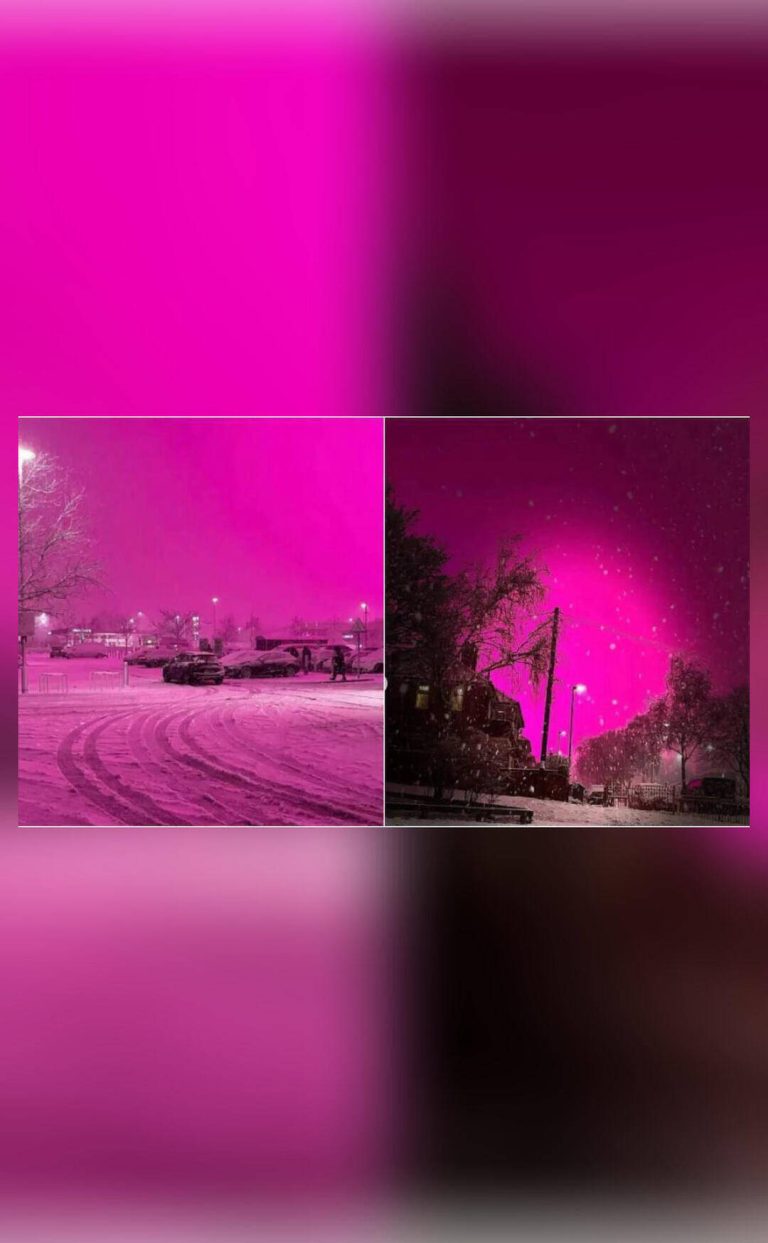
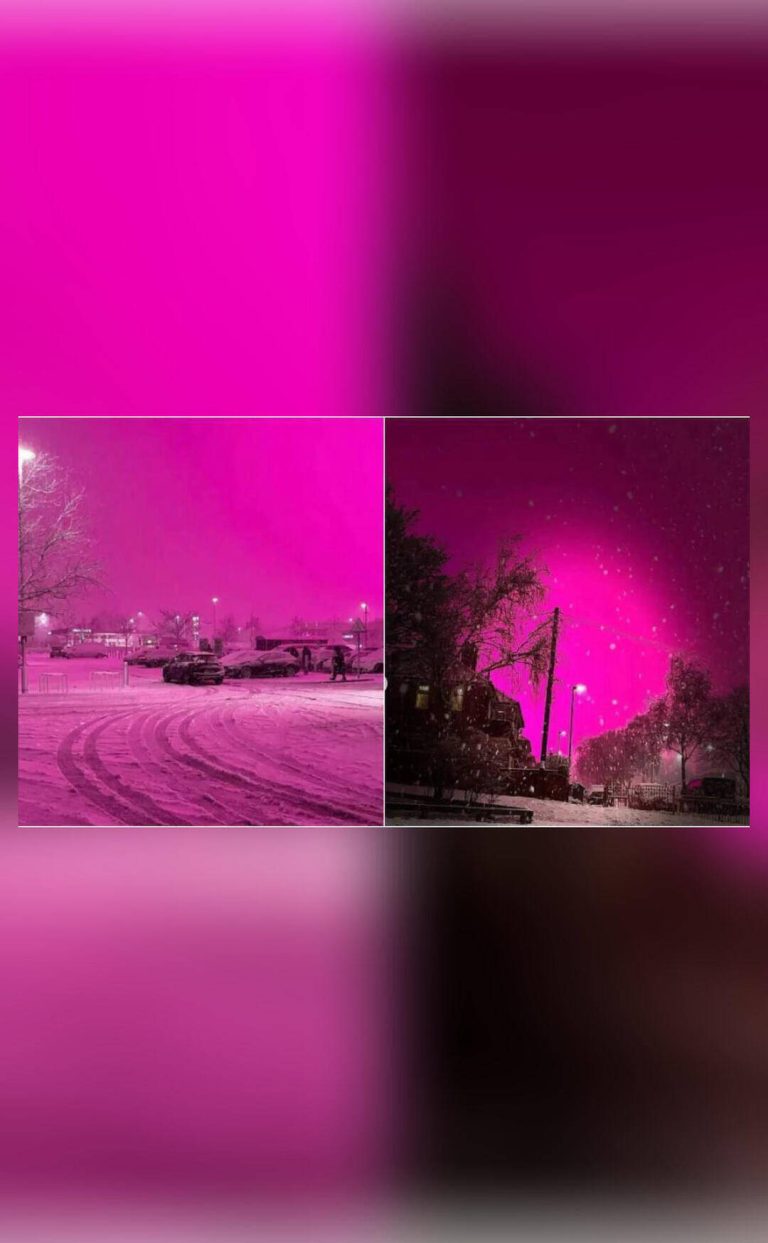
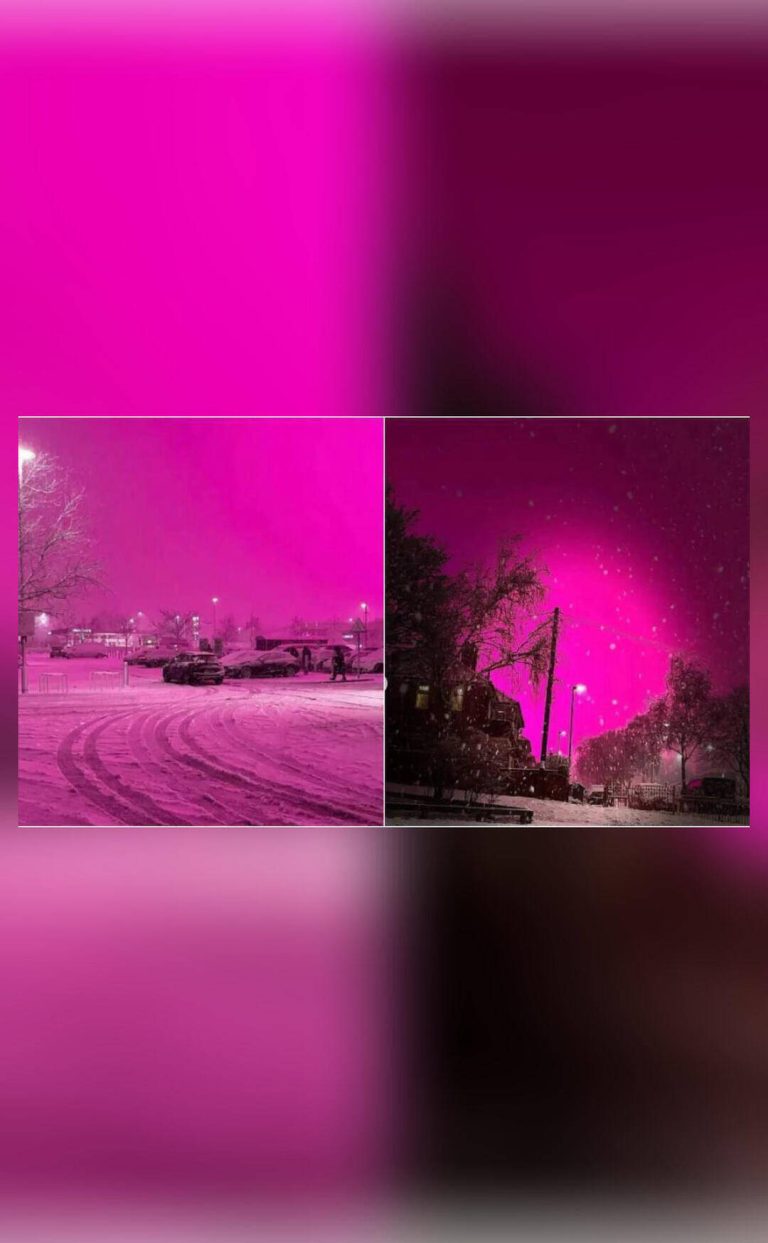
The city of Birmingham in the United Kingdom witnessed a breathtaking sight on Thursday evening as the sky turned a mesmerizing shade of pink. While one might assume that this phenomenon was a result of a natural occurrence, such as a sunset or a rare atmospheric event, the reality behind the pink sky is quite fascinating. The stunning glow that painted the sky pink was not a natural wonder, but rather a result of the floodlights at St Andrew’s Stadium.
For those who may not be familiar, St Andrew’s Stadium is a football stadium located in Birmingham, and it is the home of Birmingham City Football Club. The stadium is equipped with state-of-the-art LED floodlights that provide excellent illumination for evening matches. However, on this particular Thursday evening, the LED lights had an unexpected effect on the surrounding environment.
As it turns out, the combination of the LED lights, low cloud cover, and snow created a unique condition that made the sky appear pink. The snow, which had fallen earlier in the day, covered the ground and surrounding areas, providing a blanket of white that reflected the light emitted by the stadium’s floodlights. The low cloud cover, which is common in Birmingham during the winter months, added to the reflective quality of the atmosphere, allowing the light to bounce off the clouds and create a pink hue.
The result was a breathtaking sight, with the pink sky visible across the city. Residents and visitors alike were amazed by the stunning glow, with many taking to social media to share photos and videos of the phenomenon. The images quickly went viral, with people from all over the world marveling at the beauty of the pink sky.
But what exactly caused the pink color? The answer lies in the way that light interacts with the atmosphere. When light travels through the air, it encounters tiny molecules of gases such as nitrogen and oxygen. These molecules scatter the light in all directions, but they scatter shorter (blue) wavelengths more than longer (red) wavelengths. This is known as Rayleigh scattering, and it is the same effect that causes the sky to appear blue during the daytime.
However, when the light from the stadium’s floodlights hit the snow and clouds, it underwent a process called Mie scattering. Mie scattering occurs when light encounters larger particles, such as snowflakes or cloud droplets, and it scatters light of all wavelengths equally. As a result, the light that was reflected back to the observer had a more even distribution of wavelengths, which gave it a pinkish hue.
The combination of the LED lights, snow, and low cloud cover created a perfect storm of conditions that resulted in the pink sky. It was a rare and fleeting moment, one that was both beautiful and fascinating. And while it may not have been a natural phenomenon in the classical sense, it was still a remarkable sight that will be remembered by those who witnessed it.
In conclusion, the pink sky that appeared over Birmingham on Thursday evening was a unique and captivating sight. While it may not have been a natural wonder, it was still a remarkable example of how human-made structures can interact with the environment to create something truly breathtaking. As we continue to explore and understand the world around us, it is moments like these that remind us of the beauty and complexity of the natural world.
About the Author