Sky turns pink in UK’s Birmingham as snow reflects stadium lights
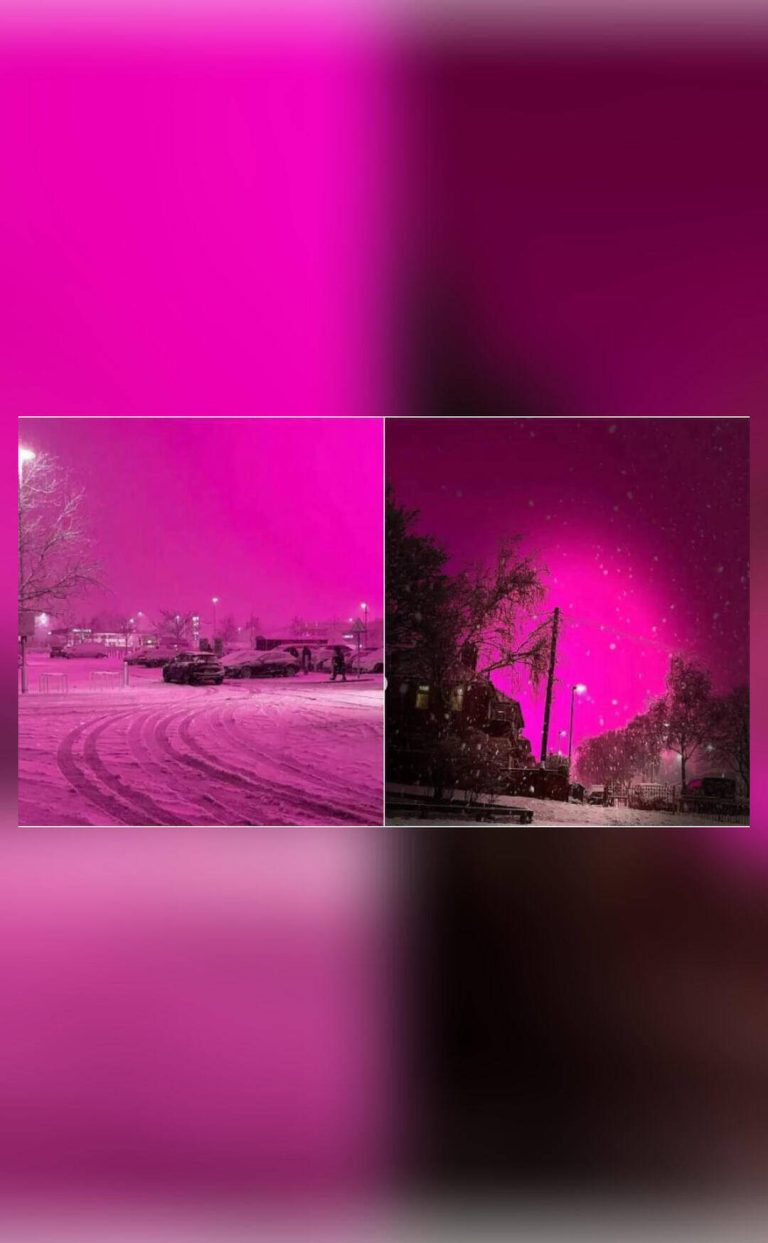
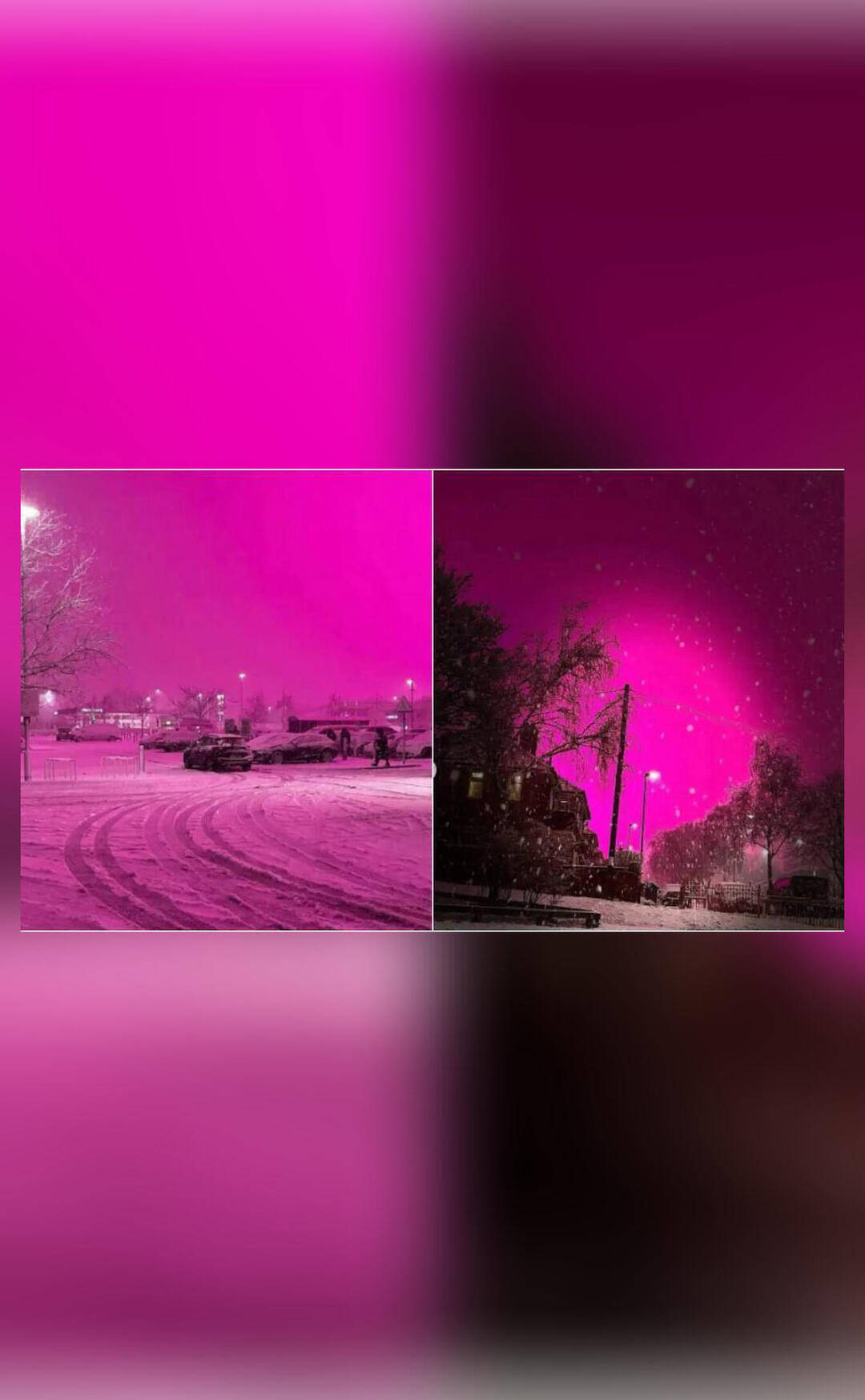
The city of Birmingham in the United Kingdom was treated to a breathtaking sight on Thursday evening as the sky turned a deep shade of pink. The phenomenon, which was witnessed by many residents and visitors, was not a result of a natural occurrence, but rather a unique combination of artificial lighting and weather conditions. As it turns out, the floodlights at St Andrew’s Stadium, the home of Birmingham City Football Club, were the primary cause of the pink hue that illuminated the sky.
The LED lights, which are designed to provide high-intensity illumination for evening football matches, combined with low cloud cover and snow, made the sky more reflective, resulting in the pink glow. This unusual sight was a topic of discussion on social media, with many people sharing photos and videos of the pink sky, wondering what could be the reason behind this stunning display.
At first glance, it might seem like a rare atmospheric phenomenon, such as a sunset or a sunrise, could be the cause of the pink sky. However, the timing and location of the event suggested that there might be a more mundane explanation. As it turned out, the stadium lights were the primary culprit behind the pink sky.
The science behind this phenomenon is quite fascinating. When the LED lights at the stadium are turned on, they emit a broad spectrum of light, including visible and ultraviolet wavelengths. On a normal day, this light would be scattered in all directions, illuminating the surrounding area. However, when the lights are reflected off the snow and low cloud cover, the light takes on a pinkish hue.
This is because the snow and clouds are able to scatter the shorter, blue wavelengths of light more efficiently than the longer, red wavelengths. As a result, the light that is reflected back to our eyes appears more pink or reddish in color. This phenomenon is similar to the way in which sunsets and sunrises can take on a reddish hue, due to the scattering of light by atmospheric particles.
The combination of the stadium lights, snow, and low cloud cover created a unique set of conditions that resulted in the pink sky. The fact that the sky was not uniformly pink, but rather had a more patchy, mottled appearance, suggests that the reflection of the light was not uniform, and was affected by the distribution of snow and clouds in the area.
The pink sky over Birmingham was a rare and striking sight, and one that was enjoyed by many people in the area. While it may not have been a natural phenomenon, it was still a beautiful and memorable display, and one that highlights the complex interplay between light, weather, and our environment.
In conclusion, the pink sky over Birmingham was a unique and fascinating sight, caused by the combination of stadium lights, snow, and low cloud cover. While it may not have been a natural phenomenon, it was still a striking display that highlights the complex interactions between light, weather, and our environment. Whether you’re a fan of football or just a lover of unusual sights, the pink sky over Birmingham was a treat that will be remembered for a long time to come.
About the Author