Showed true face: Israel accuses NYC Mayor Zohran of anti-semitism
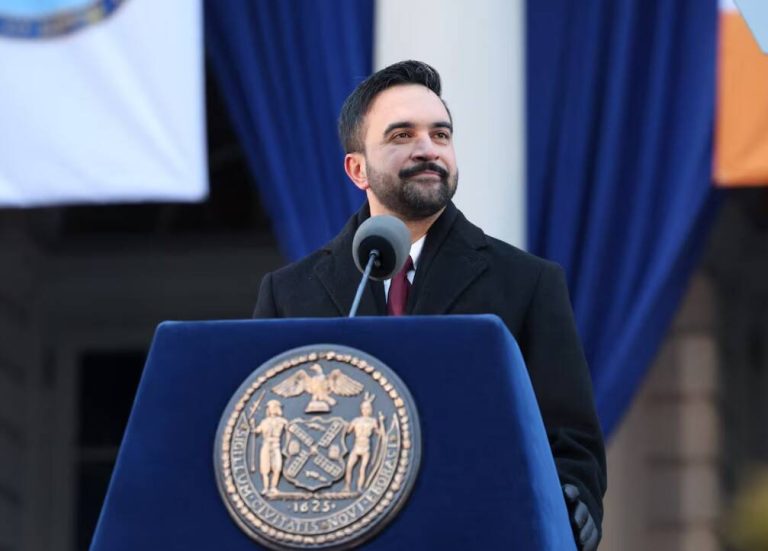
In a shocking turn of events, Israel’s foreign ministry has accused New York City Mayor Zohran Mamdani of anti-semitism, just hours after he took office. The ministry’s statement came as a response to Mayor Mamdani’s decision to scrap the IHRA definition of anti-semitism and lift restrictions on boycotting Israel. This move has sparked a heated debate, with Israel’s foreign ministry condemning the decision as “antisemitic gasoline on an open fire.”
The IHRA definition of anti-semitism, which was adopted by the International Holocaust Remembrance Alliance in 2016, provides a comprehensive framework for understanding and addressing anti-semitism. The definition states that anti-semitism is “a certain perception of Jews, which may be expressed as hatred toward Jews.” It also provides a list of examples of anti-semitic behaviors, including denying the Jewish people’s right to self-determination and applying double standards to Israel.
By scrapping the IHRA definition of anti-semitism, Mayor Mamdani has raised concerns among Jewish communities and pro-Israel groups. They argue that this move will embolden anti-semitic sentiments and create a hostile environment for Jewish people in New York City. The decision to lift restrictions on boycotting Israel has also been met with criticism, as it is seen as a move that will harm Israel’s economy and undermine its right to exist.
Israel’s foreign ministry was quick to respond to Mayor Mamdani’s decision, issuing a statement that condemned his actions as anti-semitic. “On his very first day as New York City Mayor, Mamdani shows his true face: He scraps the IHRA definition of anti-semitism and lifts restrictions on boycotting Israel….It’s antisemitic gasoline on an open fire,” the ministry said. This statement reflects the strong feelings of frustration and disappointment among Israeli officials and pro-Israel groups, who see Mayor Mamdani’s decision as a betrayal of the values of tolerance and respect.
The controversy surrounding Mayor Mamdani’s decision has sparked a wider debate about the role of politicians in addressing anti-semitism and promoting tolerance. While some argue that Mayor Mamdani’s move is a necessary step towards promoting free speech and criticism of Israel, others see it as a reckless and irresponsible decision that will harm Jewish communities and undermine the fight against anti-semitism.
As the debate continues to unfold, it is essential to consider the complexities of the issue and the potential consequences of Mayor Mamdani’s decision. On one hand, the IHRA definition of anti-semitism has been criticized for being too broad and restrictive, potentially stifling legitimate criticism of Israel. On the other hand, the decision to lift restrictions on boycotting Israel has been seen as a move that will embolden anti-semitic sentiments and harm Israel’s economy.
Ultimately, the decision by Mayor Mamdani to scrap the IHRA definition of anti-semitism and lift restrictions on boycotting Israel has shown his true face, as Israel’s foreign ministry put it. Whether this move will have far-reaching consequences for Jewish communities and pro-Israel groups remains to be seen. One thing is certain, however: the controversy surrounding Mayor Mamdani’s decision will continue to spark heated debates and discussions about the role of politicians in addressing anti-semitism and promoting tolerance.
In conclusion, the accusation by Israel’s foreign ministry that Mayor Mamdani is anti-semitic has sparked a heated debate about the role of politicians in addressing anti-semitism and promoting tolerance. As the controversy continues to unfold, it is essential to consider the complexities of the issue and the potential consequences of Mayor Mamdani’s decision. By examining the different perspectives and arguments, we can gain a deeper understanding of the issue and work towards promoting a more tolerant and respectful environment for all communities.
About the Author