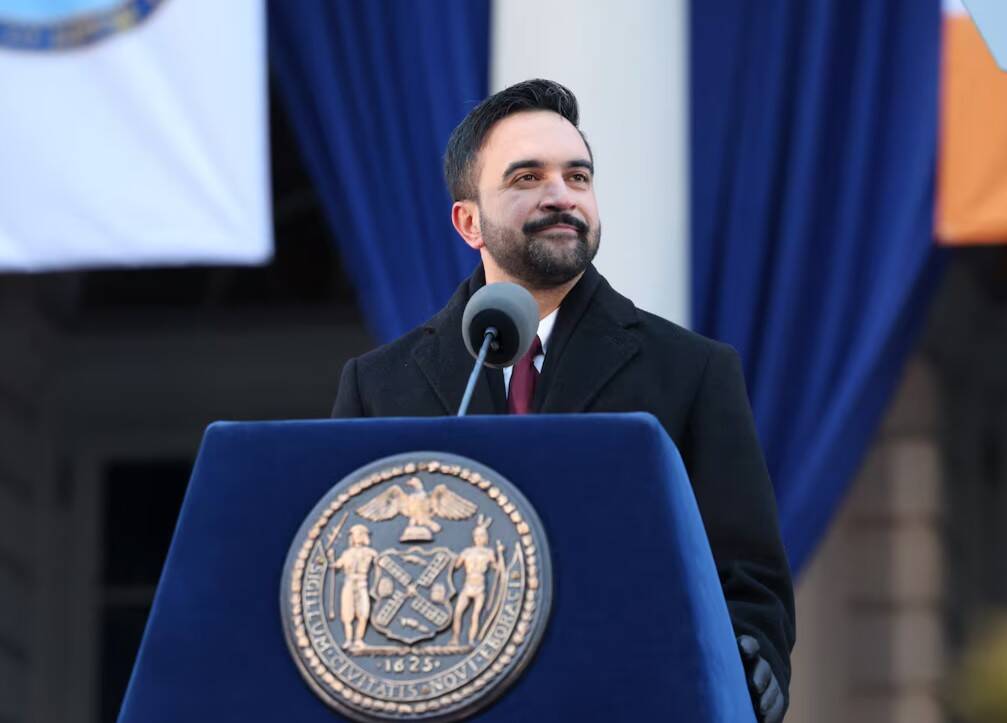
Showed true face: Israel accuses NYC Mayor Zohran of anti-semitism
In a shocking turn of events, the Israeli foreign ministry has accused New York City Mayor Zohran Mamdani of anti-semitism, mere hours after he took office. The ministry’s scathing statement has sparked a heated debate about the definition of anti-semitism and the role of politicians in promoting tolerance and understanding.
According to reports, Mayor Mamdani’s first act in office was to scrap the International Holocaust Remembrance Alliance (IHRA) definition of anti-semitism, which has been widely adopted by countries around the world. The IHRA definition provides a comprehensive framework for understanding and identifying anti-semitic behavior, and its adoption has been seen as a crucial step in combating hate speech and discrimination.
However, Mayor Mamdani’s decision to reject the IHRA definition has been met with fierce criticism from the Israeli government, which claims that it is a thinly veiled attempt to promote anti-semitic ideology. The foreign ministry’s statement, released to the media, was unequivocal in its condemnation of the mayor’s actions. “On his very first day as New York City Mayor, Mamdani shows his true face: He scraps the IHRA definition of anti-semitism and lifts restrictions on boycotting Israel….It’s antisemitic gasoline on an open fire,” the statement read.
The Israeli government’s accusations against Mayor Mamdani are not entirely unfounded. The mayor has been an outspoken critic of Israeli policy, particularly with regards to the treatment of Palestinians. His support for the Boycott, Divestment, and Sanctions (BDS) movement, which aims to economically pressure Israel into ending its occupation of Palestinian territories, has been seen as a provocation by many in the Jewish community.
However, it is also important to consider the context in which Mayor Mamdani’s actions are taking place. The BDS movement has gained significant traction in recent years, particularly among progressive activists and academics, who argue that it is a legitimate form of nonviolent resistance against Israeli occupation. While the movement has been criticized by some for its perceived anti-semitic undertones, others see it as a necessary response to the suffering of the Palestinian people.
The controversy surrounding Mayor Mamdani’s actions highlights the complex and often fraught nature of the debate around anti-semitism. On the one hand, there is a genuine concern about the rise of hate speech and violence against Jewish communities, which requires a robust and nuanced response. On the other hand, there is a risk that accusations of anti-semitism can be used to silence legitimate criticism of Israeli policy and stifle debate about the Israeli-Palestinian conflict.
As the situation continues to unfold, it is essential to approach the issue with sensitivity and nuance. Rather than resorting to inflammatory rhetoric or simplistic labeling, we should strive to engage in a thoughtful and respectful dialogue about the complexities of anti-semitism and the role of politicians in promoting tolerance and understanding.
Ultimately, the accusations against Mayor Mamdani serve as a reminder of the importance of leadership in shaping public discourse and promoting social cohesion. As we navigate the complexities of the modern world, it is crucial that our leaders prioritize empathy, understanding, and respect for all members of society, regardless of their background or identity.
In conclusion, the controversy surrounding Mayor Mamdani’s actions is a complex and multifaceted issue that requires careful consideration and nuanced analysis. While the Israeli government’s accusations of anti-semitism are certainly troubling, it is also important to recognize the context in which they are taking place and to approach the issue with sensitivity and respect.
About the Author