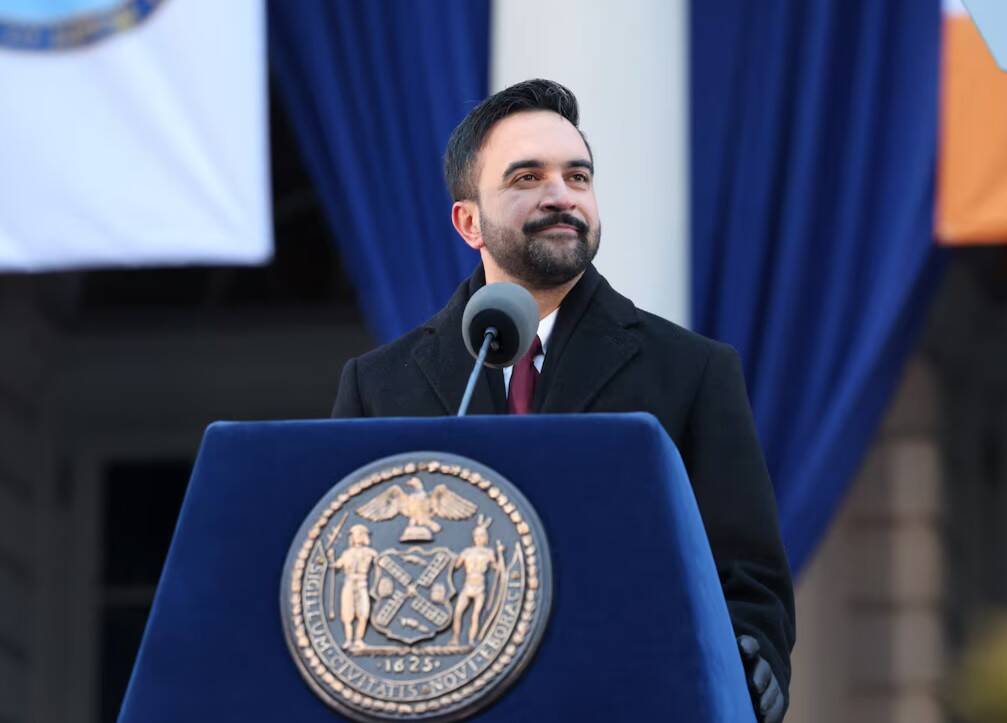
Showed true face: Israel accuses NYC Mayor Zohran of anti-semitism
In a shocking turn of events, Israel’s foreign ministry has accused New York City Mayor Zohran Mamdani of anti-semitism, just hours after he took office. The accusations come as a result of Mayor Mamdani’s decision to scrap the IHRA definition of anti-semitism and lift restrictions on boycotting Israel. This move has sparked a heated debate, with Israel’s foreign ministry condemning the actions as “antisemitic gasoline on an open fire.”
The IHRA definition of anti-semitism, which was adopted by the International Holocaust Remembrance Alliance in 2016, provides a comprehensive framework for understanding and addressing anti-semitism. The definition states that anti-semitism is “a certain perception of Jews, which may be expressed as hatred toward Jews.” It also provides examples of how anti-semitism can manifest, including denying the Jewish people’s right to self-determination and applying double standards to Israel.
By scrapping this definition, Mayor Mamdani has been accused of undermining efforts to combat anti-semitism and creating a more permissive environment for anti-semitic behavior. The decision to lift restrictions on boycotting Israel has also been seen as a provocative move, which could potentially harm relations between the United States and Israel.
Israel’s foreign ministry was quick to respond to Mayor Mamdani’s actions, issuing a statement that condemned his decision as “antisemitic gasoline on an open fire.” The statement went on to say, “On his very first day as New York City Mayor, Mamdani shows his true face: He scraps the IHRA definition of anti-semitism and lifts restrictions on boycotting Israel.” The ministry’s strong language reflects the depth of feeling on this issue, and highlights the significant concerns that exist about the potential consequences of Mayor Mamdani’s actions.
The boycott, divestment, and sanctions (BDS) movement, which seeks to economically and culturally isolate Israel, has been a source of controversy for many years. While proponents of the movement argue that it is a legitimate form of protest against Israel’s treatment of Palestinians, others see it as a thinly veiled attempt to delegitimize the state of Israel and undermine its right to exist.
Mayor Mamdani’s decision to lift restrictions on boycotting Israel has been seen as a significant victory for the BDS movement, and has been welcomed by many of its supporters. However, it has also been condemned by others, who see it as a dangerous and misguided move that could have far-reaching consequences.
The accusations of anti-semitism leveled against Mayor Mamdani are serious, and reflect the deep-seated concerns that exist about his actions. While it is unlikely that Mayor Mamdani intended to promote anti-semitism, his decision to scrap the IHRA definition and lift restrictions on boycotting Israel has been seen as a reckless and irresponsible move.
As the situation continues to unfold, it is clear that the controversy surrounding Mayor Mamdani’s actions will not go away anytime soon. The debate about anti-semitism, the BDS movement, and the IHRA definition will continue to rage on, with both sides dug in and determined to make their voices heard.
In the end, it is up to Mayor Mamdani to clarify his position and explain why he made the decisions that he did. If he is truly committed to combating anti-semitism and promoting a more inclusive and tolerant society, then he must take steps to address the concerns that have been raised and work to rebuild trust with the Jewish community.
Until then, the accusations of anti-semitism will continue to hang over Mayor Mamdani, and the controversy surrounding his actions will remain a major point of contention. One thing is certain, however: the decision to scrap the IHRA definition and lift restrictions on boycotting Israel has sparked a firestorm of debate and controversy, and it will be some time before the dust settles.
About the Author