Showed true face: Israel accuses NYC Mayor Zohran of anti-semitism
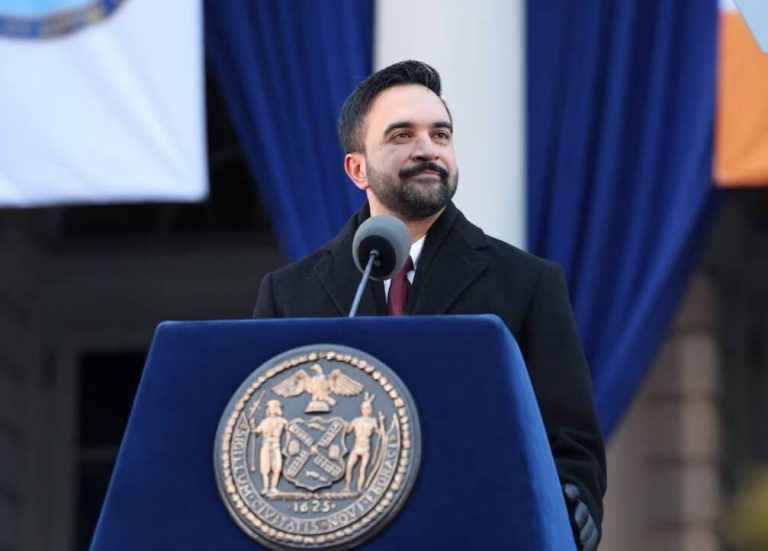
In a shocking turn of events, Israel’s foreign ministry has accused New York City Mayor Zohran Mamdani of anti-semitism, just hours after he took office. The ministry’s statement came as a response to Mayor Mamdani’s decision to scrap the IHRA definition of anti-semitism and lift restrictions on boycotting Israel. This move has sparked a heated debate, with Israel’s foreign ministry condemning the decision as “antisemitic gasoline on an open fire.”
The IHRA definition of anti-semitism, which was adopted by the International Holocaust Remembrance Alliance in 2016, provides a comprehensive framework for identifying and combating anti-semitism. It includes examples of anti-semitic behavior, such as denying the Holocaust, comparing Israeli policies to Nazi policies, and holding Jews collectively responsible for the actions of the Israeli government. By scrapping this definition, Mayor Mamdani has been accused of undermining efforts to combat anti-semitism and creating a more permissive environment for anti-semitic speech and behavior.
The decision to lift restrictions on boycotting Israel has also been met with criticism from Israel’s foreign ministry. The Boycott, Divestment, and Sanctions (BDS) movement, which aims to economically pressure Israel into ending its occupation of Palestinian territories, has been a source of controversy in recent years. While proponents of the movement argue that it is a legitimate form of nonviolent protest, critics argue that it is a thinly veiled attempt to delegitimize Israel and promote anti-semitism.
Israel’s foreign ministry has been vocal in its opposition to the BDS movement, arguing that it is a form of anti-semitism that seeks to undermine Israel’s right to exist. By lifting restrictions on boycotting Israel, Mayor Mamdani has been accused of providing a platform for anti-semitic activists to promote their ideology. The ministry’s statement, which described the decision as “antisemitic gasoline on an open fire,” suggests that Israel views this move as a serious threat to its security and well-being.
The accusations of anti-semitism against Mayor Mamdani have sparked a heated debate, with some defending his decision as a legitimate exercise of free speech and others condemning it as a reckless and irresponsible move. While Mayor Mamdani has not publicly responded to the accusations, his decision to scrap the IHRA definition of anti-semitism and lift restrictions on boycotting Israel suggests that he is committed to promoting a more nuanced and complex understanding of the Israeli-Palestinian conflict.
However, this approach has been met with skepticism by Israel’s foreign ministry, which argues that it is nothing more than a thinly veiled attempt to promote anti-semitism. The ministry’s statement, which accused Mayor Mamdani of showing his “true face” on his first day in office, suggests that Israel views this move as a betrayal of the values of tolerance and respect that are supposed to underpin the US-Israel relationship.
As the debate over Mayor Mamdani’s decision continues to unfold, it is clear that the issue of anti-semitism remains a deeply contentious and complex one. While some argue that the IHRA definition of anti-semitism is a necessary tool for combating anti-semitism, others argue that it is too broad and restrictive, and that it can be used to silence legitimate criticism of Israel. Similarly, while some argue that the BDS movement is a legitimate form of nonviolent protest, others argue that it is a form of anti-semitism that seeks to undermine Israel’s right to exist.
Ultimately, the decision by Mayor Mamdani to scrap the IHRA definition of anti-semitism and lift restrictions on boycotting Israel has sparked a necessary and important debate about the nature of anti-semitism and the best way to combat it. While Israel’s foreign ministry has accused Mayor Mamdani of promoting anti-semitism, others argue that his decision is a legitimate exercise of free speech and a necessary step towards promoting a more nuanced and complex understanding of the Israeli-Palestinian conflict.
As the city of New York and the world at large continue to grapple with the complex and contentious issue of anti-semitism, it is clear that there are no easy answers or simple solutions. However, by engaging in open and honest dialogue, and by promoting a culture of tolerance and respect, we can work towards a more just and equitable world for all.
About the Author