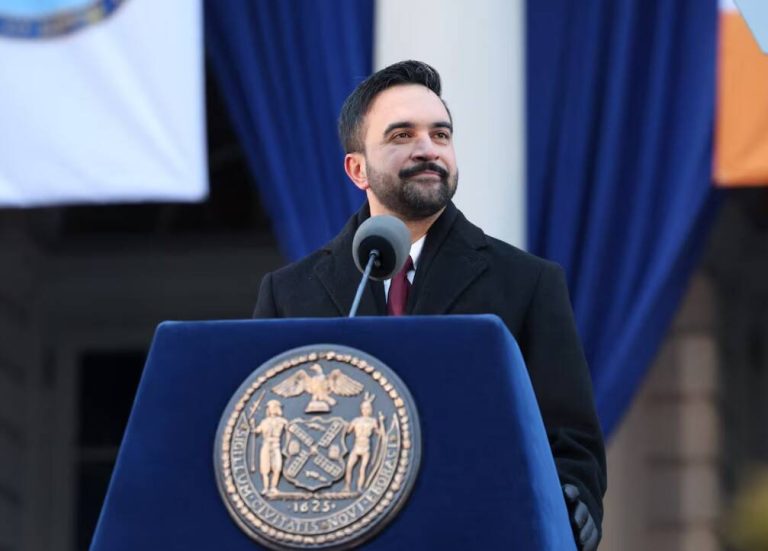
Showed true face: Israel accuses NYC Mayor Zohran of anti-semitism
In a shocking turn of events, Israel’s foreign ministry has accused New York City Mayor Zohran Mamdani of anti-semitism, just hours after he took office. The accusation comes as a result of Mayor Mamdani’s decision to scrap the IHRA definition of anti-semitism and lift restrictions on boycotting Israel. This move has sparked a heated debate, with Israel’s foreign ministry condemning the decision as “antisemitic gasoline on an open fire.”
The IHRA definition of anti-semitism, which was adopted by the International Holocaust Remembrance Alliance in 2016, provides a comprehensive framework for understanding and identifying anti-semitic behavior. The definition includes examples of anti-semitic speech and actions, such as denying the Holocaust, accusing Jews of being more loyal to Israel than their home country, and applying double standards to Israel. By scrapping this definition, Mayor Mamdani has effectively removed a crucial tool for identifying and combating anti-semitism in New York City.
The decision to lift restrictions on boycotting Israel has also been met with criticism from Israel’s foreign ministry. The boycott, divestment, and sanctions (BDS) movement, which seeks to economically and culturally isolate Israel, has been widely condemned as a form of anti-semitism. By allowing the BDS movement to operate freely in New York City, Mayor Mamdani is, in effect, providing a platform for anti-semitic groups to promote their ideology.
Israel’s foreign ministry has been quick to condemn Mayor Mamdani’s actions, stating, “On his very first day as New York City Mayor Mamdani shows his true face: He scraps the IHRA definition of anti-semitism and lifts restrictions on boycotting Israel….It’s antisemitic gasoline on an open fire.” This strong language reflects the gravity of the situation and the concern that Mayor Mamdani’s actions will embolden anti-semitic groups and create a hostile environment for Jewish people in New York City.
The accusation of anti-semitism against Mayor Mamdani is not without precedent. During his campaign, Mamdani was criticized for his support of the BDS movement and his associations with anti-semitic groups. While Mamdani has denied allegations of anti-semitism, his actions as mayor have done little to alleviate concerns. By scrapping the IHRA definition and lifting restrictions on the BDS movement, Mamdani has sent a clear message that he is willing to tolerate, if not outright support, anti-semitic ideology.
The implications of Mayor Mamdani’s actions are far-reaching and potentially devastating. By allowing anti-semitic groups to operate freely in New York City, Mamdani is putting the Jewish community at risk. The BDS movement, in particular, has been linked to a rise in anti-semitic incidents and hate crimes. By providing a platform for this movement, Mamdani is, in effect, contributing to a culture of hatred and intolerance.
Furthermore, Mayor Mamdani’s actions have the potential to damage relations between New York City and Israel. Israel has long been a close ally of the United States, and the city of New York has a significant Jewish population. By embracing anti-semitic ideology, Mamdani is risking the city’s relationships with Israel and the broader Jewish community.
In conclusion, the accusation of anti-semitism against Mayor Mamdani is a serious one, and his actions have the potential to cause significant harm to the Jewish community in New York City. By scrapping the IHRA definition of anti-semitism and lifting restrictions on the BDS movement, Mamdani has sent a clear message that he is willing to tolerate, if not outright support, anti-semitic ideology. As the situation continues to unfold, it is essential to remember the importance of combating anti-semitism in all its forms and to hold elected officials accountable for their actions.
About the Author