PM Modi is not happy with me: Trump
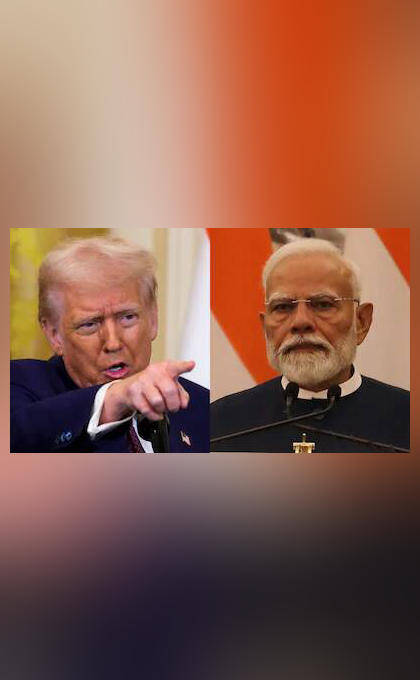
In a recent speech on Tuesday, US President Donald Trump made a surprising statement about his relationship with Indian Prime Minister Narendra Modi. Despite claiming to have a “very good relationship” with PM Modi, Trump revealed that the Indian leader is not happy with him. The reason for this discontent, according to Trump, is India’s significant purchase of Russian oil, which has resulted in the country paying a substantial amount of tariffs.
Trump’s statement has sparked interest and curiosity among international relations experts and observers, as it highlights the complex dynamics of global politics and trade. The US President’s admission that PM Modi is not happy with him suggests that there may be underlying tensions between the two nations, despite their seemingly cordial relationship.
During his speech, Trump stated, “I have a very good relationship with PM (Narendra) Modi, but he is not happy with me as India is paying a lot of tariffs over Russian oil purchase.” This statement implies that the US President is aware of India’s significant reliance on Russian oil and the resulting tariffs that the country is required to pay. Trump also claimed that India has now reduced its purchase of Russian oil substantially, which may be seen as a positive development for the US-India relationship.
In addition to discussing the issue of Russian oil purchases, Trump also spoke about the sale of Apache helicopters to India. This move is likely to be viewed as a strategic effort to strengthen the US-India defense partnership and counterbalance India’s reliance on Russian oil. The sale of Apache helicopters is a significant development, as it highlights the growing defense cooperation between the two nations.
The US has been actively seeking to expand its defense exports to India, and the sale of Apache helicopters is a major milestone in this effort. The Apache helicopter is a highly advanced and versatile aircraft, capable of performing a wide range of missions, including combat, reconnaissance, and transport. The sale of these helicopters to India is likely to enhance the country’s military capabilities and strengthen its defense posture.
Trump’s statement about PM Modi’s unhappiness with him is significant, as it suggests that there may be underlying tensions between the two nations. The issue of Russian oil purchases is a complex one, with both the US and India having different interests and priorities. While the US has been seeking to reduce its reliance on Russian oil and promote American energy exports, India has been looking to diversify its energy sources and reduce its dependence on Middle Eastern oil.
The tariffs imposed on Indian imports of Russian oil are a major point of contention between the two nations. The US has been seeking to impose sanctions on countries that continue to import oil from Russia, and India’s significant purchases of Russian oil have resulted in the country paying substantial tariffs. Trump’s statement suggests that PM Modi is not happy with the US President’s stance on this issue, and that there may be ongoing negotiations and discussions between the two nations to resolve this matter.
Despite these tensions, Trump’s statement also highlights the strong relationship between the US and India. The US President’s claim that he has a “very good relationship” with PM Modi suggests that the two leaders have a strong personal rapport and are committed to strengthening the US-India partnership. The sale of Apache helicopters to India is a significant development in this context, as it highlights the growing defense cooperation between the two nations.
In conclusion, Trump’s statement about PM Modi’s unhappiness with him is a significant development in the US-India relationship. The issue of Russian oil purchases and the resulting tariffs is a complex one, with both nations having different interests and priorities. However, the sale of Apache helicopters to India suggests that the two nations are committed to strengthening their defense partnership and promoting mutual cooperation.
As the US and India continue to navigate the complexities of global politics and trade, it is likely that their relationship will remain a key focus of attention. With the US seeking to promote its energy exports and reduce its reliance on Russian oil, and India looking to diversify its energy sources and reduce its dependence on Middle Eastern oil, there are likely to be ongoing negotiations and discussions between the two nations.
Ultimately, the US-India relationship is a complex and multifaceted one, with both nations having different interests and priorities. However, with strong leadership and a commitment to mutual cooperation, it is possible for the two nations to navigate these challenges and promote a stronger and more stable partnership.
About the Author