Pakistan supports terror, not welcome in Gaza: Israel after Pak joins Trump’s ‘Board of Peace’
In a recent development, Israel has made it clear that Pakistan is not welcome in Gaza, citing the country’s alleged support for terrorism. This statement comes after Pakistan joined US President Donald Trump’s ‘Board of Peace’ for Gaza, an initiative aimed at promoting peace and stability in the region. Israel’s Economy Minister, Nir Barkat, was quick to express his disapproval, stating that any country that supports terror is not welcome in Gaza, and that includes Pakistan.
The ‘Board of Peace’ is a part of Trump’s larger peace framework for the Middle East, which has been met with both praise and criticism. While some have hailed the initiative as a step in the right direction, others have expressed skepticism about its feasibility and potential impact. Pakistan’s decision to join the board has been seen as a significant development, given the country’s historical ties with the Palestinian cause.
However, Israel’s response has been unequivocal. Barkat’s statement reflects the country’s long-standing concerns about Pakistan’s alleged support for terrorist groups, particularly those operating in the Kashmir region. Israel has consistently maintained that Pakistan’s actions are not conducive to promoting peace and stability in the region, and that its involvement in Gaza would only exacerbate the situation.
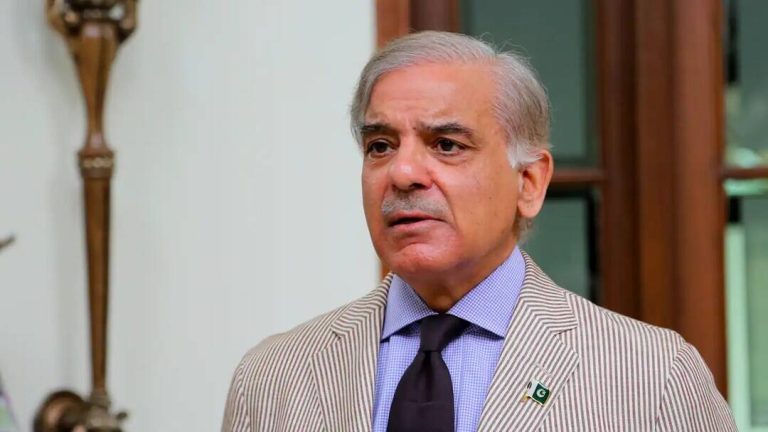
It is worth noting that Pakistan’s Prime Minister, Shehbaz Sharif, has been a vocal supporter of the Palestinian cause, and has consistently spoken out against Israeli actions in Gaza. Pakistan’s decision to join the ‘Board of Peace’ is seen as an attempt to promote a peaceful resolution to the conflict, but Israel’s response suggests that this effort may not be welcomed.
Barkat, however, was quick to emphasize that Israel strongly supports the Trump administration’s peace framework, describing it as “a better alternative than the UN, which is biased”. This statement reflects Israel’s long-standing skepticism about the United Nations’ ability to promote a peaceful resolution to the conflict, given what it sees as the organization’s inherent bias against Israel.
The Trump administration’s peace framework has been met with a mixed response, with some countries welcoming the initiative and others expressing reservations. The plan, which was unveiled in 2020, proposes a two-state solution, with Israel and Palestine coexisting as separate entities. However, the plan has been criticized for its lack of clarity on key issues, such as borders and settlements.
Despite these criticisms, Israel has been a strong supporter of the plan, seeing it as a potential opportunity to promote a peaceful resolution to the conflict. However, the country’s response to Pakistan’s involvement in the ‘Board of Peace’ suggests that there are still significant challenges to be overcome.
The situation in Gaza remains complex and sensitive, with both Israel and Palestine claiming sovereignty over the territory. The conflict has resulted in significant human suffering, with thousands of civilians caught in the crossfire. Any initiative aimed at promoting peace and stability in the region is therefore welcome, but it is clear that there are still significant obstacles to be overcome.
In conclusion, Israel’s response to Pakistan’s involvement in the ‘Board of Peace’ reflects the country’s long-standing concerns about Pakistan’s alleged support for terrorism. While the Trump administration’s peace framework has been met with a mixed response, Israel’s strong support for the initiative suggests that it sees the plan as a potential opportunity to promote a peaceful resolution to the conflict. However, the situation in Gaza remains complex and sensitive, and it is clear that there are still significant challenges to be overcome.
About the Author