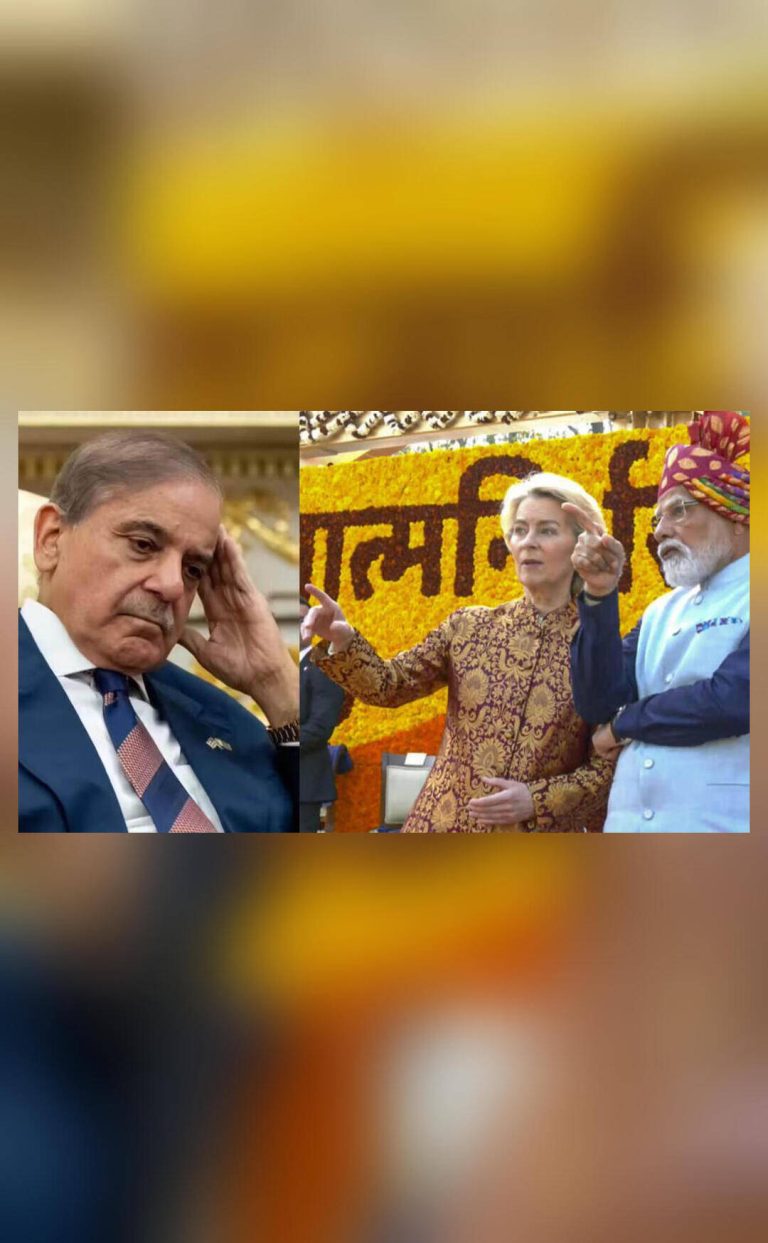
Pakistan releases statement after India and EU announce ‘mother of all trade deals’
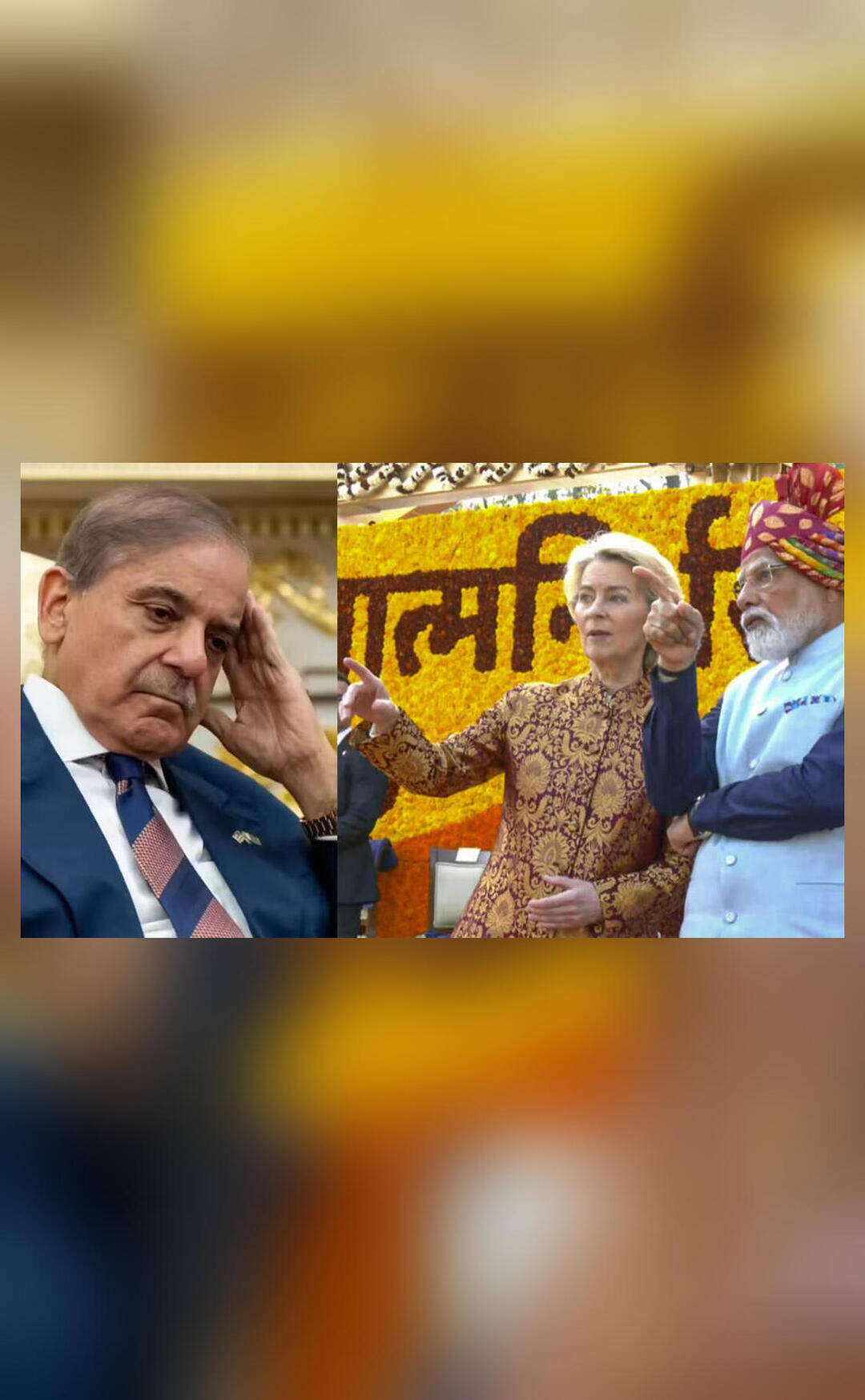
In a recent development, India and the European Union (EU) have announced a landmark trade agreement, dubbed the “mother of all trade deals”. This move has sent ripples across the globe, with neighboring countries taking notice of the potential implications. Pakistan, in particular, has been keenly observing the situation, given its own trade relations with the EU. Commenting on the agreement, Pakistan said, “We are aware of this agreement. We have seen reports and as well as the content.” This statement suggests that Pakistan is closely monitoring the situation and is prepared to respond accordingly.
Pakistan’s statement further emphasized its long-standing friendly relations with the EU, highlighting the mutually beneficial trade agreements between the two parties. “Pakistan maintains long standing friendly…relations with EU…The EU GSP+ scheme for Pakistan has proven to be a win-win…for bilateral cooperation…The total volume between our two sides stands at €12 billion,” it added. The EU’s Generalized System of Preferences Plus (GSP+) scheme has been a significant factor in boosting Pakistan’s exports to the EU, with the country enjoying preferential tariffs on a wide range of products.
The GSP+ scheme, which was granted to Pakistan in 2014, has been instrumental in increasing the country’s exports to the EU. The scheme provides duty-free access to the EU market for a wide range of products, including textiles, leather goods, and sports equipment. As a result, Pakistan’s exports to the EU have increased significantly, with the total volume of trade between the two sides standing at €12 billion. The EU has become one of Pakistan’s largest trading partners, and the GSP+ scheme has played a crucial role in promoting bilateral trade.
However, with the announcement of the India-EU trade deal, Pakistan is concerned about the potential loss of its tariff edge. The new agreement between India and the EU is expected to provide Indian exporters with preferential access to the EU market, which could erode Pakistan’s competitive advantage. Pakistan’s exports to the EU could face increased competition from Indian products, which could lead to a decline in Pakistan’s market share.
To mitigate this risk, Pakistan has engaged with the EU to safeguard its exports. Pakistani officials have been in talks with their EU counterparts to discuss the potential implications of the India-EU trade deal and to explore ways to protect Pakistan’s trade interests. Pakistan is seeking assurances from the EU that its GSP+ scheme will not be affected by the new agreement with India. The country is also exploring other options, such as negotiating its own free trade agreement with the EU, to maintain its competitive edge.
The India-EU trade deal is expected to have far-reaching implications for the global trade landscape. The agreement is expected to increase trade between India and the EU, with estimates suggesting that bilateral trade could increase by up to 20%. The deal is also expected to have a positive impact on the Indian economy, with the government predicting that it could add up to 1% to the country’s GDP growth rate.
However, the deal is not without its challenges. The agreement is expected to face opposition from some EU member states, which are concerned about the potential impact on their domestic industries. There are also concerns about the deal’s potential impact on the environment and labor standards. The Indian government has faced criticism for its handling of environmental and labor issues, and the EU has made it clear that it expects India to adhere to strict standards in these areas.
In conclusion, the announcement of the India-EU trade deal has significant implications for Pakistan and its trade relations with the EU. While Pakistan has welcomed the deal, it is also concerned about the potential loss of its tariff edge. The country is engaging with the EU to safeguard its exports and is exploring options to maintain its competitive advantage. As the global trade landscape continues to evolve, it is essential for countries like Pakistan to remain vigilant and to take proactive steps to protect their trade interests.
About the Author