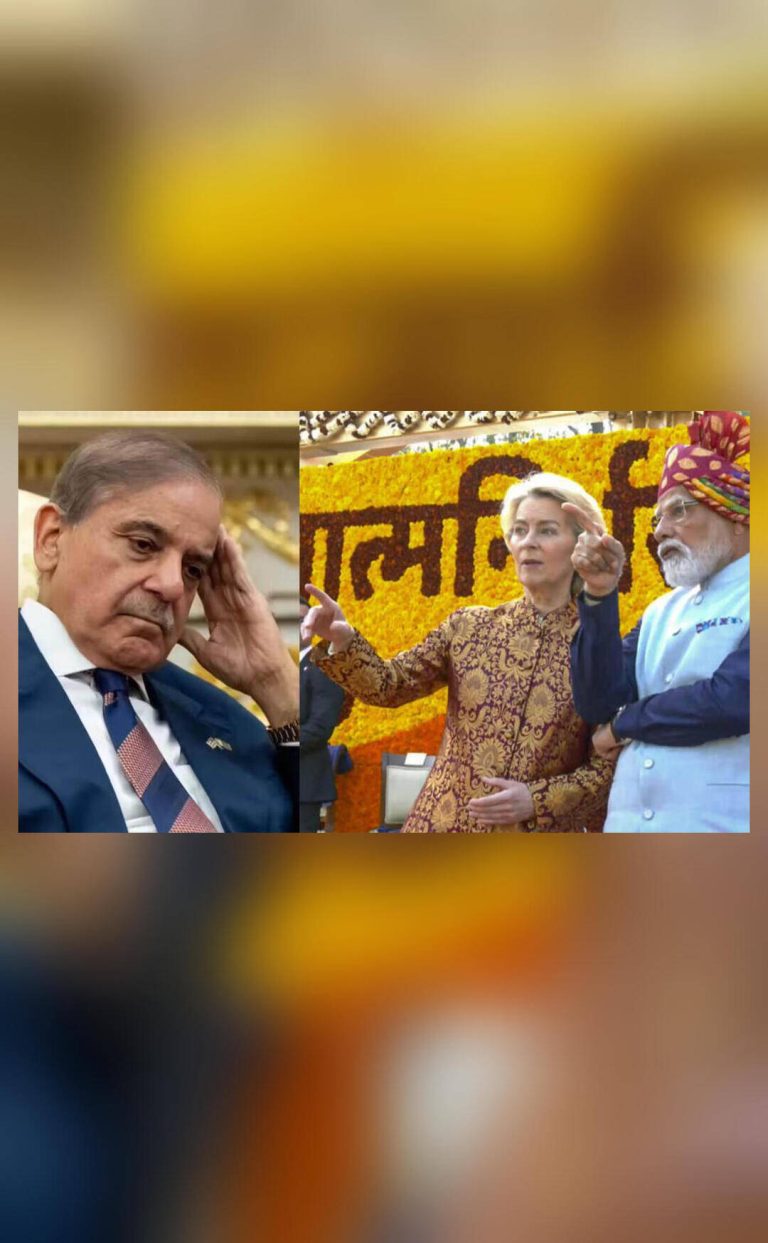
Pakistan releases statement after India and EU announce ‘mother of all trade deals’
In a recent development, India and the European Union (EU) announced a landmark trade agreement, dubbed the “mother of all trade deals”. This move has sent ripples across the globe, with neighboring countries taking notice of the potential implications. Pakistan, in particular, has been keenly observing the situation, given its existing trade relationships with the EU. Commenting on the India-EU trade deal, Pakistan released a statement, highlighting its own long-standing friendly relations with the EU and the benefits of their bilateral cooperation.
According to Pakistan, “We are aware of this agreement. We have seen reports and as well as the content.” The statement suggests that Pakistan is closely monitoring the situation and is aware of the potential consequences of the India-EU trade deal. Pakistan’s response is measured, and the country seems to be adopting a cautious approach, choosing not to directly criticize the agreement.
Instead, Pakistan has chosen to focus on its own relationship with the EU, highlighting the benefits of their bilateral cooperation. “Pakistan maintains long standing friendly…relations with EU…The EU GSP+ scheme for Pakistan has proven to be a win-win…for bilateral cooperation…The total volume between our two sides stands at €12 billion,” the statement added. This emphasis on the EU-Pakistan relationship suggests that Pakistan is seeking to reassure its own exporters and stakeholders that their trade ties with the EU remain strong.
The EU’s GSP+ (Generalized System of Preferences Plus) scheme is a preferential trade arrangement that offers duty-free access to the EU market for certain products from eligible countries, including Pakistan. The scheme is designed to support sustainable development and good governance in developing countries. Pakistan has been a beneficiary of the GSP+ scheme since 2014, and the country’s exports to the EU have increased significantly as a result.
However, the India-EU trade deal has raised concerns in Pakistan that the country may lose its competitive edge in the EU market. With India, a major competitor, now having a preferential trade agreement with the EU, Pakistan fears that its own exports may be negatively impacted. The total volume of trade between Pakistan and the EU stands at €12 billion, and any disruption to this trade could have significant consequences for Pakistan’s economy.
In an effort to safeguard its exports, Pakistan has engaged with the EU to discuss potential measures to mitigate the impact of the India-EU trade deal. According to reports, Pakistan has sought assurances from the EU that its GSP+ preferences will be maintained, and that the country will not be disadvantaged by the new trade agreement with India.
The India-EU trade deal is expected to have far-reaching implications for global trade, and Pakistan is not the only country that is likely to be affected. Other countries, including those in the region, will also need to reassess their trade relationships with the EU in light of this new agreement.
As the situation unfolds, it remains to be seen how Pakistan will navigate the changing trade landscape. The country’s statement suggests that it is committed to maintaining its strong relationship with the EU, while also seeking to protect its own trade interests. With the EU GSP+ scheme set to continue, Pakistan’s exporters can take comfort in the fact that their preferential access to the EU market remains intact, at least for now.
In conclusion, Pakistan’s response to the India-EU trade deal is a measured one, reflecting the country’s desire to maintain its strong relationship with the EU while also protecting its own trade interests. As the situation continues to evolve, it will be important for Pakistan to remain engaged with the EU and to seek assurances that its GSP+ preferences will be maintained. With the total volume of trade between Pakistan and the EU standing at €12 billion, the stakes are high, and Pakistan will need to navigate the changing trade landscape carefully to ensure that its exports continue to thrive.
About the Author