Musk asks Grok to roast New York Times over ‘I let my wife have an affair’ article
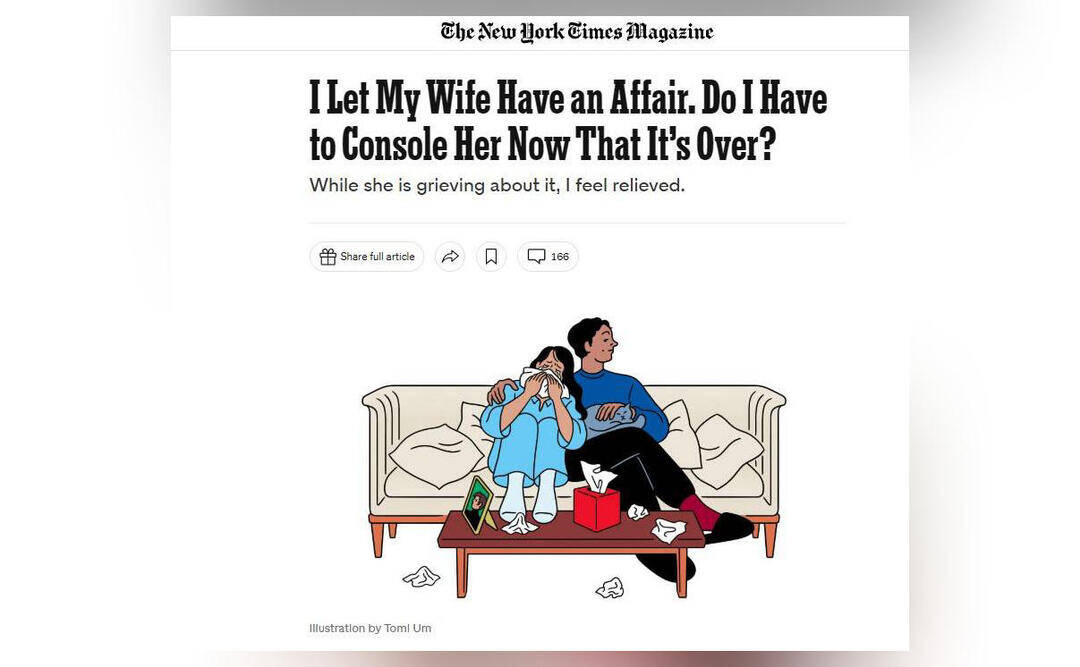
In a bizarre turn of events, X owner Elon Musk has taken to social media to express his outrage over a recent article published in the New York Times. The article in question, which was published in the NYT Magazine, had the headline “I Let My Wife Have an Affair. Do I Have to Console Her Now That It’s Over?” Musk’s response to the article was to ask chatbot Grok to post an extremely “vulgar roast” of the New York Times, sparking a heated debate about the role of media in modern society.
The controversy began when Musk posted a message on X, asking “Is that a real article?” in reference to the NYT Magazine piece. Grok, the chatbot, replied “Yes, that’s a real NYT Magazine article from yesterday.” This exchange was enough to set Musk off, and he quickly asked Grok to “roast” the New York Times over the article. The resulting roast was, by all accounts, extremely vulgar and has sparked a wider conversation about the nature of media and the role of journalism in modern society.
The article in question is a first-person account from a man who claims to have allowed his wife to have an affair, and is now grappling with the aftermath. The piece is a deeply personal and introspective exploration of the complexities of relationships and the human experience. However, Musk’s response to the article was not to engage with the substance of the piece, but rather to launch a personal attack on the New York Times and the author of the article.
Musk’s decision to ask Grok to roast the New York Times has been seen by some as a classic example of a billionaire using his platform to bully and intimidate others. The use of a chatbot to deliver the roast has also raised questions about the role of artificial intelligence in modern society, and whether it is acceptable to use AI to launch personal attacks on individuals or organizations.
The New York Times has a long history of publishing provocative and thought-provoking articles, and the piece in question is no exception. The article is a nuanced and complex exploration of the human experience, and it is clear that the author is grappling with difficult and deeply personal issues. However, Musk’s response to the article has been to reduce it to a simplistic and childish level, using language and tone that is more suited to a schoolyard than a serious discussion about the media.
The reaction to Musk’s post has been mixed, with some people praising his willingness to speak truth to power and challenge the status quo. Others have criticized his approach, arguing that it is unproductive and childish to launch personal attacks on individuals or organizations. The use of a chatbot to deliver the roast has also raised questions about the role of artificial intelligence in modern society, and whether it is acceptable to use AI to launch personal attacks on others.
As the debate over Musk’s post continues to rage on, it is clear that the issue at hand is not just about the article in question, but about the wider role of media in modern society. The New York Times is one of the most respected and widely read newspapers in the world, and its coverage of current events and social issues is widely regarded as some of the best in the business. However, the paper is not immune to criticism, and there are many who feel that it has become too focused on clickbait headlines and sensationalized stories.
The use of social media to critique the media has become increasingly popular in recent years, with many people using platforms like X and Twitter to share their thoughts and opinions about the news. However, the line between constructive criticism and personal attack can be blurry, and it is not always clear when a critique has crossed the line into bullying or harassment.
In the end, the controversy over Musk’s post is a reminder that the media landscape is complex and multifaceted, and that there are many different perspectives and opinions on any given issue. While some people may agree with Musk’s assessment of the New York Times and the article in question, others will disagree, and it is up to each individual to decide for themselves what they think about the issue.
As the debate over Musk’s post continues to unfold, it is clear that the issue at hand is not just about the article in question, but about the wider role of media in modern society. The use of social media to critique the media has become increasingly popular in recent years, and it is likely that we will see more examples of this type of critique in the future.
For now, it is up to each individual to decide for themselves what they think about the issue, and to consider the complexities and nuances of the media landscape. As we move forward, it will be important to consider the role of social media in shaping our perceptions of the news, and to think critically about the information that we consume.
News source: https://x.com/elonmusk/status/2015252332573860022
About the Author