Iran’s Khamenei skips key military meet for first time in 37 years amid US threats
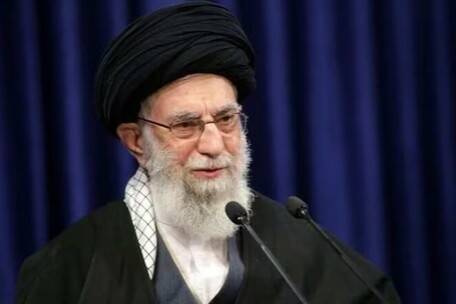
In a shocking turn of events, Iran’s Supreme Leader Ayatollah Ali Khamenei has broken a long-standing tradition by missing the annual February 8 meeting with air force commanders, a ritual he has followed every year since assuming power in 1989. This unprecedented move has sparked widespread speculation and concern, particularly given the current state of rising tensions between Iran and the United States.
For nearly four decades, Khamenei has made it a point to attend this annual meeting, which is seen as a crucial event in the Iranian military calendar. The meeting provides an opportunity for Khamenei to address the country’s air force commanders, outline the military’s strategic objectives, and emphasize the importance of the armed forces in defending the nation. The fact that Khamenei has chosen to skip this meeting for the first time in 37 years suggests that something is amiss, and that the current situation is more complex and sensitive than usual.
Instead of Khamenei, the chief of staff of the armed forces, Abdolrahim Mousavi, reportedly met with the commanders. While Mousavi is a high-ranking official in the Iranian military, his presence at the meeting is unlikely to have the same impact or carry the same weight as Khamenei’s. The Supreme Leader’s absence is likely to be perceived as a significant departure from the norm, and may be seen as a sign of the escalating tensions between Iran and the US.
The timing of Khamenei’s decision to skip the meeting is particularly notable, given the current state of relations between Iran and the US. In recent months, tensions between the two countries have reached new heights, with the US imposing stringent sanctions on Iran and engaging in a series of provocative military maneuvers in the region. The US has also been actively seeking to isolate Iran diplomatically, and has been working to build a coalition of like-minded nations to counter Iranian influence in the Middle East.
Khamenei’s decision to skip the meeting may be seen as a response to these growing tensions, and a sign that Iran is taking a more cautious and measured approach to its military engagements. By avoiding the meeting, Khamenei may be seeking to avoid any actions that could be perceived as provocative or inflammatory, and may be looking to reduce the risk of a miscalculation or misunderstanding that could lead to further escalation.
At the same time, Khamenei’s absence may also be seen as a sign of weakness or vulnerability, and could potentially be interpreted as a sign that Iran is not as committed to its military objectives as it once was. This could have significant implications for the balance of power in the region, and could potentially embolden Iran’s enemies or rivals to take a more aggressive stance.
The implications of Khamenei’s decision to skip the meeting are far-reaching and complex, and will likely be the subject of intense speculation and analysis in the coming days and weeks. As the situation continues to unfold, it will be important to watch for any further developments or statements from Iranian officials, and to consider the potential consequences of Khamenei’s decision for the region and the world at large.
In conclusion, Khamenei’s decision to skip the annual February 8 meeting with air force commanders is a significant and unprecedented move, and one that is likely to have far-reaching implications for the region and the world. As the situation continues to evolve, it will be important to stay informed and up-to-date on the latest developments, and to consider the potential consequences of Khamenei’s decision for the future of Iran and the Middle East.
About the Author