Iran’s Khamenei skips key military meet for first time in 37 years amid US threats
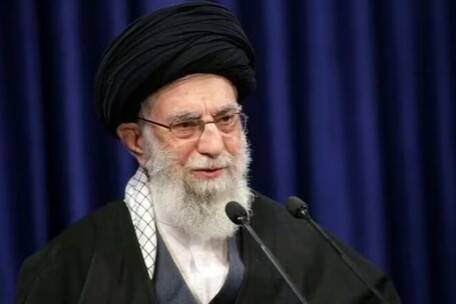
In a surprise move, Iran’s Supreme Leader Ayatollah Ali Khamenei has broken a long-standing tradition by missing the annual February 8 meeting with air force commanders, a ritual he has followed every year since assuming power in 1989. This sudden change in routine has sparked curiosity and raised eyebrows, especially given the current state of rising tensions between Iran and the United States. Instead of Khamenei, the chief of staff of armed forces, Abdolrahim Mousavi, reportedly met with the commanders, marking a significant departure from the usual protocol.
The annual meeting with air force commanders is a significant event in Iran’s military calendar, and Khamenei’s presence has been a constant feature of this gathering for nearly four decades. The Supreme Leader’s absence from this meeting is being seen as a sign of the escalating tensions between Iran and the US, which have reached new heights in recent months. The US has been actively engaged in a campaign of maximum pressure against Iran, imposing stringent economic sanctions and issuing threats of military action.
The US-Iran tensions have been simmering for years, but the situation took a turn for the worse in 2018 when the US withdrew from the Joint Comprehensive Plan of Action (JCPOA), also known as the Iran nuclear deal. The US has since reimposed sanctions on Iran, targeting its oil exports, banking sector, and other key industries. The sanctions have had a crippling effect on Iran’s economy, leading to widespread protests and unrest across the country.
In response to the US sanctions, Iran has taken a series of measures to bolster its military capabilities and strengthen its defenses. The country has been actively engaged in a program of military modernization, with a focus on developing its ballistic missile capabilities and improving its air defense systems. Iran has also been involved in a series of military exercises and drills, aimed at showcasing its military prowess and deterring potential aggressors.
The current tensions between Iran and the US have been further exacerbated by a series of incidents in the region. In June 2019, Iran shot down a US drone, claiming it had entered Iranian airspace. The US responded by imposing additional sanctions on Iran and issuing threats of military action. The situation took a turn for the worse in January 2020, when the US launched a drone strike that killed top Iranian military commander Qasem Soleimani. Iran responded by launching a series of missile strikes against US military bases in Iraq, marking a significant escalation of the conflict.
Given the current state of tensions between Iran and the US, Khamenei’s decision to skip the annual meeting with air force commanders is being seen as a sign of the Supreme Leader’s growing concern about the security situation in the region. By absenting himself from the meeting, Khamenei may be signaling that the current situation is too sensitive and volatile for him to engage in routine military ceremonies.
The decision to send Abdolrahim Mousavi, the chief of staff of armed forces, to meet with the commanders instead of Khamenei, may also be intended to convey a sense of business as usual. Mousavi is a seasoned military commander with a strong track record of service in the Iranian armed forces. By dispatching him to meet with the commanders, Khamenei may be seeking to reassure the military establishment that the Supreme Leader remains committed to the country’s defense and security.
The implications of Khamenei’s decision to skip the annual meeting with air force commanders are far-reaching and complex. On one hand, it may be seen as a sign of the Supreme Leader’s growing concern about the security situation in the region and his desire to avoid any actions that could be perceived as provocative or escalatory. On the other hand, it may also be interpreted as a sign of weakness or indecision on the part of the Iranian leadership, which could embolden the US and its allies to take a more aggressive stance against Iran.
As the situation continues to unfold, it remains to be seen how the US and Iran will navigate the complex web of tensions and rivalries that have developed between them. One thing is certain, however: the current state of tensions between Iran and the US is unsustainable and poses a significant threat to regional and global security. It is imperative that both sides engage in a constructive dialogue and work towards finding a peaceful resolution to their differences.
In conclusion, Khamenei’s decision to skip the annual meeting with air force commanders is a significant development that reflects the growing tensions between Iran and the US. As the situation continues to evolve, it is essential to monitor the actions and statements of both sides, and to work towards finding a peaceful and diplomatic solution to the conflict.
About the Author