India Resumes Ops at Dhaka Visa Centre After Closure Amid Protests
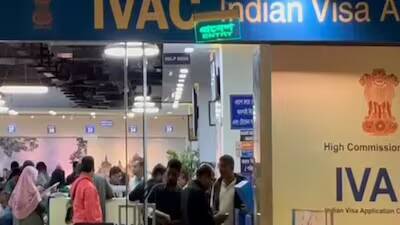
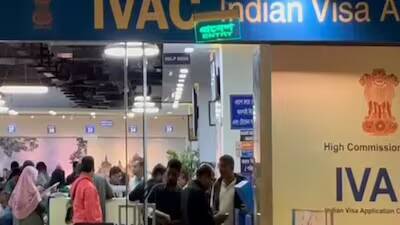
The Indian visa centre in Dhaka, the capital city of Bangladesh, has resumed its operations on Thursday, a day after it was temporarily shut down due to security concerns. The closure was a result of anti-India protests that took place in the city, with demonstrators marching towards the Indian High Commission. The protests were sparked by a radical remark made by a Bangladeshi leader, Hasnat Abdullah, against India. In response to the remark, the Ministry of External Affairs (MEA) summoned Bangladesh’s High Commissioner on Wednesday to express its protest.
The Indian visa centre in Dhaka is a crucial facility for Bangladeshi citizens who wish to travel to India for various purposes, including tourism, business, and education. The centre provides visa services, including application submission, processing, and issuance. However, due to the security concerns arising from the protests, the centre was forced to shut down temporarily, causing inconvenience to many applicants.
The protests in Dhaka were a result of a statement made by Hasnat Abdullah, a Bangladeshi leader, who made a radical remark against India. The remark was widely condemned by the Indian government, which saw it as an attempt to damage the bilateral relations between the two countries. In response, the MEA summoned Bangladesh’s High Commissioner on Wednesday to express its protest and concern over the remark.
The MEA’s decision to summon the High Commissioner reflects the seriousness with which the Indian government views the situation. India and Bangladesh have historically enjoyed good relations, with cooperation in various areas, including trade, security, and culture. However, the recent protests and the radical remark made by the Bangladeshi leader have raised concerns about the stability of the relationship.
The resumption of operations at the Indian visa centre in Dhaka is a welcome development, as it will allow Bangladeshi citizens to continue with their travel plans to India. However, the incident highlights the need for both countries to work together to address the issues that led to the protests and to strengthen their bilateral relations.
The Indian government has been making efforts to improve its relations with Bangladesh, with Prime Minister Narendra Modi visiting the country in 2015. During his visit, Modi announced a number of initiatives aimed at strengthening bilateral ties, including the signing of a historic land boundary agreement. The agreement resolved a long-standing issue between the two countries and paved the way for increased cooperation in various areas.
Despite the progress made in recent years, there are still challenges that need to be addressed. One of the major concerns is the issue of terrorism, with India having long accused Bangladesh of not doing enough to prevent terrorist groups from operating on its soil. The issue has been a major point of contention between the two countries, with India seeking greater cooperation from Bangladesh in combating terrorism.
Another area of concern is the issue of trade, with India being one of Bangladesh’s largest trading partners. However, the trade relationship between the two countries has been uneven, with India enjoying a significant trade surplus. Bangladesh has been seeking to address this issue, with the country’s government pushing for greater market access for its exports.
In conclusion, the resumption of operations at the Indian visa centre in Dhaka is a positive development, but it also highlights the need for both countries to work together to address the issues that led to the protests. The incident reflects the complexities of the bilateral relationship between India and Bangladesh, with both countries having their own set of concerns and interests. However, with efforts from both sides, it is possible to strengthen the relationship and address the challenges that lie ahead.
The Indian government’s decision to summon Bangladesh’s High Commissioner reflects its commitment to protecting the country’s interests and promoting good relations with its neighbors. The resumption of operations at the visa centre is a step in the right direction, but it is only the beginning. Both countries need to work together to build trust and understanding, and to address the issues that have been affecting their relationship.
As the two countries move forward, it is essential to recognize the importance of their bilateral relationship. India and Bangladesh have a long history of cooperation, and their relationship has the potential to be a model for regional cooperation. However, it requires effort and commitment from both sides to make it work.
In the coming days and weeks, it will be important to monitor the situation and to see how the two countries respond to the challenges that lie ahead. The resumption of operations at the Indian visa centre in Dhaka is a positive step, but it is only the beginning. The real test will be in how the two countries work together to address the issues that have been affecting their relationship.
About the Author