India Resumes Ops at Dhaka Visa Centre After Closure Amid Protests
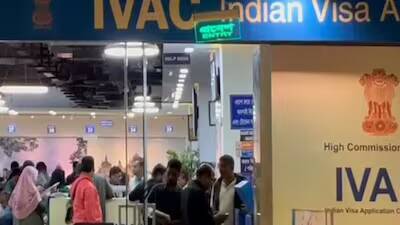
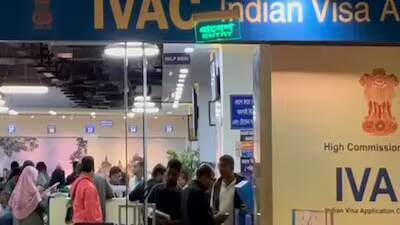
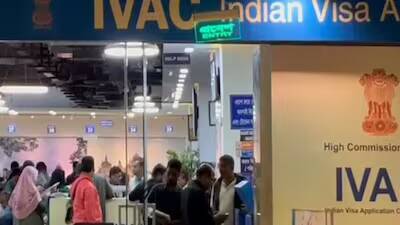
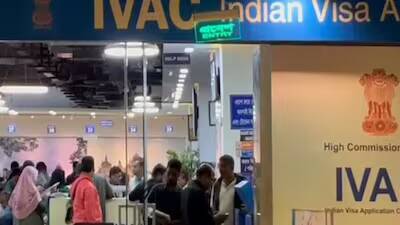
The India-Bangladesh relationship has been under strain in recent times, with protests and radical remarks threatening to disrupt the harmony between the two neighboring countries. In the latest development, the Indian visa centre in Dhaka resumed operations on Thursday, a day after it was temporarily shut due to security concerns. This comes after anti-India protesters marched towards the Indian High Commission in Dhaka, sparking fears of violence and unrest.
The protests were sparked by a radical remark made by a Bangladeshi leader, Hasnat Abdullah, against India. The remark was widely condemned by the Indian government, which summoned the Bangladesh High Commissioner on Wednesday to express its displeasure. The Ministry of External Affairs (MEA) took strong exception to the remark, terming it “unacceptable” and “unwarranted”.
The temporary closure of the visa centre was a precautionary measure taken by the Indian authorities to ensure the safety of the staff and applicants. The centre, which is responsible for processing visa applications for Bangladeshi citizens, is a critical facility that enables people-to-people contact between the two countries. The closure of the centre, even if temporary, would have caused significant inconvenience to those seeking to travel to India for various purposes, including education, medical treatment, and business.
The protests in Dhaka were organized by a group of activists who were angered by the perceived injustices meted out to Bangladesh by India. The protesters marched towards the Indian High Commission, shouting slogans and waving banners that condemned India’s policies towards Bangladesh. The situation was tense, with a heavy police presence deployed to prevent any untoward incident.
The resumption of operations at the visa centre is a welcome development, as it will enable the processing of visa applications to resume. However, the incident highlights the need for greater understanding and cooperation between the two countries. The India-Bangladesh relationship is complex and multifaceted, with a shared history, culture, and geography that binds the two nations together. However, there are also significant challenges that need to be addressed, including trade imbalances, border disputes, and security concerns.
The radical remark made by Hasnat Abdullah is a case in point. Such remarks can have far-reaching consequences, including damaging the relationship between the two countries and creating an atmosphere of mistrust and hostility. It is essential for leaders on both sides to exercise restraint and avoid making inflammatory statements that can exacerbate tensions.
The Indian government’s decision to summon the Bangladesh High Commissioner is a significant development, as it reflects the seriousness with which India views the situation. The MEA’s strong reaction to the remark is a clear indication that India will not tolerate any attempts to undermine its relationship with Bangladesh or create unrest in the region.
In recent times, there have been several incidents that have strained the India-Bangladesh relationship. These include disputes over border demarcation, trade imbalances, and security concerns. However, despite these challenges, the two countries have made significant progress in recent years, including the signing of several agreements on trade, energy, and security cooperation.
The resumption of operations at the visa centre in Dhaka is a positive development, as it reflects the commitment of both countries to maintain people-to-people contact and facilitate travel between the two nations. However, it is essential for both countries to address the underlying issues that have led to the current tensions. This includes promoting greater understanding and cooperation, addressing trade imbalances, and resolving border disputes.
In conclusion, the India-Bangladesh relationship is at a critical juncture, with protests and radical remarks threatening to disrupt the harmony between the two countries. The resumption of operations at the visa centre in Dhaka is a welcome development, but it is essential for both countries to address the underlying issues that have led to the current tensions. By promoting greater understanding and cooperation, India and Bangladesh can work together to build a stronger and more stable relationship that benefits both nations.
About the Author