India Resumes Ops at Dhaka Visa Centre after Closure amid Protests
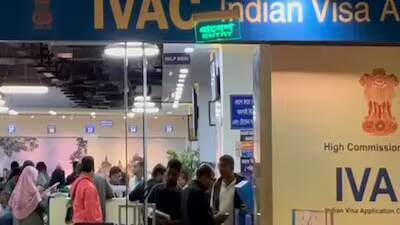
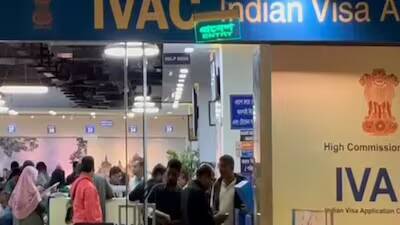
In a significant development, the Indian visa centre in Dhaka resumed operations on Thursday, a day after it was temporarily shut due to security concerns. The centre was closed on Wednesday as a precautionary measure following anti-India protests in the Bangladeshi capital. The protests were sparked by a radical remark made by a Bangladeshi leader, Hasnat Abdullah, against India, which led to the Indian government summoning Bangladesh’s High Commissioner on Wednesday in protest.
The temporary closure of the visa centre was a result of the Indian government’s decision to prioritize the safety and security of its citizens and staff in Dhaka. The protests, which were marchings towards the Indian High Commission in Dhaka, had created a volatile situation, and the Indian government had to take swift action to prevent any potential harm to its interests and personnel.
The radical remark made by Hasnat Abdullah had sparked widespread outrage in India, with many condemning his statement as unacceptable and provocative. The Indian government, through the Ministry of External Affairs (MEA), had summoned Bangladesh’s High Commissioner on Wednesday to express its strong protest against the remark. The MEA had also sought an explanation from the Bangladeshi government regarding the incident and had asked them to take necessary action against those responsible.
The resumption of operations at the Indian visa centre in Dhaka is a welcome development, as it will help to restore normalcy in the relations between the two countries. The centre is an important facility that provides visa services to Bangladeshi citizens who wish to travel to India for various purposes, including business, tourism, and education. The closure of the centre had caused inconvenience to many applicants who had already submitted their visa applications or were planning to do so.
The incident highlights the complexities and challenges of India-Bangladesh relations, which have been marked by periods of cooperation and tension. While the two countries have made significant progress in recent years in areas such as trade, connectivity, and security, there are still many issues that need to be addressed. The radical remark made by Hasnat Abdullah and the subsequent protests in Dhaka are a reminder that there are still many challenges that need to be overcome in order to build a stronger and more stable relationship between the two countries.
The Indian government’s decision to summon Bangladesh’s High Commissioner and to temporarily close the visa centre in Dhaka were necessary measures to protect its interests and personnel. However, the resumption of operations at the centre is a positive development that suggests that the situation is returning to normal. It is hoped that the two countries will be able to put this incident behind them and continue to work towards building a stronger and more cooperative relationship.
In recent years, India and Bangladesh have made significant progress in areas such as trade and connectivity. The two countries have signed several agreements and memoranda of understanding (MoUs) to enhance cooperation in areas such as transportation, energy, and education. The Indian government has also provided significant economic assistance to Bangladesh, including loans and grants, to support its development priorities.
However, despite these positive developments, there are still many challenges that need to be addressed in order to build a stronger and more stable relationship between the two countries. One of the major challenges is the issue of illegal immigration, which has been a source of tension between the two countries for many years. India has long been concerned about the influx of illegal immigrants from Bangladesh, which it believes is a threat to its national security and stability.
Another challenge is the issue of terrorism, which has been a major concern for both countries. India has long been concerned about the presence of terrorist groups in Bangladesh, which it believes are a threat to its national security. The two countries have cooperated in the past to counter terrorism, but more needs to be done to address this challenge.
The radical remark made by Hasnat Abdullah and the subsequent protests in Dhaka are a reminder that there are still many challenges that need to be addressed in order to build a stronger and more stable relationship between India and Bangladesh. However, the resumption of operations at the Indian visa centre in Dhaka is a positive development that suggests that the situation is returning to normal. It is hoped that the two countries will be able to put this incident behind them and continue to work towards building a stronger and more cooperative relationship.
In conclusion, the resumption of operations at the Indian visa centre in Dhaka is a welcome development that suggests that the situation is returning to normal. The incident highlights the complexities and challenges of India-Bangladesh relations, which have been marked by periods of cooperation and tension. While there are still many challenges that need to be addressed, the two countries have made significant progress in recent years in areas such as trade and connectivity. It is hoped that the two countries will be able to put this incident behind them and continue to work towards building a stronger and more cooperative relationship.
About the Author