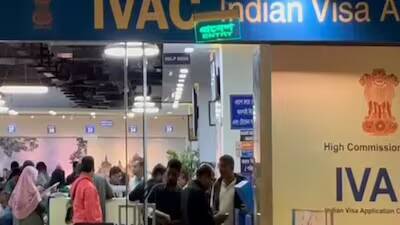
India Resumes Ops at Dhaka Visa Centre after Closure amid Protests
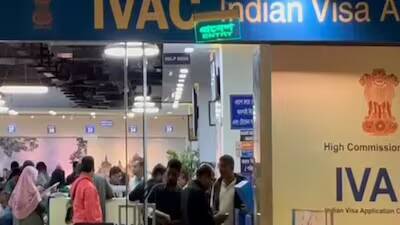
In a significant development, the Indian visa centre in Dhaka, Bangladesh, resumed its operations on Thursday, a day after it was temporarily shut down due to security concerns. The closure came in the wake of anti-India protests in the city, where demonstrators marched towards the Indian High Commission. The protests were sparked by a radical remark made by a Bangladeshi leader, Hasnat Abdullah, against India, which did not go down well with the Indian government.
The situation took a turn for the worse when the protesters attempted to march towards the Indian High Commission in Dhaka, prompting the Indian government to take swift action. The Ministry of External Affairs (MEA) summoned the Bangladesh High Commissioner on Wednesday to express its strong protest against the remarks made by Hasnat Abdullah. The MEA’s move was seen as a strong diplomatic response to the incident, which had the potential to escalate into a full-blown crisis.
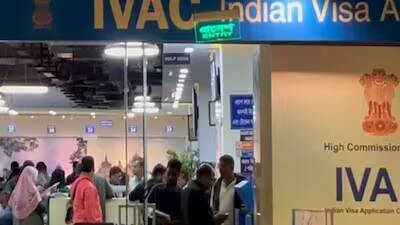
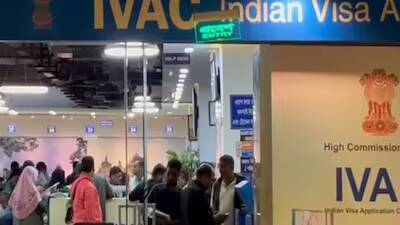
The temporary closure of the Indian visa centre in Dhaka was a precautionary measure taken by the Indian government to ensure the safety of its citizens and staff. The centre, which is responsible for processing visa applications for Bangladeshi nationals, is a critical facility that provides essential services to those seeking to travel to India. The closure, although temporary, had the potential to cause inconvenience to many individuals who were planning to travel to India for various purposes, including business, education, and tourism.
The resumption of operations at the Indian visa centre in Dhaka is a welcome move, as it will help to restore normalcy and facilitate the movement of people between the two countries. The Indian government’s decision to reopen the centre demonstrates its commitment to maintaining good relations with Bangladesh and ensuring that the bilateral ties between the two nations remain strong.
The incident, however, highlights the complexities and challenges of managing diplomatic relations between countries. The radical remark made by Hasnat Abdullah, a Bangladeshi leader, was seen as an attempt to provoke India and create tensions between the two nations. The Indian government’s response, which included summoning the Bangladesh High Commissioner, was a clear indication that it would not tolerate any provocative statements or actions that could harm its interests.
The incident also underscores the importance of maintaining open and honest communication channels between countries. Diplomacy is a delicate art that requires careful navigation of complex issues and sensitive relationships. The Indian government’s decision to summon the Bangladesh High Commissioner was a calculated move that aimed to convey its concerns and expectations to the Bangladeshi government.
In recent years, India and Bangladesh have made significant progress in strengthening their bilateral ties. The two countries have cooperated on a range of issues, including trade, security, and connectivity. The Indian government has been actively engaged in promoting people-to-people contacts between the two nations, which has helped to foster greater understanding and friendship.
The resumption of operations at the Indian visa centre in Dhaka is a positive development that will help to promote greater people-to-people contacts between India and Bangladesh. The centre will continue to provide essential services to Bangladeshi nationals seeking to travel to India, which will help to strengthen the bonds of friendship and cooperation between the two nations.
In conclusion, the temporary closure of the Indian visa centre in Dhaka was a precautionary measure taken by the Indian government to ensure the safety of its citizens and staff. The resumption of operations at the centre is a welcome move that will help to restore normalcy and facilitate the movement of people between the two countries. The incident highlights the complexities and challenges of managing diplomatic relations between countries and underscores the importance of maintaining open and honest communication channels.
The Indian government’s response to the incident, which included summoning the Bangladesh High Commissioner, demonstrates its commitment to maintaining good relations with Bangladesh and ensuring that the bilateral ties between the two nations remain strong. The resumption of operations at the Indian visa centre in Dhaka is a positive development that will help to promote greater people-to-people contacts between India and Bangladesh.
As the two nations continue to work together to strengthen their bilateral ties, it is essential to recognize the importance of diplomacy and dialogue in resolving complex issues and sensitive relationships. The Indian government’s decision to reopen the visa centre in Dhaka is a significant step in the right direction, which will help to promote greater understanding and cooperation between the two nations.
About the Author