India Resumes Ops at Dhaka Visa Centre after Closure amid Protests
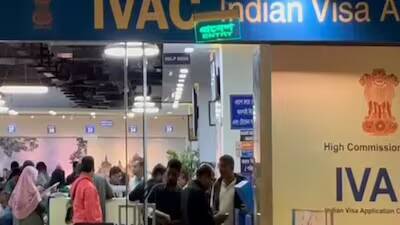
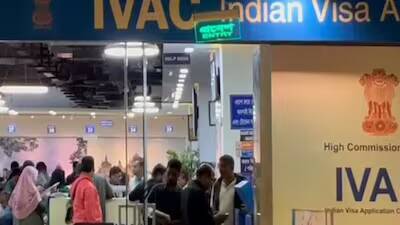
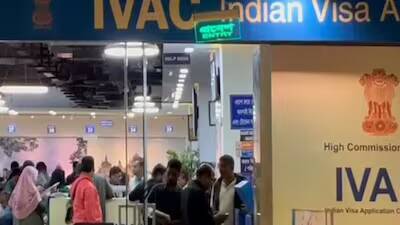
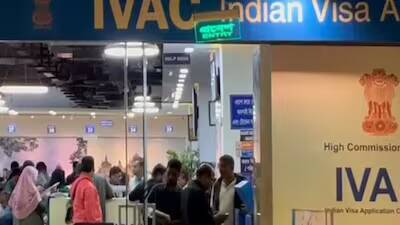
In a significant development, the Indian visa centre in Dhaka resumed operations on Thursday, a day after it was temporarily shut due to security concerns. The closure of the visa centre was a precautionary measure taken by the Indian authorities in the wake of anti-India protests that erupted in the Bangladeshi capital. The protests were sparked by a radical remark made by a Bangladeshi leader, Hasnat Abdullah, against India, which did not go down well with the Indian government.
On Wednesday, a group of anti-India protesters marched towards the Indian High Commission in Dhaka, prompting the Indian authorities to take swift action to ensure the safety and security of their citizens and staff. The protesters were reportedly upset over India’s alleged interference in Bangladesh’s internal affairs, and their march towards the Indian High Commission was seen as a provocative move.
The Indian government, however, was quick to respond to the situation, and the Ministry of External Affairs (MEA) summoned Bangladesh’s High Commissioner on Wednesday to express its strong protest over the radical remark made by Hasnat Abdullah. The MEA’s move was seen as a firm message to Bangladesh that India would not tolerate any kind of anti-India rhetoric or activity that could harm its interests or compromise the safety of its citizens.
The temporary closure of the Indian visa centre in Dhaka was a precautionary measure taken to avoid any untoward incident that could put the lives of Indian staff and applicants at risk. The visa centre is a crucial facility that caters to the needs of thousands of Bangladeshi nationals who travel to India every year for various purposes, including education, medical treatment, and business.
The resumption of operations at the Indian visa centre in Dhaka on Thursday is a welcome move, as it will help to restore normalcy and facilitate the travel plans of Bangladeshi nationals who have been affected by the temporary closure. The Indian government has assured that all necessary security measures are in place to ensure the safety and security of its citizens and staff, and the visa centre will function normally from now on.
The incident, however, highlights the complexities and challenges of India-Bangladesh relations, which have been marked by periods of tension and cooperation over the years. While the two countries have made significant progress in recent years in strengthening their bilateral ties, there are still several issues that need to be addressed to take the relationship to the next level.
One of the major challenges facing India-Bangladesh relations is the issue of radicalism and terrorism, which has been a major concern for both countries. India has been particularly concerned about the presence of radical elements in Bangladesh, which have been known to foment anti-India sentiment and engage in violent activities.
The Indian government has been working closely with its Bangladeshi counterpart to address the issue of radicalism and terrorism, and both countries have taken several steps to strengthen their cooperation in this area. However, more needs to be done to tackle the menace of radicalism and terrorism, which poses a significant threat to regional peace and stability.
Another challenge facing India-Bangladesh relations is the issue of border management, which has been a source of tension between the two countries. The India-Bangladesh border is one of the most porous and sensitive borders in the world, and it has been a major challenge for both countries to manage it effectively.
The Indian government has been working to strengthen its border infrastructure and enhance its surveillance capabilities to prevent illegal activities such as smuggling and infiltration. However, more needs to be done to address the issue of border management, which requires a comprehensive and coordinated approach by both countries.
In conclusion, the resumption of operations at the Indian visa centre in Dhaka is a welcome move, and it highlights the importance of India-Bangladesh relations in the region. While there are several challenges that need to be addressed to take the relationship to the next level, both countries have made significant progress in recent years in strengthening their bilateral ties.
The Indian government’s decision to summon Bangladesh’s High Commissioner over the radical remark made by Hasnat Abdullah sends a strong message that India will not tolerate any kind of anti-India rhetoric or activity that could harm its interests or compromise the safety of its citizens. The incident also highlights the need for both countries to work closely together to address the challenges facing their relationship and to take concrete steps to strengthen their cooperation in areas such as counter-terrorism, border management, and trade.
As India and Bangladesh look to the future, it is essential that they build on the progress made so far and work together to address the challenges facing their relationship. The resumption of operations at the Indian visa centre in Dhaka is a positive step in this direction, and it is hoped that both countries will continue to work together to strengthen their bilateral ties and promote regional peace and stability.
About the Author