India & China know struggle with air pollution: China Spokesperson
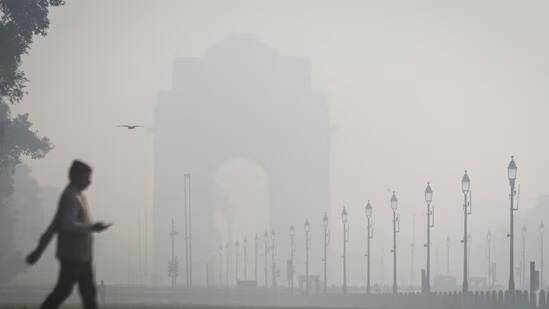
In a rare acknowledgment of a shared environmental concern, China has admitted that both China and India face a common struggle with air pollution, particularly in the context of rapid urbanization. The comments were made by Chinese spokesperson Yu Jing on Monday, as the air quality in Delhi continued to deteriorate, with the Air Quality Index (AQI) nearing 500.
The admission of a shared struggle with air pollution is significant, given the fact that both China and India are among the most populous countries in the world, with a combined population of over 2.7 billion people. The rapid urbanization and industrialization in both countries have led to a significant increase in air pollution, posing a major threat to public health and the environment.
“In the coming days, we’ll share a bite-sized series exploring how China tackled air pollution, step by step,” Yu Jing said, indicating that China is willing to share its experiences and expertise in addressing air pollution with India. This offer of cooperation and knowledge-sharing is a welcome development, given the fact that air pollution is a complex and multifaceted issue that requires a collaborative and sustained effort to address.
The remarks by the Chinese spokesperson come at a time when the air quality in Delhi has been particularly poor, with the AQI reaching hazardous levels. The Indian capital has been struggling with air pollution for several years, with the problem worsening during the winter months due to a combination of factors, including crop burning, vehicular emissions, and industrial pollution.
China, on the other hand, has made significant progress in addressing air pollution in recent years, particularly in the capital city of Beijing. The Chinese government has implemented a range of measures to reduce air pollution, including the closure of polluting factories, the promotion of clean energy, and the implementation of stringent emissions standards for vehicles.
One of the key strategies that China has used to tackle air pollution is the creation of a network of air quality monitoring stations across the country. These stations provide real-time data on air quality, which is used to inform policy decisions and to alert the public to potential health risks. China has also implemented a system of alerts and warnings, which are issued when air pollution levels reach certain thresholds.
In addition to these measures, China has also invested heavily in clean energy, including solar and wind power. The country has set ambitious targets for the development of renewable energy, with the goal of reducing its reliance on fossil fuels and decreasing air pollution. China has also implemented policies to promote the use of electric vehicles, which are seen as a key component of a low-carbon transportation system.
The offer by China to share its experiences and expertise in addressing air pollution with India is a significant development, and one that could potentially have a major impact on the air quality in Indian cities. By learning from China’s successes and challenges, India may be able to accelerate its own efforts to address air pollution, and to create a cleaner and healthier environment for its citizens.
However, it is also important to note that air pollution is a complex and multifaceted issue, and one that requires a sustained and collaborative effort to address. It will require the involvement of multiple stakeholders, including government agencies, businesses, and civil society organizations, as well as a commitment to implementing policies and programs that prioritize public health and environmental protection.
In conclusion, the admission by China that both China and India face a shared struggle with air pollution is a significant development, and one that highlights the need for cooperation and knowledge-sharing between the two countries. By working together and sharing their experiences and expertise, China and India may be able to accelerate their efforts to address air pollution, and to create a cleaner and healthier environment for their citizens.
As the air quality in Delhi and other Indian cities continues to deteriorate, it is clear that urgent action is needed to address this critical issue. The offer by China to share its experiences and expertise in addressing air pollution is a welcome development, and one that could potentially have a major impact on the air quality in Indian cities. We look forward to learning more about China’s strategies for tackling air pollution, and to exploring ways in which India can learn from these experiences.
About the Author