I’m still the President of Venezuela: Maduro as he pleads not guilty in US court
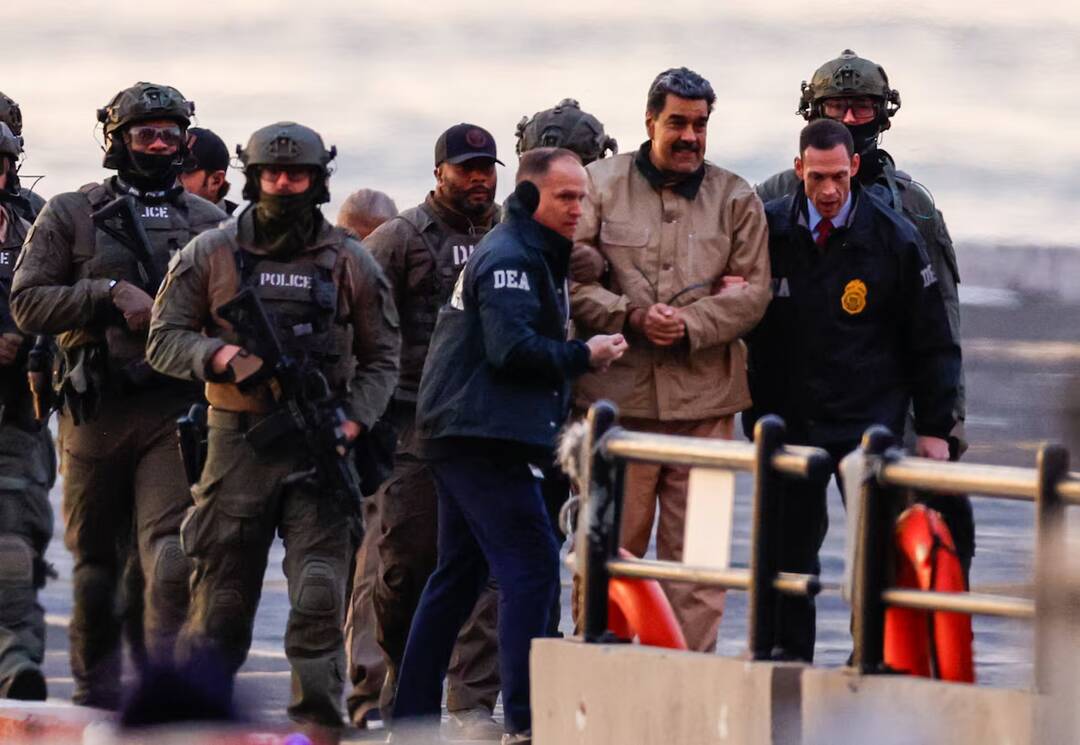
In a dramatic turn of events, Venezuelan President Nicolas Maduro appeared before a court in New York, where he was asked to identify himself. In a bold statement, Maduro replied in Spanish, “I am the President of Venezuela and was captured at my home.” He further added, “I am innocent, I am a decent man, I am still the President,” as he pleaded not guilty to narco-terrorism charges.
The court appearance of Maduro marks a significant development in the ongoing tensions between the United States and Venezuela. The US government has been a vocal critic of Maduro’s regime, accusing him of human rights abuses, corruption, and undermining democracy in the country. The Trump administration has also imposed severe economic sanctions on Venezuela, which has led to a humanitarian crisis in the country.
Maduro’s appearance in the US court is a result of a long-standing extradition request by the US Department of Justice, which has charged him with narco-terrorism conspiracy, conspiracy to commit cocaine trafficking, and conspiracy to commit money laundering. The charges against Maduro are related to his alleged involvement in a scheme to traffic cocaine from Venezuela to the United States.
As Maduro pleaded not guilty to the charges, his lawyers argued that the US government’s actions against him are politically motivated and aimed at overthrowing his government. Maduro’s supporters have also rallied behind him, arguing that the US is interfering in Venezuela’s internal affairs and attempting to undermine the country’s sovereignty.
The US government, on the other hand, maintains that Maduro’s regime is corrupt and responsible for the suffering of the Venezuelan people. The US has recognized Juan Guaido, the opposition leader, as the legitimate president of Venezuela, and has imposed sanctions on Maduro’s government in an attempt to pressure him to step down.
The court appearance of Maduro has sparked a heated debate about the role of the US in Venezuela’s affairs. While some argue that the US is justified in taking action against Maduro’s regime, others see it as an example of US imperialism and interference in the internal affairs of another country.
As the case against Maduro proceeds, it is likely to have significant implications for the future of Venezuela and the region. The US-Venezuela tensions are already at an all-time high, and the court appearance of Maduro is likely to escalate the situation further.
In recent years, Venezuela has been plagued by a severe economic crisis, which has led to widespread poverty, hunger, and migration. The country’s economy has been in free fall, with hyperinflation rendering the local currency almost worthless. The crisis has also led to a shortage of food, medicine, and other essential supplies, leaving millions of Venezuelans struggling to survive.
The US government has blamed Maduro’s regime for the crisis, arguing that his policies have led to the economic collapse of the country. However, Maduro’s supporters argue that the US sanctions have exacerbated the crisis, making it difficult for the country to access foreign currency and import essential goods.
As the situation in Venezuela continues to deteriorate, the international community is watching with bated breath. The court appearance of Maduro is a significant development, and it remains to be seen how the case will unfold. One thing is certain, however – the US-Venezuela tensions are unlikely to ease anytime soon, and the fate of Venezuela hangs in the balance.
In conclusion, the court appearance of Nicolas Maduro is a significant development in the ongoing tensions between the US and Venezuela. As Maduro pleaded not guilty to narco-terrorism charges, he asserted his claim to the presidency of Venezuela, despite the US recognizing Juan Guaido as the legitimate leader. The case against Maduro is likely to have significant implications for the future of Venezuela and the region, and it remains to be seen how the situation will unfold.
About the Author