I’m still the President of Venezuela: Maduro as he pleads not guilty in US court
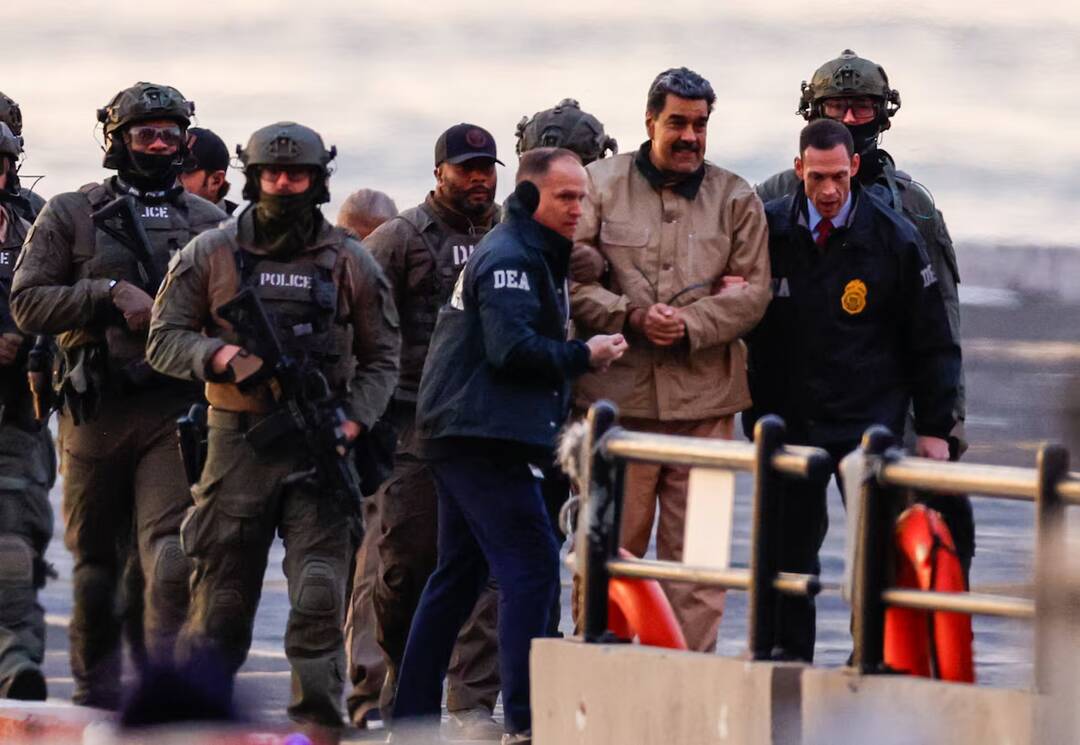
In a dramatic turn of events, Venezuelan President Nicolas Maduro appeared before a court in New York, where he was asked to identify himself. In a bold statement, Maduro replied in Spanish, “I am the President of Venezuela, and I was captured at my home.” He further emphasized his innocence, stating, “I am innocent, I am a decent man, I am still the President.” These statements were made as Maduro pleaded not guilty to narco-terrorism charges brought against him by the United States.
The court appearance marked a significant moment in the ongoing tensions between the United States and Venezuela. Maduro’s defiance in the face of these charges is a testament to the complex and often contentious relationship between the two nations. The Venezuelan President’s assertion of his innocence and his continued claim to the presidency highlights the deep-seated political divisions that have plagued Venezuela for years.
Maduro’s appearance in a US court is a rare occurrence, and it underscores the gravity of the charges brought against him. The narco-terrorism charges allege that Maduro and other high-ranking Venezuelan officials have been involved in a large-scale cocaine trafficking operation. The charges also accuse Maduro of using his position to facilitate and profit from the drug trade.
The US has been a vocal critic of Maduro’s government, with many officials accusing him of corruption, human rights abuses, and undermining democracy in Venezuela. The Trump administration, in particular, has been a strong opponent of Maduro, with President Donald Trump recognizing opposition leader Juan Guaido as the legitimate President of Venezuela.
Despite the US’s recognition of Guaido, Maduro remains in control of the Venezuelan government and military. His appearance in a US court is seen as a significant blow to his regime, and it could potentially weaken his grip on power. However, Maduro’s defiance and continued claim to the presidency suggest that he will not go quietly.
The court proceedings against Maduro are likely to be complex and contentious. The Venezuelan President’s lawyers will likely argue that the charges against him are politically motivated and that he is being unfairly targeted by the US. They may also argue that Maduro has immunity as a head of state and that the US court lacks jurisdiction over him.
The implications of Maduro’s court appearance extend far beyond the immediate case against him. The tensions between the US and Venezuela have been escalating for years, with both sides engaging in a war of words and diplomatic maneuvers. The US has imposed significant economic sanctions on Venezuela, which have had a devastating impact on the country’s economy.
The situation in Venezuela is dire, with widespread poverty, hunger, and humanitarian crises affecting millions of people. The political divisions and instability have created a power vacuum, which has been exploited by criminal organizations and other nefarious actors. The US’s recognition of Guaido as the legitimate President has further complicated the situation, with many countries around the world recognizing him as the rightful leader of Venezuela.
As the court proceedings against Maduro continue, it is likely that the tensions between the US and Venezuela will escalate further. The US may impose additional sanctions or take other measures to pressure Maduro’s government. The international community will be watching the situation closely, with many countries calling for a peaceful resolution to the crisis.
In conclusion, Maduro’s appearance in a US court is a significant development in the ongoing tensions between the US and Venezuela. His defiance and continued claim to the presidency highlight the complex and often contentious nature of the relationship between the two nations. As the court proceedings continue, it is likely that the situation will remain volatile, with significant implications for the people of Venezuela and the wider region.
The international community must continue to monitor the situation closely and call for a peaceful resolution to the crisis. The US and other countries must work together to find a solution that respects the sovereignty and dignity of the Venezuelan people. The situation in Venezuela is a stark reminder of the complexities and challenges of international relations, and it highlights the need for diplomacy, dialogue, and cooperation in resolving conflicts and promoting peace and stability.
About the Author