I’m still the President of Venezuela: Maduro as he pleads not guilty in US court
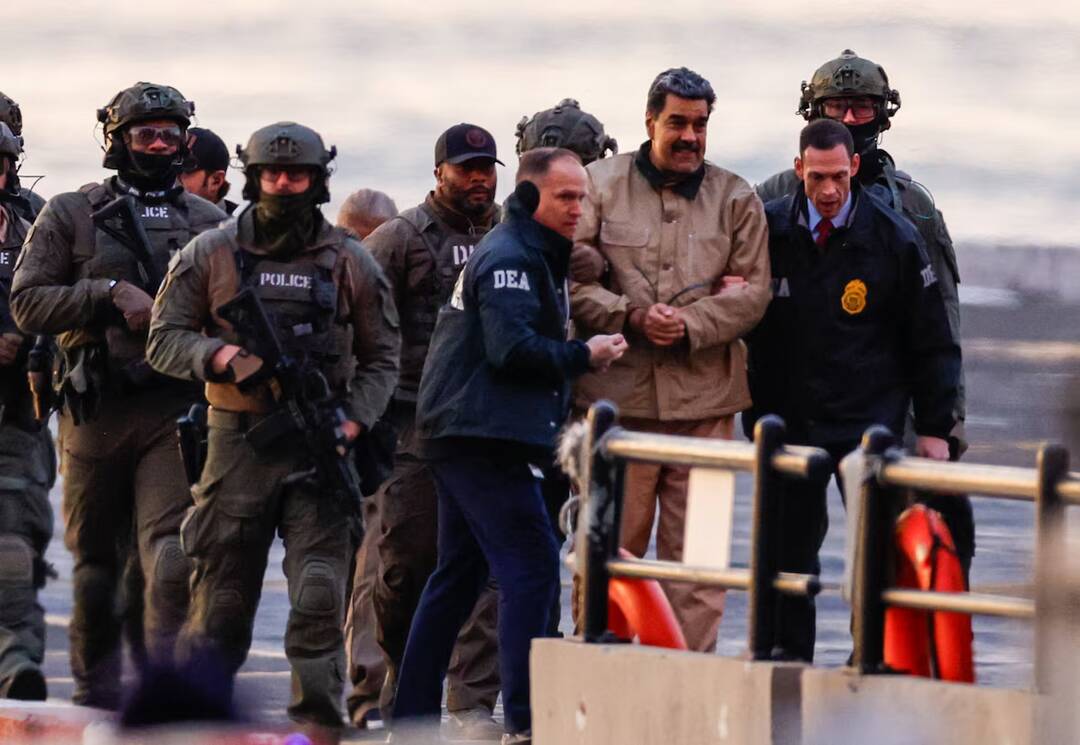
In a dramatic turn of events, Venezuelan President Nicolas Maduro appeared before a court in New York, where he was asked to identify himself. In a bold statement, Maduro replied in Spanish, “I am the President of Venezuela and I was captured at my home.” He further emphasized his innocence, stating, “I am innocent, I am a decent man, I am still the President.” These words were uttered as he pleaded not guilty to the narco-terrorism charges brought against him.
The court appearance of Maduro marks a significant escalation in the tense relations between the United States and Venezuela. The US government has been a vocal critic of Maduro’s regime, accusing him of human rights abuses, corruption, and undermining democracy in the country. The charges against Maduro are related to his alleged involvement in a scheme to traffic cocaine into the United States, which he vehemently denies.
As the proceedings began, Maduro was asked to state his name and occupation. With conviction, he declared himself as the President of Venezuela, emphasizing his position and authority. His statement was met with a mixture of curiosity and skepticism, given the complex and contentious nature of his presidency.
Maduro’s plea of not guilty was anticipated, as he has consistently maintained his innocence in the face of the allegations. The Venezuelan leader has been the subject of intense scrutiny and criticism, both domestically and internationally, with many accusing him of perpetuating a corrupt and authoritarian regime.
The US government’s decision to indict Maduro on narco-terrorism charges has been seen as a significant escalation of the tensions between the two nations. The move has been interpreted as an attempt to further isolate Maduro and his government, which has been struggling to cope with a severe economic crisis and widespread social unrest.
The appearance of Maduro in a US court is a rare occurrence, as heads of state are typically immune from prosecution in foreign jurisdictions. However, the US government has taken the position that Maduro’s alleged involvement in criminal activities renders him liable to prosecution, regardless of his position as a head of state.
As the trial proceeds, it is likely that the court will hear evidence and testimony related to the allegations against Maduro. The prosecution will seek to prove that Maduro was involved in a conspiracy to traffic cocaine into the United States, while the defense will argue that the charges are baseless and motivated by political considerations.
The outcome of the trial is uncertain, and it is likely to have significant implications for the future of Venezuela and its relations with the United States. If convicted, Maduro could face a lengthy prison sentence, which would likely have far-reaching consequences for the stability and governance of Venezuela.
In the meantime, Maduro’s assertion that he is still the President of Venezuela is a clear indication that he intends to maintain his position and authority, despite the challenges and controversies surrounding his presidency. The international community will be watching the developments in the trial closely, as they have significant implications for the future of Venezuela and the region as a whole.
As the world waits with bated breath for the outcome of the trial, one thing is certain – the fate of Nicolas Maduro and the future of Venezuela hang in the balance. The coming days and weeks will be crucial in determining the course of events, and it remains to be seen how the situation will unfold.
In conclusion, the appearance of Nicolas Maduro in a US court marks a significant development in the complex and contentious saga surrounding the Venezuelan leader. As he pleads not guilty to the narco-terrorism charges, the world is watching with great interest, eager to see how the situation will unfold. One thing is certain, however – the fate of Venezuela and its people hangs in the balance, and the outcome of the trial will have far-reaching implications for the future of the country and the region.
About the Author